The Life and Loss of Reclamation
Sophie Haugen
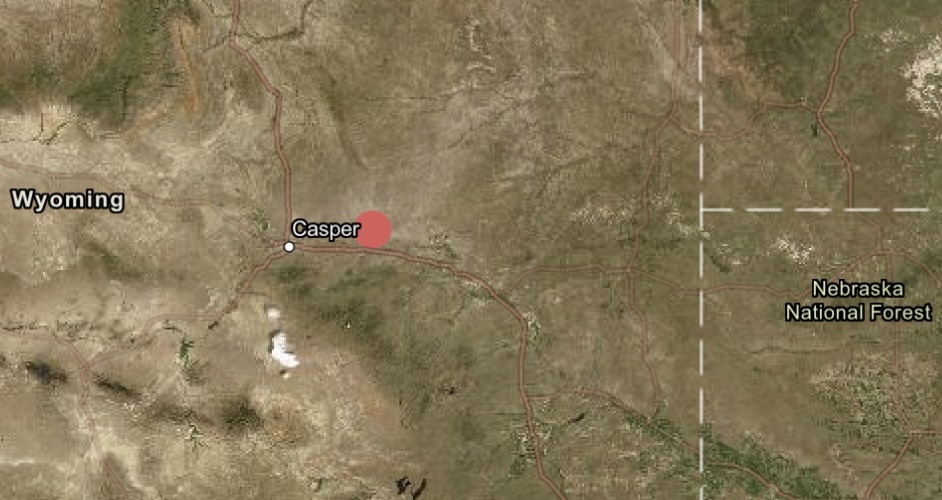
Very few actions in the fight against climate change happen without consequence — even positive steps. Being at a self-inflicted war with our own planet can feel like one step forward, two steps back, even with the most promising of changes. From 1958 to 2000, the Dave Johnston Mine, formerly situated near the towns of Rolling Hills and Glenrock in Converse County, Wyoming, produced 104 million tons of coal and powered the adjacent 922-megawatt Dave Johnston Power Plant. Annually, over 30 deaths and hundreds of incidences of illness or hospitalizations are attributable to fine particle pollution from the Dave Johnston Power Plant alone. While the Dave Johnston Mine closed in 2022, the Power Plant will still be in operation, powered by other coal sources, and will continue to emit millions of tons of carbon dioxide, thousands of pounds of chronic waste, and an excess of fine particles that contribute to incidences of asthma, bronchitis, and heart disease in the surrounding region until its planned closure in 2027.
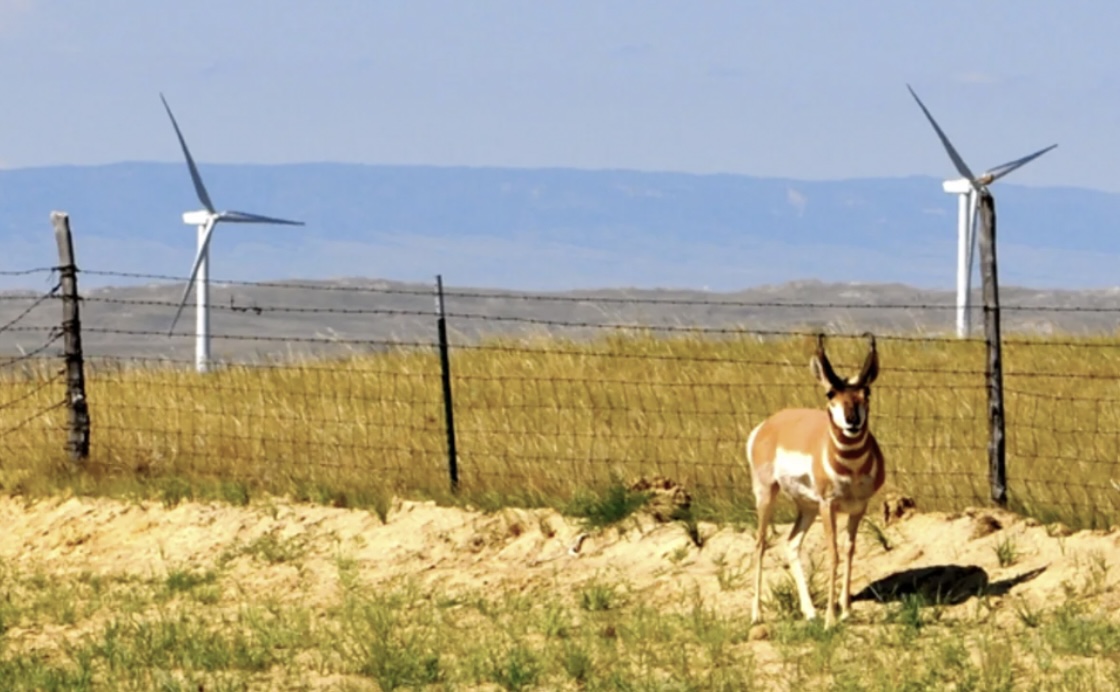
The state of Wyoming ranks first in the nation for carbon dioxide emissions, and the Powder River Basin, where the Dave Johnston Mine and Plant are located, has been referred to as "the center of the nation's coal sector." Making change when industry giants and decades of dependence on coal stand in the way can seem like an impossible task, but we have to use momentum from individual efforts and achievements to keep going. In the case of the Dave Johnston Mine, there's still a story of hope. Today, the Glenrock Rolling Hills Wind Energy Project (pictured below) sits on reclaimed land of the former Dave Johnston Mine, producing almost 300 megawatts of power from over 150 electric wind turbines. The site is one of three wind energy projects in Glenrock and Rolling Hills operated by PacifiCorp, which also still operates the Dave Johnston Power Plant.

Reclaiming the land in which the coal mine formerly stood brings both hope and more loss. On one hand, the project is the first of its kind to be built on reclaimed mine land. On the other, it's an efficient yet artificial disruption to the natural environment — the field of metal trees serves as a reminder that to reclaim means something was lost in the first place. Reclaiming implies a need for recovery, yet is still a step in the right direction.
The path to "clean" energy is never linear, and it especially isn't in the case of this reclamation project. Over the several years it took to "reclaim" this land, "More than 85 million yards of earth were moved" — from where? From whom? PacifiCorp and vegetation scientists working on this reclamation project sought to create a long-term, habitable environment for the plant and animal species who are indigenous to the area. One of the scientists, Chet Skilbred, "explained that as part of the reclamation project, he and his team were required to replace all the indigenous plants that had been there prior to the coal mine." Again, reclamation requires replacement. Replacing what had been there prior, and what had been lost.
But where were these species during Dave Johnston Mine's 42 year-long life? Where did the antelope, deer, rabbits, foxes, and 21 species of plants go, and how did they know to return? Now that they're back, how will they interact with the land? Glenrock Rolling Hills has a bald eagle conservation plan in place, but still "predicts that up to 1.43 bald eagles and up to 10.86 golden eagles could be killed incidentally on an annual basis" at the wind farm. There's no question that a reclaimed coal mine turned wind energy project is evidence of progress and a significant achievement for the coal center of America, but reclamation and restoration still come with a cost. Reclaiming the land that a coal mine destroyed does not mean returning it to its original state, but rather rebuilding it with something that shouldn't but needs to be in place.
Sources
Dave Johnston Power Plant. Global Energy Monitor Wiki.
Glenrock Rolling Hills Wind Energy Project. U.S. Fish & Wildlife Service.
Glenrock, Rolling Hills, and Seven Mile Hill Wind Farms. Tetra Tech.
Terdiman, Daniel. "From coal mine to wind farm." July 24, 2009, CNET.