Boston's Energy
An interactive history of the Mystic Generating Station and Everett Marine Terminal
Julian Giordano
Since coming to Boston for college, I've found myself noticing a set of three tall smokestacks on the horizon on many occasions. They stood out against the modern glass high-rises of the city, and my curiosity as to their use (or former use) grew the more I saw them. I finally decided to look up the smokestacks, and discovered they were a part of the huge Mystic Generating Station and had been looming over Boston for over half-a-century. I also learned that the Station was neighbored by another important plant: the Everett Marine Terminal for natural gas. A research rabbit hole led me to discover that these were sites of incredibly local and national significance for fossil fuel transportation, processing, and consumption, and I knew that I had to write my weekly response on them.
On October 15th, I decided to go check it out. I grabbed my camera and rode my bike down Washington Street for half an hour, passing over the bridge before arriving at the heavily guarded gates to the complex. Below are some of the photos I took and the local history I discovered.
The Mystic Generating Station and Everett Marine Terminal can be found in Everett Boston, across the Mystic River from the neighborhoods of Charlestown and Bunker Hill. Their location in Boston's harbor and between US-1 and I-93 situates them perfectly for boat and truck transportation while placing them at the heart of the city.

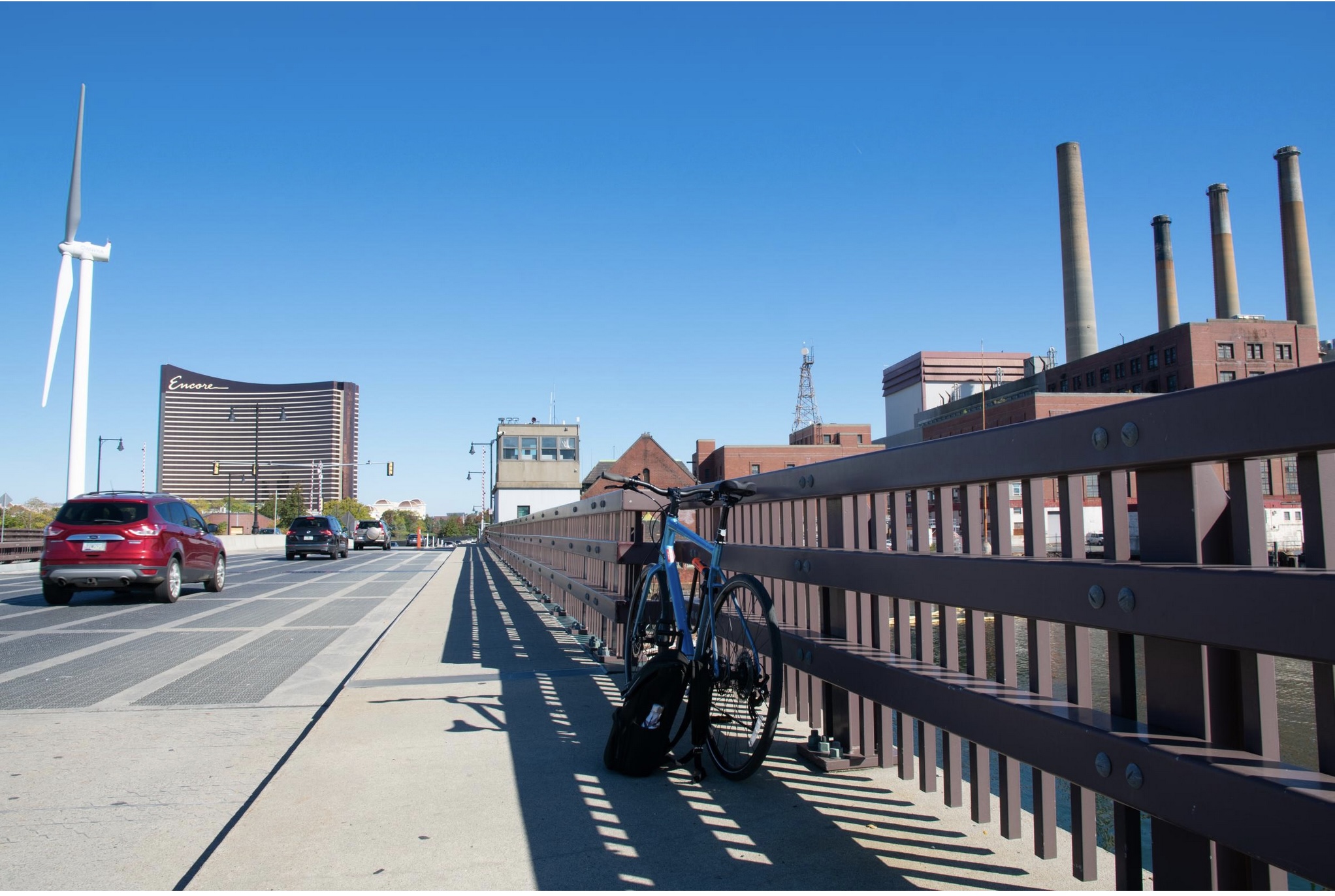
Riding over the Alford St. bridge, I discovered that there was a third energy-related site just across the street from the two plants I was visiting. The Massachusetts Water Resources Authority's wind turbine contrasted sharply with the generating station and natural gas terminal: the old and polluting versus the new and renewable. This photo captures that juxtaposition, adding in the visual symbols of cars and my lone bike (two forms of transportation at odds with each other for a similar reason).
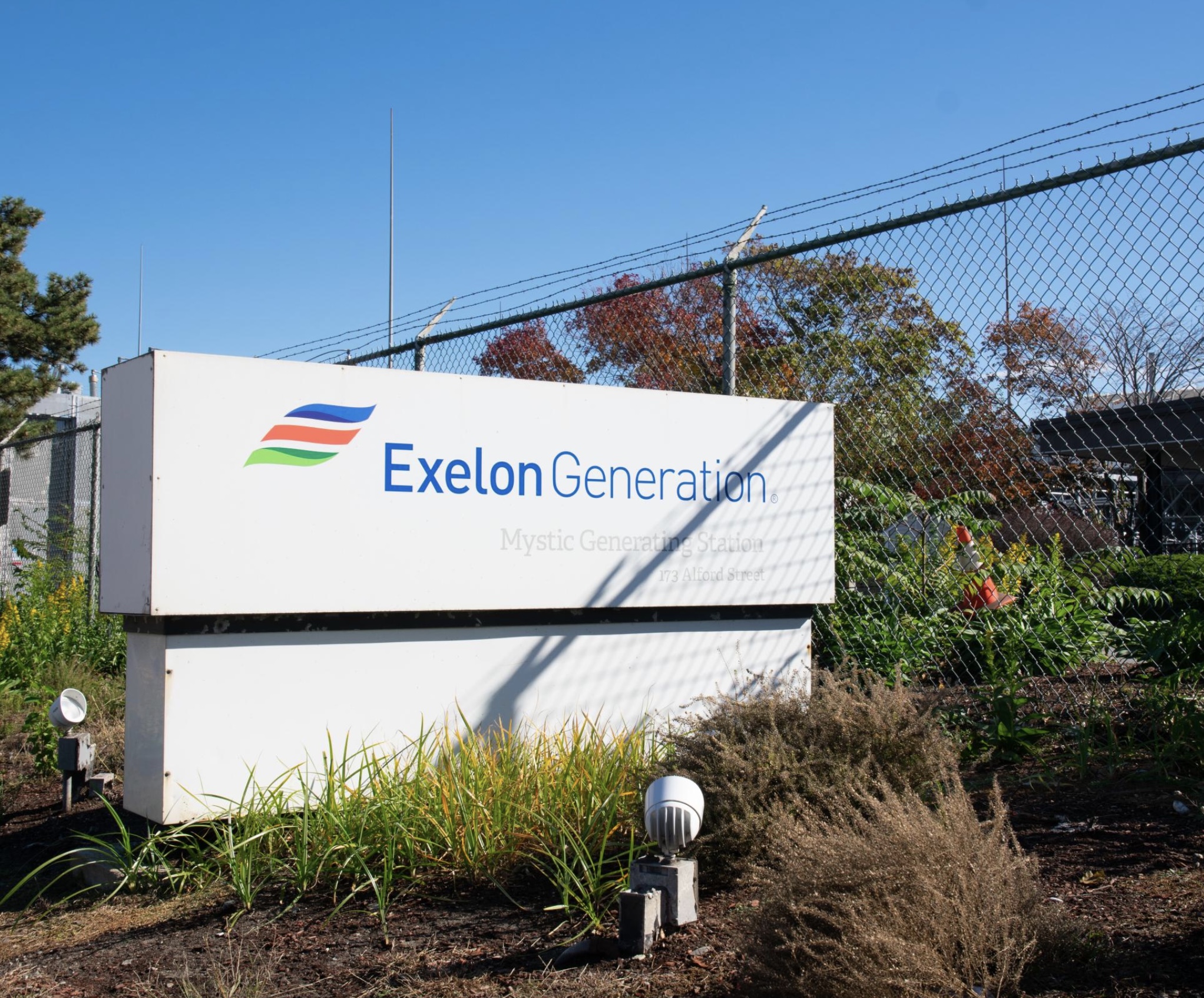
The modern logo and new fencing and murals might try and conceal it, but the Mystic Generating Station is one of the oldest, longest running power plants in the nation . It's changed owners and infrastructure over time, but has existed in different forms since the 1940s. Today, the station operates as a "peaker," a plant designed to run only when electricity demand peaks. Out of 23 such plants in Massachusetts , ⅔ burn oil, and the rest natural gas. Around 90% are over 30 years old, and they run less efficiently with more greenhouse gas emissions as a result. Mystic is able to burn both oil and the more climate-friendly natural gas, which it has been doing for over 60 years. Operating on a larger scale than most of its peers, it has earned itself a spot in the top five worst-polluting power stations in the state. Formerly owned by Exelon, the station is currently under the control of Constellation , which also owns the Everett Marine Terminal next door (and additional power plants in West Medway and Framingham).
This 1966 aerial image of the plant shows 5 smokestacks running. Many have been phased out over time, and only two are still operational today . They are both natural gas-fired turbines and are called Mystic Units 8 and 9. They each have a generation capacity of ~700 megawatts (Unit 8 is 708-MW and Unit 9 is 714-MW). If they were used full time (not just at peak times) this would be enough to power nearly 1.2 million homes for a year .

On the left is a 1981 satellite photo of the station and on the right is a present-day photo. Surprisingly, what's most noticeable is how little has changed. The plant has visibly scaled back in its current "peaker" role.
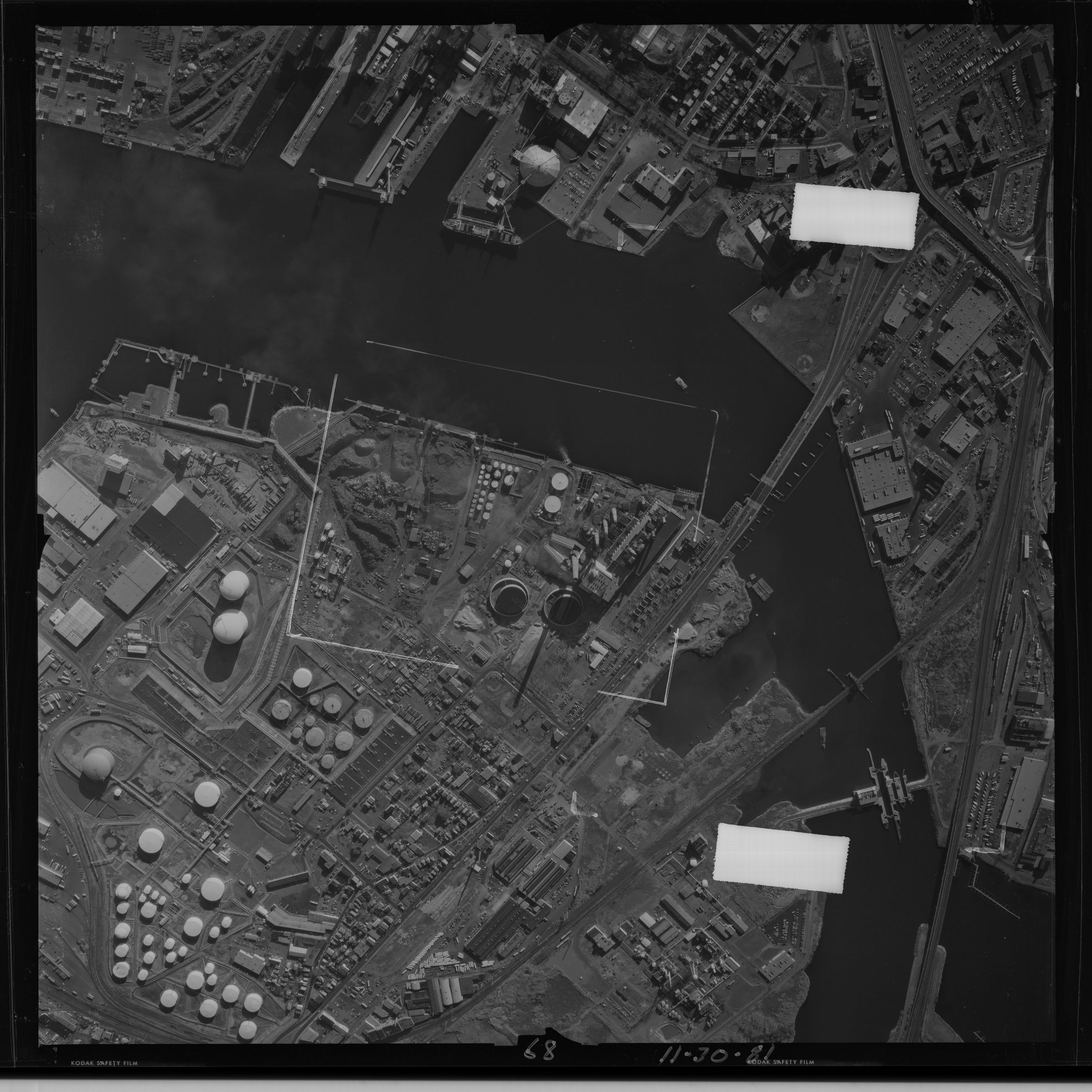
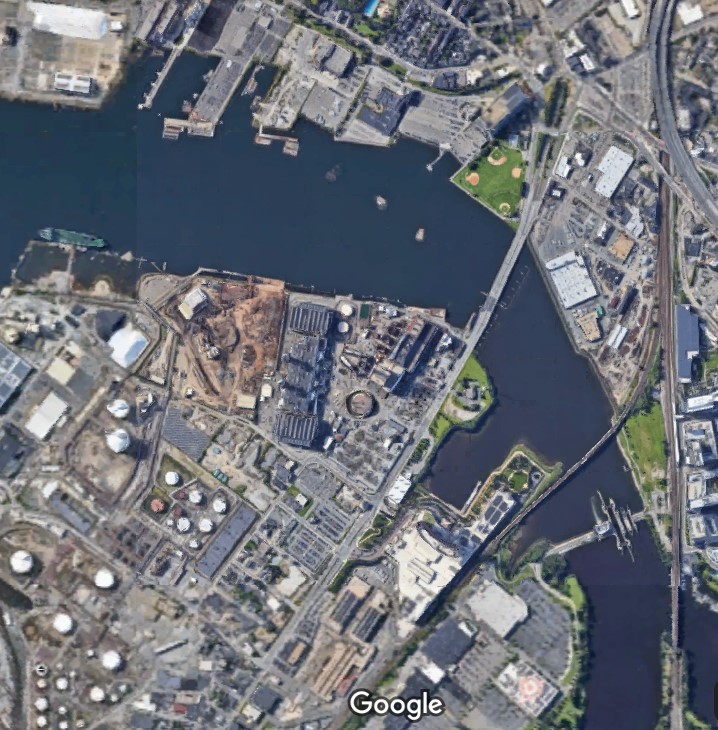
There are many environmental reasons to want to close the plant, but one that is less spoken of has to do with land use. The station takes up a lot of real estate and pays little taxes comparatively.
The clean energy director for the Massachusetts Climate Action Network, Logan Malik, has called Mystic and other peaker-plants "low-hanging fruit"
"They aren't in use a whole lot of time, and at the same time, technology is available as we speak, today, to replace these dirty plants with clean, renewable alternatives."
-Logan Malik ( 2022 )
Up until last year, Units 8 and 9 were supported by Mystic Unit 7 (575-MW) and Mystic Jet (9-MW). The latter of these was oil-fueled. Unit 7 and the Mystic Jet were phased out last year , and Units 8 and 9 will be shut down in May 2024 . This is six years after the New England Independent System Operator (ISO-NE), which runs the entire electric grid, almost caused the shut down of the whole Mystic operation . While environmental groups have been campaigning to close it for years, the plant's near-demise in 2018 was actually due to a rise in fuel costs that would've made its continued operations unviable.

"…[peaking power plants] are often located in areas with concentrations of low-income households and residents of color, likely posing additional health risks to populations that are already more vulnerable. When peakers run, it can also raise costs for consumers, as they are generally the most expensive plants to operate."
-Sarah Shemkus, Energy News Network reporter
Notice the two white tanks on the right side of the photo? They're a part of the Everett Marine Terminal, a storage and transportation hub for liquid natural gas (LNG).

What is LNG? Simply put, it's regular natural gas cooled to -265° Fahrenheit and mixed with methane and ethane , which reduces the gas to 1/600th of its original volume . Behind the three smoke stacks in this photo are two huge, 180-foot-tall tanks totalling 3.4 billion cubic feet where all of the LNG in the terminal is contained. These two tanks hold enough natural gas to heat and light all of Massachusetts for a day. The terminal supplies 20% of New England's annual natural gas demand (a lot of which goes to generating electricity -- it is the sole provider to Mystic next door).
From 1971 to 2003, half of the US's LNG imports came through Everett.
Although not a "peaker" plant like the generating station next door, the marine terminal is very underutilized, containing far more LNG than the region needs. The massive scale of the terminal (which makes it the most concentrated site of LNG in the country) is needed most during cold spells, when demand for natural gas soars. However, these only happen 30-40 days a year, and the terminal runs an excess capacity for the remaining ~320 days. This explains why the terminal sends gas from its tanks all the way to the Algonquin and Tennessee interstate pipeline systems.
Everett Marine Terminal has been operating continuously since 1971 - making it the longest-running of any import terminal in the US. The imports come predominantly from Trinidad and Tobago, but in occasional cold spells, the terminal will take imports from Yemen and Russia (which has caused controversy in the past). The ongoing war in Ukraine has vastly diminished supply , and could make this a tough, expensive winter for Everett.

The proximity of the Everett Marine Terminal to the Mystic Generating Station makes a difference in both of their operations. They currently have a contract going through 2027 that provides important economic stability.
They aren't the only two energy and fossil-fuel related sites in the area, though.
Behind the Terminal is a 95-acre tank farm owned by ExxonMobil that buyers are currently trying to set up deals to develop and rezone (which has been complicated by necessary environmental remediation costs).
And down the river (to the right in this photo) is Global's Chelsea Terminal , a plant that supplies almost everything to the Boston area: biodiesel, crude, diesel, ethanol, gasoline, heating oil, and kerosene.
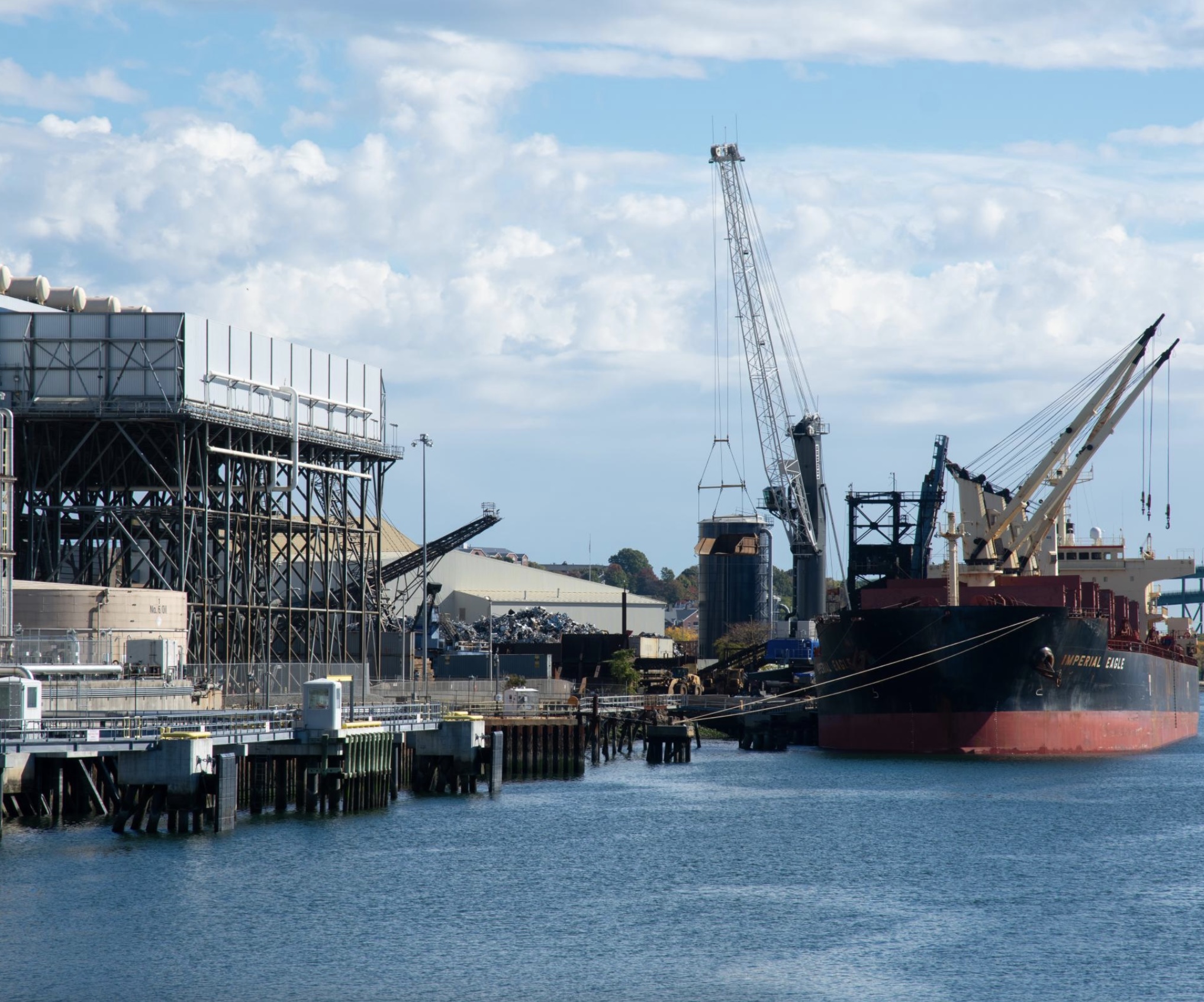
Amidst all of these fossil fuel plants stands a single site of renewable energy...
Constructed in 2011, the Massachusetts Water Resources Authority (MWRA) wind turbine is a relatively new addition to Everett. Standing beneath, its size is imposing: it extends 365 feet into the air and weighs over 200 tons . But contrasted with the two neighboring plants, it is miniscule, both in terms of size and energy output. There is a good reason for this. Unlike its neighbors, the turbine is not serving all of Boston and New England, but only the local DeLauri Wastewater Pump Station. It operates at 1.5-megawatts and generates 3 million kilowatt hours of electricity per year , saving taxpayers $350,000 annually. All of this, however, came at the expensive price tag of $4.7 million. Financed in part by the American Resource and Recovery Act (ARRA), the turbine is a good example of just how expensive renewable energy projects can be. It'll all be worth it, however, when the turbine starts recouping its cost less than five years from now and continues to power the wastewater pumping station well into the future.
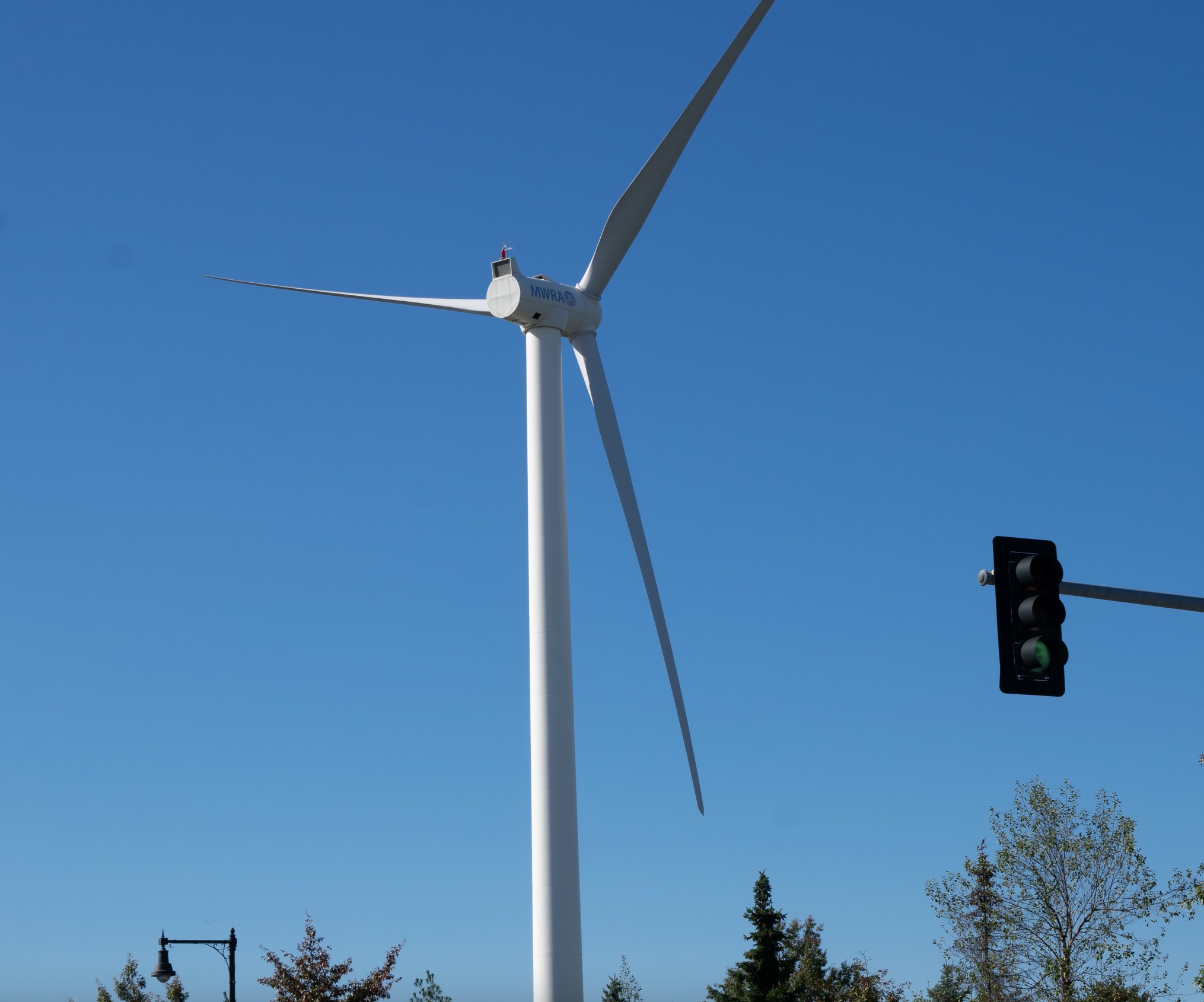
"I support projects like these because this is what we need to be doing to become energy independent. It is projects like this one that help us generate electricity without having to pay for energy to drive the turbine itself."
- City Councilor Sal LaMattina, District 1 ( 2012)
With the Mystic Generating Station retiring in 2024, Boston (and ISO-NE) is looking for environmentally friendly and low-cost alternatives to replace it through its " Ready Path " program. This will mark a positive step towards clean energy for Boston and New England, but will still leave much work to be done.
Unlike its neighbor, the Everett Marine Terminal won't be going away any time soon. Even as competitive renewable options start to fill the market, the LNG tanks will still be needed as backup for the foreseeable future.
Ten, fifteen, or twenty years from now, however, there is hope for the Everett neighborhood and greater Boston. As investments in clean energy sources like the MWRA's wind turbine add up and old fossil fuel infrastructures get replaced with affordable housing, parks, and sustainable infrastructure, the balance will shift.

Sources
Mystic Generating Station
Everett Marine Terminal
MWRA Wind Turbine