Jincheng, Shanxi Province, China
Methane Ultra-Emission Site
Christopher Kwon

Shanxi is one of China's major coal mining provinces, possessing approximately a third of the country's total coal deposits. Located in the Northern region of China, Shanxi province is home to numerous coal mines and their companies with their cumulative annual coal production exceeding 300 million metric tons. For scale, 2 tons of coal can power a typical household's electrical appliances in the United States for a whole year. Annual production of coal from the Shanxi province can power 150 million homes in the United States for a year. Detection of multiple methane ultra-emission sites from this province speaks to the area's immense production of coal of which methane is a common byproduct. The importance of coal mining in the Shanxi Province is emphasized through the sheer scale of production in providing energy to the rest of China.
Three-quarters of China's electricity is generated from coal. The framework of companies and government campaigns for the sustained mining of coal speaks to China's history of coal usage as a cheap, nonrenewable, seemingly abundant resource, to produce energy. China’s insatiable appetite for coal grew hand in hand with the growth of the Chinese economy, much like the blossoming use of the Daqing oilfields at the onset of Mao Zedong's rule. The Daqing oilfields, located in northeast China, holds one of the largest oil reserves within China with an output of 600,000 barrels of oil per day. Exalted by the Chinese government, the development of the Daqing oilfield served as a model industrial enterprise throughout the 1960s and 70s. The development of the Daqing oilfields and, subsequently, the Shanxi coal mining industry emphasizes the dependence of Chinese economies on the continual production of Chinese fossil fuels.
Ten years ago, under the growing international awareness of China’s fossil fuel consumption, China set a goal to control methane emissions by using the gas extracted during coal production for heating and electricity. Yet, methane emissions have steadily increased by 1.1 million metric tons from 2010-2015 (Miller). Excessive methane emissions as compared to the United States are not entirely due to Chinese negligence: coal mines run deeper in China than in the United States which require harsher extraction techniques and manipulation of the surrounding landscape. In addition, coal mines are in rural areas of China, far away from city centers, which lack the necessary infrastructure to harvest the methane gas as a source of energy. Thus, the geographical difference of coalbed mines between the United States and China make it difficult to solely blame the Chinese for excessive methane emissions from Jincheng. But, the presence of long-standing coalbed mining companies, which possess technologies to harness methane gas, in Jincheng emphasizes the possibility of harnessing methane gas as a source of energy rather than an aggravator of the green-house effect. Furthermore, the countries that produce the most methane emissions, including China and the United States, are obligated to be vigilant in the environmental footprint they leave behind.
Coalbed methane (CBM) can be found anywhere where there is coal. With studies showing that CBM can be a "greener" source of natural gas around 20 years ago, countries around the world began utilizing CBM to supplement the use of natural gas. Burning CBM does not release toxins or ashes, and emits less carbon dioxide per unit of energy than coal, oil, and wood. The United States leads in annual CBM production with all other countries trailing far behind. China, with its vast coal and CBM resources, estimated at more than 1100 trillion cubic feet, has great potential for tapping into this source of energy. The increased usage of CBM poses a set of challenges though. Environmental issues involving CBM extraction include deliberate recycling of the water produced, extensive water withdrawal changing local water levels, and the possibility of methane contaminating the water supply. Large volumes of water that are produced from the reservoir cannot directly be injected back into the earth until water quality guidelines are met. Due to the large amounts of water extracted, local water level changes can affect landowners and farmers who are reliant on the water for irrigation and livestock. Yet, the environmental issues involving the containment of methane are manageable during the coal mining process. Reducing methane emissions after its release into the atmosphere, on the other hand, is harder to contain. Careful research into the mining of CBM alleviates many of the aforementioned challenges into more manageable guidelines.
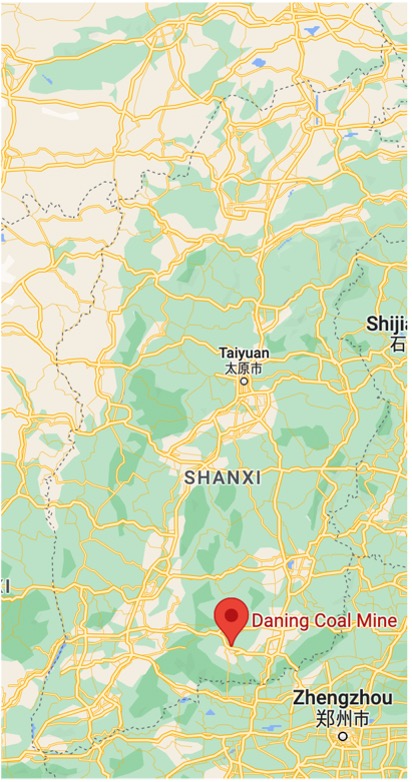
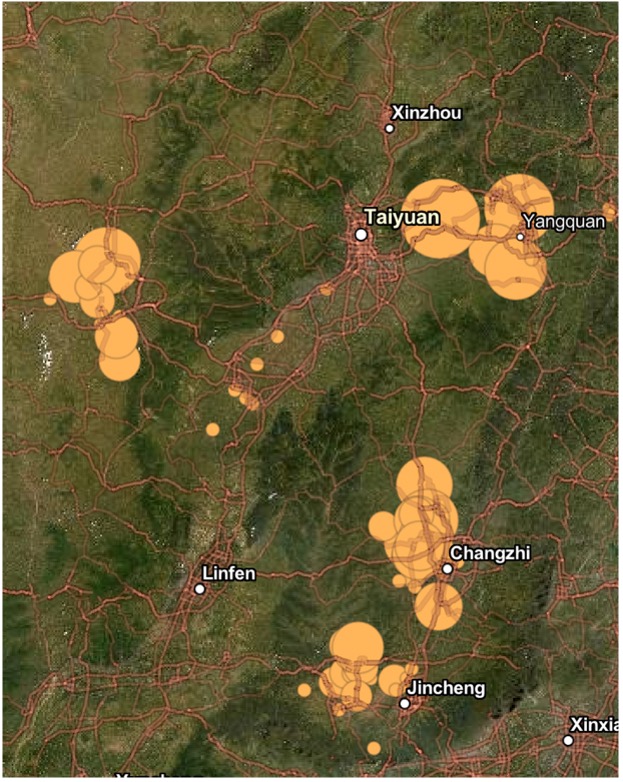
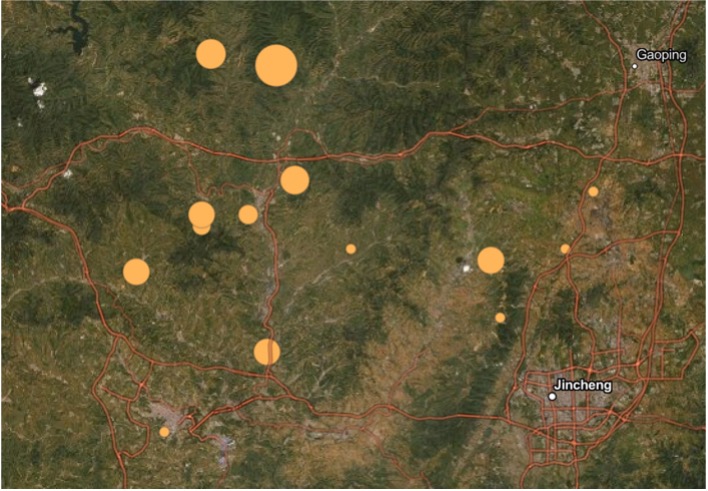
Of the 670 mines in Shanxi, I decided to focus on the methane emission sites near the southern border of the province near Jincheng. Much like Daqing and its oilfields being inseparable, Jincheng and its people are married to coal. Using the methane emission map as the starting point, I pinpointed the location on Google Maps and became aware of the proximity of the Daning Coal Mine, one of the most important coalfields in Shanxi province. Jincheng is infamous for having poor air quality due to coal extraction and processing. The hazy city has undertaken efforts to improve air quality by making the city "greener" through planting trees, establishing parks, shutting down the worst-polluting factories, and attempting to make full use of coalbed methane. Yet, many other cities don’t share the same “green” fate as Jincheng.

Between 2016-2021, China closed 5,500 coal mines, half of the country's total, presumably, in their efforts to decline carbon emissions by 2030. Ambitious hydroelectric dam projects, solar panel, and wind turbine installations were also implemented to curb China's reliance on energy produced by coal. Yet, despite these initiatives, in recent years, China has reverted to burning more coal in the face of electricity shortages. Energy shortages across the nation have pushed the Chinese government to open previously idle coal mines.
Jincheng was no exception - the city was the epicenter of the revival of coal production in the Shanxi province. In contrast to the public outcry of climate change activists, Jincheng locals welcome the renewed vigor of coal production, especially the rise in coal prices. Not unlike Daqing and its oilfields, coal embedded itself into the fabrics of Jincheng and its surrounding area. Peak coal consumption in China was projected to be 2013; but now, with renewed mining efforts, coal usage in China won't decline until 2026, per an HIS Energy analysis (Bradsher).
The ongoing reversion of any progress made by the reduction of methane emissions raises the question about whether harsher regulations are the best course of action to curb the ultra-emission of methane. Incorporating the use of coalbed methane as a source of energy is a reliant way to reduce methane emissions while also being a much cleaner alternative to burning coal. The problem of insufficient infrastructure in rural areas, where most mines are located, to transport the methane through pipes and other means remains to be solved by the Chinese government in collaboration with the dominant coal mining companies.
Understandably, the fear of an energy crisis while transitioning to a cleaner energy source can be a formidable barrier. China can implement methane usage now – technological capabilities of installing pipelines are present in China as seen by coalbed methane generating companies operating in Jincheng. Installations of renewable energy sources such as windmills, solar panels, etc. are important in the future, but ultra-methane emissions require an immediate solution. Utilization of the coalbed methane gas as an additional source of energy may mitigate the shortages in energy across China in a greener way as compared to burning more coal.