Houston
Brian Medrano
You can take the boy out of the village, but you cannot take the village out of the boy. Houston, despite being a bit on the larger side, is my village. I was born and raised there and I intend to settle back down there at some point. So whenever I am in Cambridge and I find myself feeling homesick, I think about how much more earthy the air is on a cold night, how the city is so plain that on a clear day I can see the downtown skyscrapers despite living miles away. As ridiculous as it sounds, there is something truly special about being Texan. It is a communal source of pride and resistance. It's almost as if the essence of Texas being its own country at one point never really left.
I come from a different place. A lot of my experiences since arriving to college have been a lot of firsts. To say that it feels like I am in a different world sometimes would be an understatement. I used to think that I could tell who was from where, like who grew up in the south or who grew up on the west coast, but it turned out that I was slightly wrong. I've come to learn that what really differentiates people, aside from obvious cultural norms, is knowledge. I grew up going to a charter school system where the phrase "Knowledge is power" was all too familiar to me. It did not make much sense at the time, but every day that now passes it gets proven to me more and more. If knowledge is power, then with great knowledge comes great responsibility. From my time as an Ivy League student, I have come to understand that my pursuit of knowledge should be unquenchable, and in turn, my level of accountability forever increase. When it comes to matters relating to the future well-being of our planet, it is our responsibility to learn it as if our lives depended on it, because our impending doomed future could come to our present faster than ever imagined. In that same light, we are also responsible for the sharing of that knowledge.
This semester I took a class that taught the history of factors and implications of climate change. It stressed the importance of learning how to effectively communicate the complex history of climate change through various writing assignments over a range of topics such as methane emissions or the automobile industry. This portfolio below is a brief collection of some of my personal essays throughout the semester. When it came to selecting a central theme, it was very natural to go back to my beginnings: Texas. Within these papers, I will use personal anecdotes and works of realistic fiction to explore ideas of guilt, accountability, community, and identity in relation to how we view and interact with climate change.
Air Conditioning
The sunlight was able to peek through the branches of my pecan tree and the blinds, finally hitting me square in the eyes. Almost immediately, I knew that something was not right. Although it was the peak of summer, I typically should have still been bundled up in my blanket. My family and I have the horrible habit of turning down the thermostat to below 70 degrees, allowing us to peacefully hibernate through the night. But there I was, halfway sweated through my shirt and blanket halfway across the room. "Oh, crap", I thought to myself. I shot up from my bed and went straight through the thermostat. My heart dropped; it was dead and unresponsive. My day had just begun and it was already over. Living in Houston, AC is absolutely critical. Personally, during summer I do not leave the house unless it is for good reason. However, this time I had no choice but to leave. Eventually, my family and I made our way to our cousin's home, but up to that point, my siblings were at each other's throats. Turn the heat up and you will quickly see people turn on each other and blurt out long-buried sentiments. It's pretty insane to think about how the removal of something that should be deemed a luxury can be detrimental to their content. While I initially dismissed their hissy fits as being nothing more than bratty, it did cause me to ponder at what threshold of temperature their outcries would be stemming from actual concern rather than discomfort. The fact that there are people in the world already experiencing those insufferable temperatures, along with the dozens of heat deaths in my state every year helped me conclude that air conditioning could be on that pesky borderline of being a human rights issue.
Looking back at my summer in Houston, I was not surprised to find out that this past June and July were the hottest months ever recorded. I am not going to fully blame climate change as the reason why I did not go to the gym, see my friends, or just did fun activities in the city, but it was a pretty big one. It makes me wonder how people used to live here prior to the invention of AC. I am now beginning to learn that its invention could have been a contributing factor to people moving down to the South. It could have been possible before, but with my recent AC fiasco and the recent climate changes, I am starting to wonder if I could ever go backward. The STEM major in me tries to reason that as humans we are driven to achieve homeostasis, so it is only natural to put ourselves in conditions that hold a comfortable temperature. As any Houstonian could attest, being out all day begins to conjure up thoughts on how that first gush of cold air will hit our bodies like a blissful semi-truck. And I know how that sounds, but I cannot put it into any other words.
In another sense, the sheer intensity of the summer rays cooking my scalp and sizzling my hands whenever it touched something remotely metal made me teleport back to the summer after fourth grade. For some odd reason, I was invited to attend a school summer camp centered around global warming and renewable energy. During the camp, we were taught about big contributors to climate change, the effects of it, and were told to come up with potential solutions we could implement in daily life. The fact that I can still recall various moments of it shocked me; I did not realize how impactful and memorable that experience was until now.
I suppose this past summer experience of non-stop humid heat, where you feel as if you're walking through an air of soup-like, swampy consistency shaped me more than I anticipated. It took me through a rabbit hole of memories — most of them of me being miserable because of this unwavering heat — and really put into perspective how things have changed, and yet at the same time haven't. While attending that summer camp was somewhat transformative, I cannot proudly say that I have been a mindful citizen of the world since and acted exclusively on climate-friendly decisions. I do not know why it was so hard for me to do so though. Maybe I am unwilling to dive fully into a lifestyle I will have trouble maintaining. I also can't help but wonder how much of that effort would be in vain, but that does not make it okay not to try. So, what does it have to take for that to change, and at what point are my actions inexcusable? How can I twist guilt into responsibility? Moving forward, however, I would really like to challenge myself and change that about myself and my community.
A Conversation Between Two Classes and Generations
Chris was getting frustrated with the pool he was cleaning. The one stubborn leaf seemed to dance away from his net with every single attempt to scoop it. At the same time, Mr. Charles, the owner of the home came out. He waved at Chris.
"Hi, Chris! How are you?" Charles belted out. "Well, it would be better if you didn't have so many trees and shrubs blowing this much junk into your pool," Chris remarked. "Do you think we're just paying more to have nice trees?", Charles chuckled. "Open your eyes, kid, these canopies are busting their ass to soak up a couple more degrees than the cracked sidewalk in your neighborhood". "Wait, what do you mean?" said Chris, unknowingly balling up his fists. Charles sighed a bit as he shook his head.
"Listen, Chris. It was not my intention to create a divide. Let me put it to you this way. Have you ever paid attention to how much cooler the breeze that flows through these trees is compared to when you are back home? How many trees does your neighborhood have?", Charles asked. Chris's hands unclenched. He plopped down and dipped his feet in the pool to think. He looks up and murmured, "Yeah I guess I have noticed that. Why is this neighborhood covered in green and we only have two trees on our street?"
"Well I know you're probably thinking it's because the people on this street might have more money than your neighbors, but it is actually deeper than that". "Wait, really?", Chris asked in confusion. " I haven't told you what I do for a living, but I am climate change historian." Charles replied. "What even is that?"
"Well, essentially I look at the intersection between history and climate change to make a better sense of our past and how that might impact the future. Recently, I have been working on mapping out heat islands in lower-income neighborhoods like yours." said Charles as he decided to sit next to Chris.
"What the heck are heat islands? We're not surrounded by water." Chris laughed. "Heat islands are places where there is a higher temperature due to the infrastructure, such as paved sidewalks, parking lots, and roads with a lack of enough green spaces such as trees, grass lawns, and parks." "Hmm, now that I think about it that does pretty much sum up my neighborhood," Chris mumbled. "Another reason why things are the way they are is because of redlining. It was not that long ago that good people were denied loans and mortgages simply because of they looked and what side of town they lived on. This along with some really messed up laws stopped minorities from moving into nicer neighborhoods where taxes and capital could be spent on nice trees and green bushes.". "Wow, that is so messed up," Chris whispers. He could be seen getting a bit upset. "I want you to know that I understand if you are upset. But luckily, things are starting to change and look up," Charles said as he gave Chris two pats on the back. "Oh yeah, how?" " I have been working closely with the city in making more green spaces within the inner city. That could begin to help lower the temperature during the summer heat. Do you know of any places in your neighborhood that could use a new park?" Charles asked.
" Well, there's this empty parking lot two blocks away from my house. There's just a bunch of trash, but it would be cool if it was a new soccer field." "Awesome! Before you go, let me know how to find it, I really think I could help make your wish come true," Charles grinned.
"Wow, thanks so much, Mr. Charles! My friends are gonna be stoked about this."
Automobiles
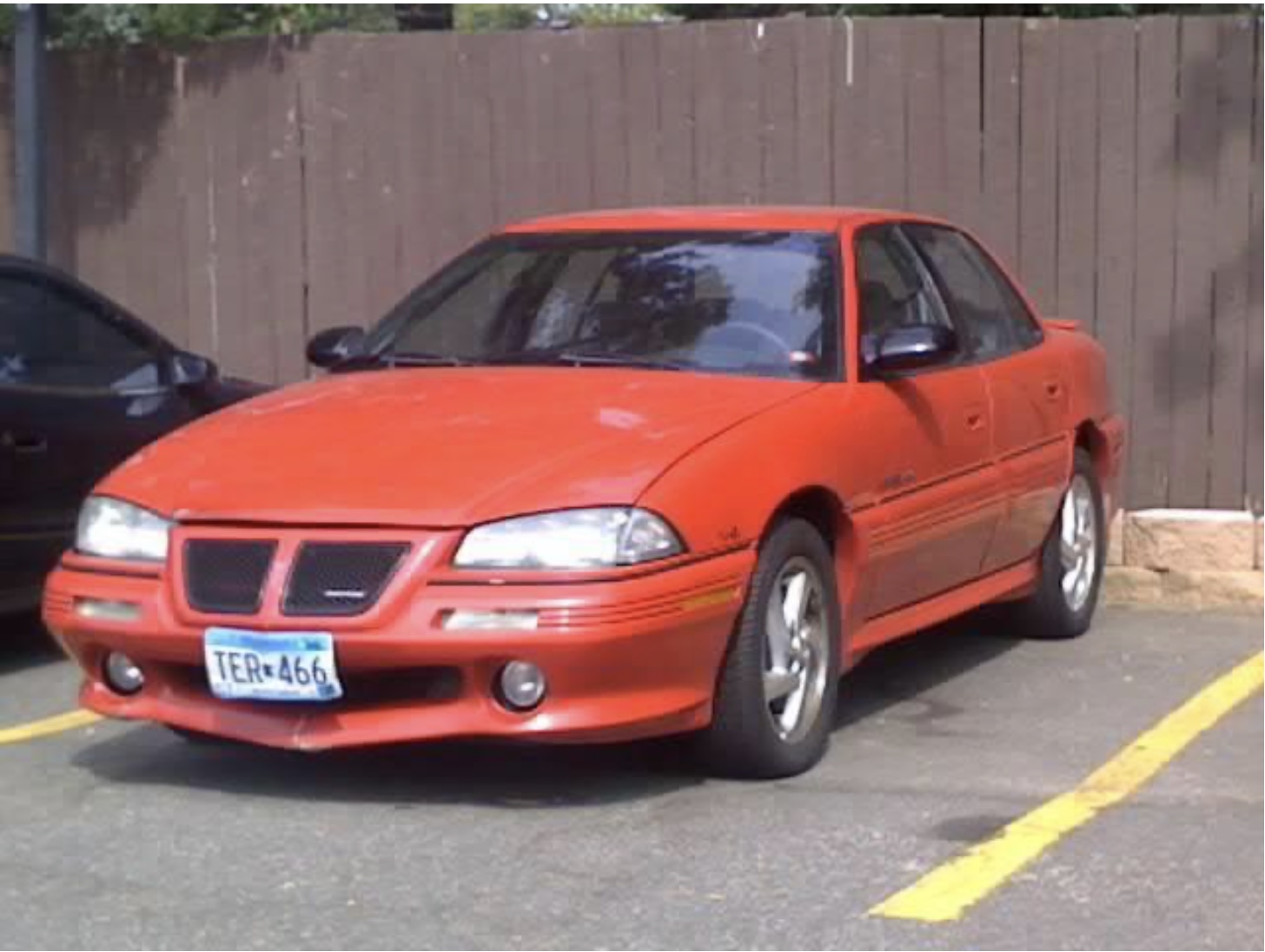
I don't know why, but this tiny red sedan has always seemed to be embedded in the depths of my childhood. Anytime I spot a car remotely similar I am warped back in time and am able to see myself near it, but more importantly, my mom driving it. My mother came to this country as an immigrant with nothing to her name. There were certain points where ends were barely just met, yet at no point since my birth has she been without a reliable source of transportation. Some may argue that the vehicle and its associated costs far outweighed the cost of taking some other form of transportation such as a bus, and they wouldn't be wrong.
The summer after my junior year of high school, I began conducting research at the University of Houston. At that po int, I did not have my driver's license, so my mother was a bit hesitant about letting me drive to the other side of town. I was determined to have this experience and left with no other options, I decided I would take a bus. I had never really used Houston's public transportation, to the point where I was shocked that there was a bus stop no farther than two blocks from my home. That entire summer I would make the almost three-hour roundtrip to campus, rain or shine. It was brutal. There were times when walking to the next stop I would get drenched by surprise rain showers. I absolutely hated it. I would watch all the cars drive by, and I would boil with envy. "That used to be me," I would think. Once summer was over and my time at the lab came to an end, nothing changed in the slightest. I didn't have an epiphany about being environmentally or economically conscious. I went straight back to driving my pickup truck, and as I would drive around the neighborhood and pass the bus stops I used to take, I thought to myself, "Geez, I am so glad that's not me".
From witnessing both my mother's troubles and mine with transportation, I began to think about what became our daily life-saver: the automobile.
How did our lives become so fixated and revolved around this mechanical contraption? Why did my mother actively choose to keep a financial liability such as a car instead of securing a little more financial freedom for her and her family? Why could I not decondition myself out of the tight grasp that the society around me had imposed on me in my disdain for public transportation? For my mother, there was in a broader sense a simple answer and then a more complex reason. The simple answer was that a car was quite literally necessary. When her red Pontiac was stolen by my uncle's teenage wife (a story for another time), she did not take it as a chance to start using Houston's notoriously lousy transportation. My mom would say, "Es que el coche es una herramienta igual que mi escoba o mi plumero, yo no puedo estar sin el", which roughly translates to "The car is a tool just like my broom or duster, I cannot be without it". For most people like my mother, the public transportation was either too terrible or in more often cases, simply unavailable. The majority of people in my community could not afford to live around the corner from where they were employed. My mother worked at a Chili's at the George Bush Intercontinental Airport. There was no method of transportation for her to get there, much less when she was opening up and expected to arrive around 4:30 am. Without the job, she would not be able to barely afford the car that took her there and vice versa. In a larger sense, however, the car was a symbol, a sign that she had somehow made it. I can still feel myself standing at the bus stop in 100-degree weather and longing to be inside the passing cars with the A/C on full blast. I had seen both sides of the situation, and there was a very clear winner.
When looking at my mom's necessity for a reliable vehicle through the larger scope of climate change, it is very obvious that the use of automobiles has had an enormous impact on global warming and air quality. Yet I can't help but feel that removing the joy from her small societal victory in the name of progress feels a bit wrong. At some point in recent times, it became a luxury to have the choice to be environmentally conscious without suffering too much for that "sacrifice". In comparison to someone who could live down the street from their investment banking position, my mom drives more than a hundred miles a day, stretching herself out to clean the maximum amount of homes all across town so she can make a reasonable profit. Even with public transportation, it would not be humanly possible to do so without her trusty tool of a car. It just really puts things into perspective for me that inequality creates necessity.
We have created a society where within our lifetimes it would be difficult to revert to a world not dependent on machinery. Similarly, it would take more than a lifetime to see any actual change corresponding to our present actions in the fight against climate change. The solution is then not to learn how to live without automobiles, but rather restructure how we use automobiles and maximize their use in transportation. Houston - a city containing about four million people - could create a massive reduction in automobile use if they increased the infrastructure of public transportation. In recent years, they have made valid efforts by creating an above-ground rail system that goes through the more trafficked parts of town. Sadly, Houston's transportation infrastructure has not been around long enough to eradicate the stereotypes and judgments associated with people who take the bus or train.