The Long History of Methane in Greeley
Greeley, Colorado. 1869-2020
Cole Petersen
When I asked my dad - who moved to Colorado in 1980 at the age of 17 - why there might be a methane site emitting nearly 44 tons of methane per hour near Greeley, he answered automatically, "Oh the Hog farms!" I was puzzled. The 1800 Histories data project lists the area around Greeley as an ultra-emitter of methane related to oil and gas. To me, this had been surprising but not altogether unfathomable. Hydraulic fracturing ('fracking') on the Colorado Front Range, and especially in Weld County where Greeley is located, has been on the rise for the past several decades. I asked my dad if he thought it might be due to the increase in oil and gas fracking, but he persisted, "Ahhhh…maybe, but I'd look at the agriculture out there. Weld County is big ag for sure."
I am from Snowmass Village up in the mountains and had only ever driven through Greeley on the way to and from swim meets in Denver. And as absurdly pretentious as it sounds, the one thing I remembered about the town was that it smelled awful. Driving on the two-lane roads next to sheep and cattle farms provided the distinct sensation of moving through a cloud of particalized feces. That opinion seems to be shared by many residents of surrounding Front Range cities and counties. Some of the students at the University of Northern Colorado in Greeley even claim that the variation in odor on a daily basis corresponds to the times when the industrial meatpacking plants are burning cow carcasses. So perhaps those odors were originating not only from oil and gas leaks, but from agriculture related methane ultra-emissions. Maybe my dad was not too far off after all.
Greeley's founding was in fact based on agriculture. Six years before Colorado entered statehood, Greeley was established as a refuge for immigrants who saw the rich agricultural land as a significant opportunity to start anew. The discovery of the sugar beet as a major source of feed for livestock paired with the conveniently well irrigated plains of Northern Colorado primed the area for agricultural advances. German-Russian immigrants who had flooded into the area while fleeing persecution and who coincidentally had familiarity with the farming techniques required for beet cultivation triggered an agricultural boom. Through the silver and gold rushes that hit Colorado in the early to mid-1900s, Greeley continued to grow and served as a major mining site due to its rich mineral deposits.
Toward the middle of the 20th century, agriculture again became the predominant source of growth for Greeley. The wealthy Monfort family relocated from Illinois, converting their small family farm into one of the largest beef producing hubs in the entire world. They accomplished this feat by moving away from traditional cattle grazing and into feeding large quantities of sugar beets to cows in feed lots. A job at the Monfort beef plant was considered quite good for the time and was one of the highest paying jobs in Greeley, attracting groups of immigrants and refugees from across the globe. It would make sense, then, that this agricultural expansion and exploitation would produce inordinate quantities of methane from industrialized livestock agriculture.
However, early mining efforts showed that Greeley was more than just a place of agricultural potential. Exploration for oil and gas showed that Greeley and the area surrounding the city known as Wattenberg Field are extremely rich in oil and natural gas. In these earlier decades, wells had been drilled outside the boundaries of cities in the Front Range. Rapid population growth in the 1970s and 1980s led to residential development into these former extraction sites. Greeley has an inordinate number of residential areas that border or overlap with these former oil and gas fields. According to state regulators, conglomerations of storage tanks, tubes, and generators sprawl everywhere in the landscape. Currently, Greeley and Weld County produce almost 90% of the oil in the state of Colorado, and 26% of natural gas. These sites leak thousands of tons of gasses, including methane, into the air. This is likely the cause of the ultra-emissions seen on satellite imagery. Indeed, a recent EPA investigation and lawsuit found that equipment problems at a natural gas refinement plant near Greeley leaked thousands of tons of volatile organic compounds which contribute to ground level ozone and huge quantities of methane.
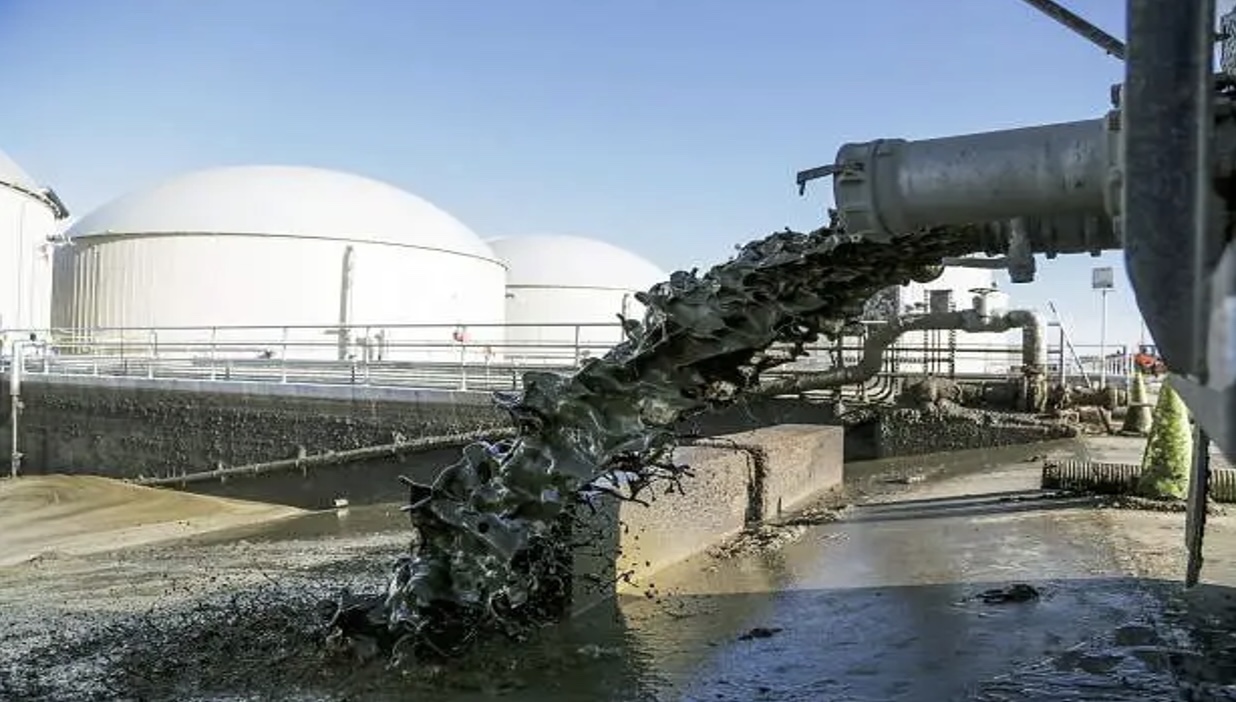
From agriculture expansion into oil and gas, Greeley has always been a source of methane emissions. Now, dealing with intense pollution problems and lawsuits from the State and Federal governments over air quality and emissions, the city has been tasked with cleaning up its act. As recently as 2016, a biogas cleanup site has attempted to combine the two histories of its city in a way that mitigates pollution and provides new jobs in renewable and clean energy. The Heartland Biogas Project attempted to reduce methane emissions from agricultural waste with a large industrial "stomach" that removed and cleaned the methane from the excessive manure produced by livestock in Greeley. The plant was shut down in 2016 because unfortunately rather than helping with the smell the process exacerbated it. Recently, however, new owners are attempting to reopen with improved processing that can simultaneously capture the 80-90% of the manure that is water and remove the organic compounds through filtration to reuse on fields for irrigation. Although the process ahead will be rocky and already faces opposition, this is a significant positive step forward in Greeley's goals to reduce methane emissions.