Memories of Childhood/Memories of Hurricanes
Maya Rosen
If I ever wrote an autobiography, the chapters could be the names of hurricanes. The table of contents would read Hurricane Wilma/Katrina (early years), Hurricane Matthew (the middle years), and Hurricane Irma (the high school years).
Hurricane Wilma/Katrina (early years)
If you were to ask me to give my life story from age zero to five, I would have little to share (except for stories told to me by my parents). Of the few that I retain, one of the more complete memories transports me back to sitting in a dark living room synchronizing the swaying of a rocking chair with the flipping on and off of a flashlight. I do not know if I understood why we were all gathered in a dark room. My parents were doing unusual things - filling up our bathtub and letting the water sit for days, not letting me open the fridge, and listening to these crackly radio broadcasts. Yet, I sat there, too young to know how to ask. It was 2005. Now, I know that it was either Hurricane Wilma or Katrina.
Hurricane Matthew (middle years)
In middle school, Hurricane Matthew caused quite a commotion. I was in eighth grade, finally finding my footing in a middle school environment. In the flow of schoolwork and having not experienced the talk of a major hurricane since I was a toddler, news of a developing storm found me unprepared. I did not know how to react to an impending hurricane. The school chatter was that this hurricane might be a "big one." After school, I parked myself in front of the TV anxiously awaiting a statement from the County Schools' Superintendent. They announced that schools were to be closed on Wednesday and Thursday - much to our middle school delight. I was ambivalent - appreciating the rest - but also confused by the emotional drain of tracking a hurricane. Thankfully, at the last minute, the trajectory changed. Wednesday brought thunder and showers, but Thursday made Matthew the hurricane that never came. The sky looked perfectly white. With neither a visible cloud nor its characteristic blue color, the sky looked like a giant bubble wrap layer that had enveloped the city and insulated it from all elements. With school still canceled, I went for a walk. The city felt eerie. Calm and quiet as I'd never seen it. The next day, I returned to school which was abuzz with the miracle of the "free" vacation day we gained. Hurricane Matthew became the subject of memes in the coming years. If only all hurricanes could be like Matthew, we joked. I think of Hurricane Matthew as the closest experience Floridian children will ever have to a snow day.
Hurricane Irma (High School)
When I think of hurricanes, I think of Irma. Irma was the first time that I acutely sensed the fear and danger of hurricanes. I watched the forecast and anxiously refreshed the NOAA website every four hours. It was also the first time I actively participated in hurricane preparations. This time, I put up shutters. The hour-long lines for gas and desolate store shelves felt more apocalyptic than the hurricane itself. With the eye of the hurricane approaching, we were locked down. We had aimed to make our home a fortress. We prayed that the sandbags at the door would prevent water from seeping in and that wood panels would shield us from the wind. I sat in my room doodling by flashlight and watching our analog clock change numbers. When the storm finally passed, it was time to assess the damage.
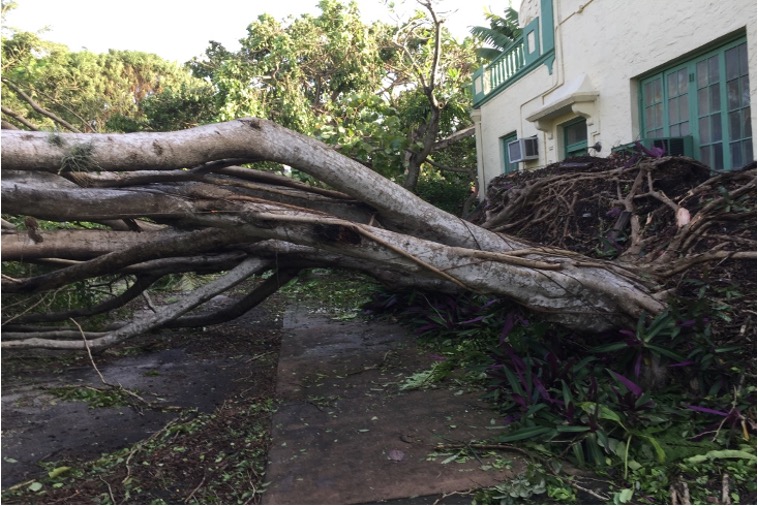
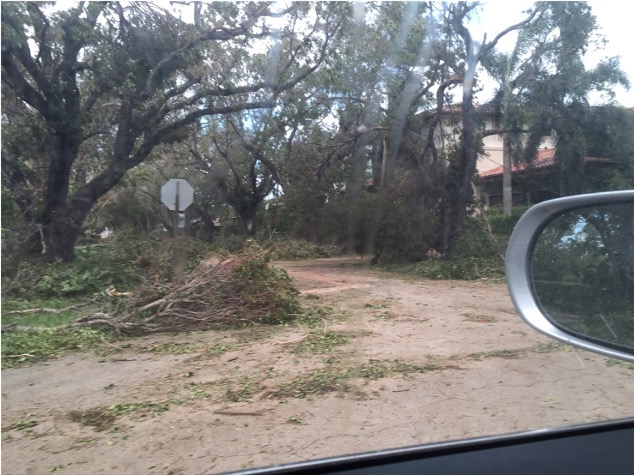
What people often fail to realize is that the worst part of the hurricane is after the storm. Like with Hurricane Matthew, I was startled by the creepy calm, but, this time, I was also stunned by the silent destruction. Trees fell without anyone to bear witness. Streets were empty yet full of debris. Now, I can only think to liken the feeling of driving around my neighborhood after Irma to walking through an empty downtown Manhattan during the early stages of Covid-19. I recognized the places, but everything looked and felt like an artistic reproduction of the city in an alternate reality. It took many weeks for power to be restored and many months for all the debris to be cleared. My high school suffered. Irma washed away the field and flooded various buildings. I remember sitting in one of the few open stores - a bookstore cafe - where my family had camped out for air conditioning while reading the news of my school's new academic plan. For the rest of my high school experience, learning would take place in portable classrooms, and midterms were canceled. Irma created a new academic normal.
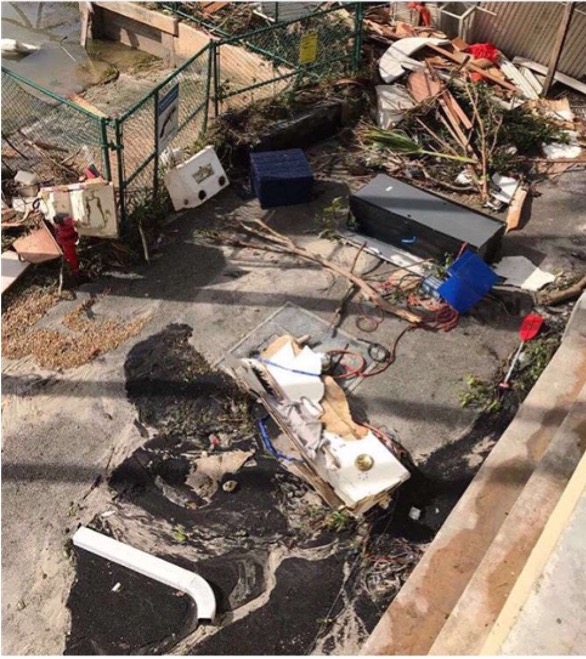
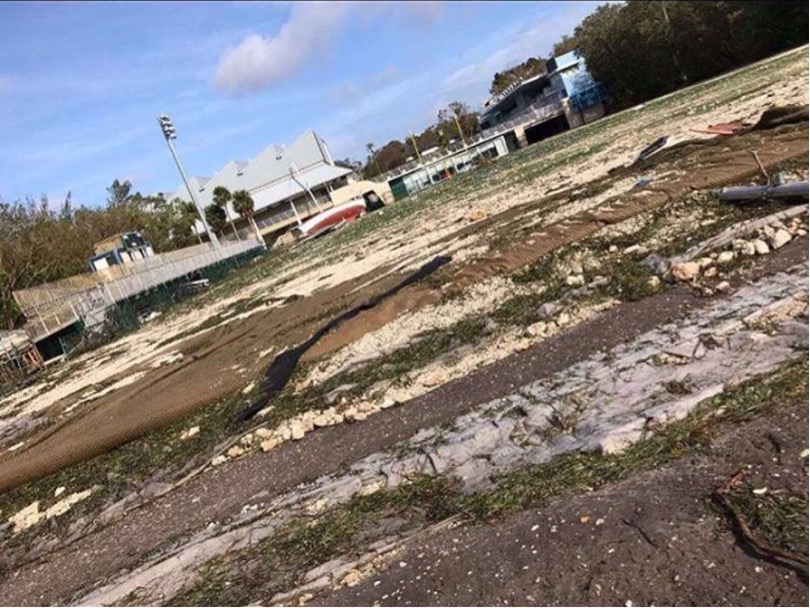
Luckily, my home and family have experienced minimal harm from hurricanes. At the same time, I think that anyone who grows up in a hurricane zone is inevitably shaped by these disasters. I assume that I retain one of my earliest memories from a hurricane because of its slightly traumatic element. The memory is coated with fear but also emotional paralysis. I was unable to question why I was scared. The presence of hurricanes in my memories highlights that it is easier to remember highly unusual or scary things, even if they are more fear-inducing in threat. Hurricanes are not just day-long climactic events. The cone may move away but the physical and psychological destruction lingers.