From the Swamp Land Act of 1850 to Today
Maya Rosen
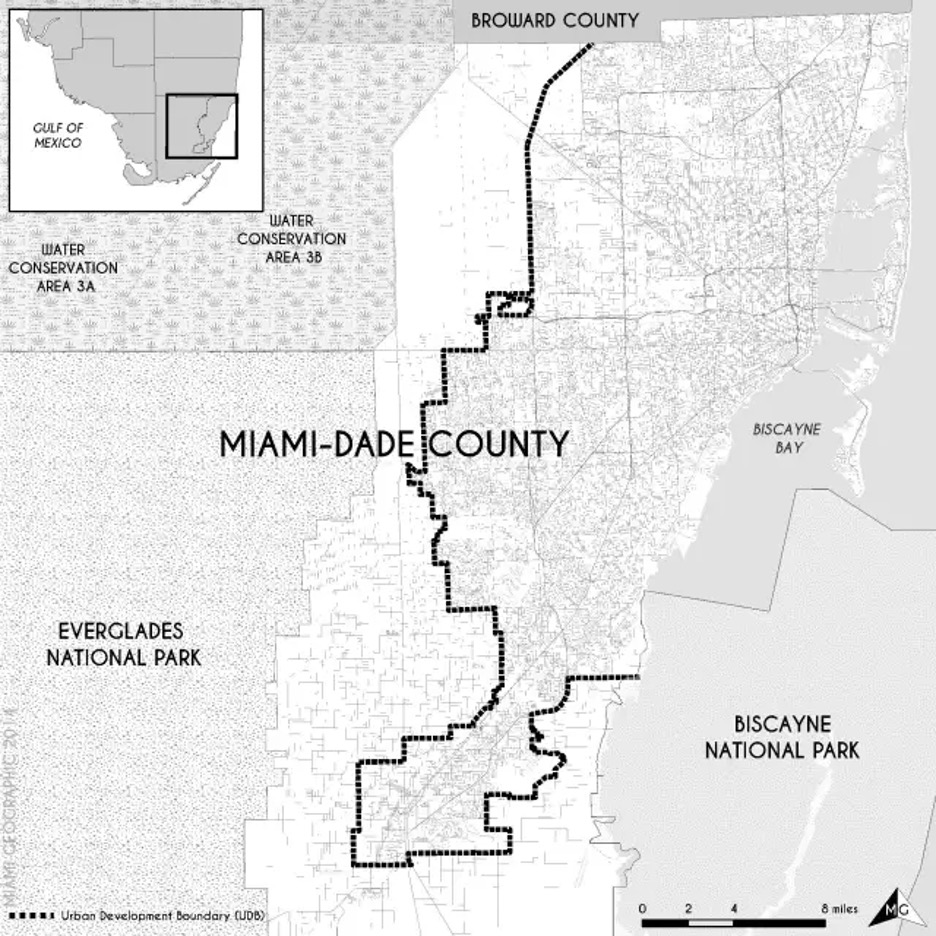
From the beginning of Florida's statehood, its success depended upon conquering and harnessing the land of the greatest swamp. Florida became a state in 1845. However, early Floridian settlers quickly realized that if the state was to have any viability and economic prosperity, its natural environment would need to be controlled. Luckily for Florida and various other Southern states with similar geographical challenges, the federal government would provide a legal pathway for development. Passed by Congress in 1850, the Swamp Land Act ruled that lands "wet and unfit for cultivation" (i.e. wetlands) belonged to the state government. The Swamp Land Act importantly decided that although much of the acreage of the marshlands was underwater for a portion of the year, the government could claim ownership over the "land."
As a result of the passage of the Swamp Land Act, Florida went from a 15-million-acre state to a 35-million-acre state. That is to say, the majority of the state's land today could not have been developed without this law. The entirety of Southern and Central Florida (Orlando down) was deemed apt for statehood and made viable for agricultural and real estate development. Through this law, the U.S. government granted Florida and its real-estate, agricultural, and business tycoons of the coming decades the green light to turn "rivers of grass" into urban and agricultural projects.
Soon after its passage, developers began to literally "drain the swamp." Thousands of miles of levees and canals were constructed to turn wetlands into livable land. The process of infrastructural drainage would take many years. Over the course of the 20th century, hundreds of miles of drainage canals were built to connect the "swamp" middle part of the state with the Atlantic Ocean and the Gulf of Mexico. Today, this drainage system transports 1.7 billion gallons of water into the Atlantic Ocean daily.
As the land drained, construction began. In the 1940s, the U.S. Army Corps of Engineers took on enormous infrastructural projects. The creation of roads, bridges, and urban areas were eagerly funded by tax dollars, and developers filled these areas in with equally profitable real estate and commercial projects. Following techniques employed by the US Army service in Latin America, explosive and tractors razed entire mangrove forests and coral areas. Any marshland that could become an economically profitable project was developed, especially areas that could become highly desirable waterfront property. Every acre turned from a challenge into an opportunity, and the people followed. The sixty-year period between 1936 and 1995 saw a population increase of 12 million people and a sixfold increase in land use at the cost of a 50% reduction in swampland area. Without the Swamp Land Act of 1850, Florida would not be able to be the third most populous state in America today.
However, as Robert Gramling puts it, "the growth was not sustainable." The areas that were developed under the Swamp Land Act remain some of the most at-risk places for flooding in the United States. In terms of the impacts on the natural ecosystem, the development was tragic. It extinguished a one-of-a-kind natural ecosystem with millions of native plant and animal species. Florida's wetlands have seen a 50 percent reduction in size since 1850. What remains - 1.5 million acres of the original 3 million acres of wetlands - is protected by the Everglades National Park, luckily.
The Swamp Land Act story is most notably one of greed. The land was not made livable for survival purposes but for expansion purposes. Eager to turn a profit on the natural beauty of the sun and water of the state, there was a need for more space to do so. More beachfront property could only be built if there was more space to be lived on by the sea.
In 2022, The Swamp Land Act is not an obscure law from the 1800s but one that is relevant to legislation contemporarily being passed by the Miami-Dade County Commission. In November of 2022, the commission overrode a veto from the mayor to expand the Urban Development Boundary, colloquially known as the UBD. The expansion of the UBD came after years of lobbying from developers who plan to build warehouses on the newly available land.
The Urban Development Boundary was established in the 1970s by county officials to counter "unchecked development" (allowed by the Swamp Land Act). The UBD contains 269,000 acres bounding two National Parks - the Everglades to the West and Biscayne National Park (marine national park) to the East – and protects land that is essential to Miami's ground water sources. In 2012, the EPA issued an assessment of the UBD where it explained the UDB"s importance to the preservation of unique Everglades species, Miami's water sources, and air quality. Expanding the UDB will increase the miles travelled by car and water usage. The UDB is one of the last remaining intact climate-saving government policies. However, its expansion demonstrates once again that political actions have chosen the side of economic growth and development. After the reversal, the mayor of Miami-Dade County, Daniella Levine-Cava echoed the EPA report when she said said "moving the (UDB) without a proven need to do so threatens all the work we have already done to build a… more resilient Miami-Dade" and sets a "a dangerous precedent to allow irresponsible development in the areas most at risk for flooding and sea level rise." There is no legal precedent. All that is preventing development is an agreement dating to the 1970s when county commissioners decided to implement an Urban Development boundary to prevent development from encroaching further on "highly sensitive land." By highly sensitive, as Mayor Levine Cava noted, the commission meant land that is prone to flooding. The 380 acres that were approved for expansion are in "coastal high hazard zones" meaning areas most prone to flooding from storm surges as hurricanes worsen and sea levels rise.
The recent expansion of the Urban Development Boundary reframes the Swamp Land Act. Although the 1850 bill has been absent from news coverage of the UDB expansion, it is just another step in the long history of the Swamp Land Act. Although the Swamp Land Act may be invisible in the story, the flooding will be very visible.
Today, Florida is recognizable as a rapidly growing state and as famous for its sun and beaches. However, the areas that have come to be the picture of Florida - urban land by the beach - are predicated on government-sponsored environmental change. Government officials have paved the way for immediate economic growth over safeguarding future natural environment. It was done in 1850 with the Swamp Land Act and the decision was made again in 2022 with the UDB expansion.