Mélanie Lamotte
By Flesh and Toil: How Sex, Race, and Labor Shaped the Early French Empire
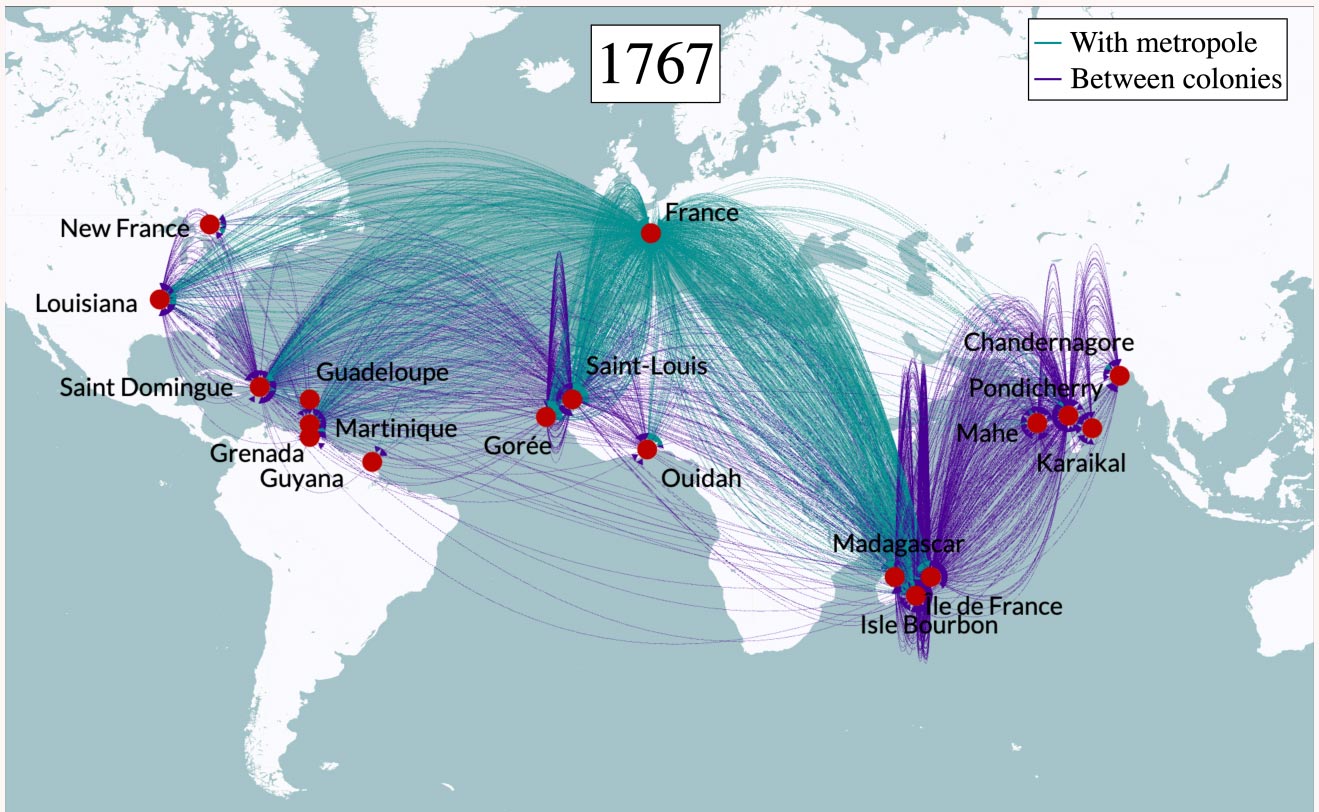 Mélanie Lamotte's paper shows how an increasingly cohesive legal culture came to govern the lives of enslaved and free people of African, Malagasy, South Asian, and Native American descent in the early French Empire. The talk will highlight the important role played by these populations in the making and unmaking of the French empire, from Louisiana to Guadeloupe, Senegambia, Madagascar, Isle Bourbon, and India. Through their sexuality and their labor, along with their socio-economic and political endeavors, they played a critical role in building the empire and setting its limits. As they sought justice for themselves, strove to protect their kin, and aimed to improve their social conditions, these individuals also pushed against the advancement of white dominion in unexpected ways.
Mélanie Lamotte is a tenure-track Assistant Professor of History at Duke University. She received her PhD in History from the University of Cambridge, and was subsequently a fellow in the Andrew W. Mellon Program at Stanford University. She is a historian of race, colonialism, and slavery in the early modern period. Her work focuses on the French colonial world, with an emphasis on Guadeloupe and Martinique in the Caribbean, French Louisiana, Senegal, and Isle Bourbon, in the southwestern Indian Ocean.
This seminar took place on Wednesday 11 March 2026, 12.00 EDT
Harvard University, Lee Gathering Room, CGIS S-030, 1730 Cambridge Street