
Del Rey, California
Only one of the 1,796 sites of ultra methane emissions is recorded on the west coast of the United States. The event, observed by the TROPOMI instrument on the Sentinel-5 satellite on September 21 2020, took place in Del Rey, California, an unincorporated community of some 1,500 people in Fresno County. The town of Del Rey, seemingly isolated from the rest of the world, is connected in the large history of climate change to the Permian Basin, the Ghazipur Landfill in Delhi, the Trona mines in Sweetwater County, Wyoming, and the Bowen Basin in Australia.
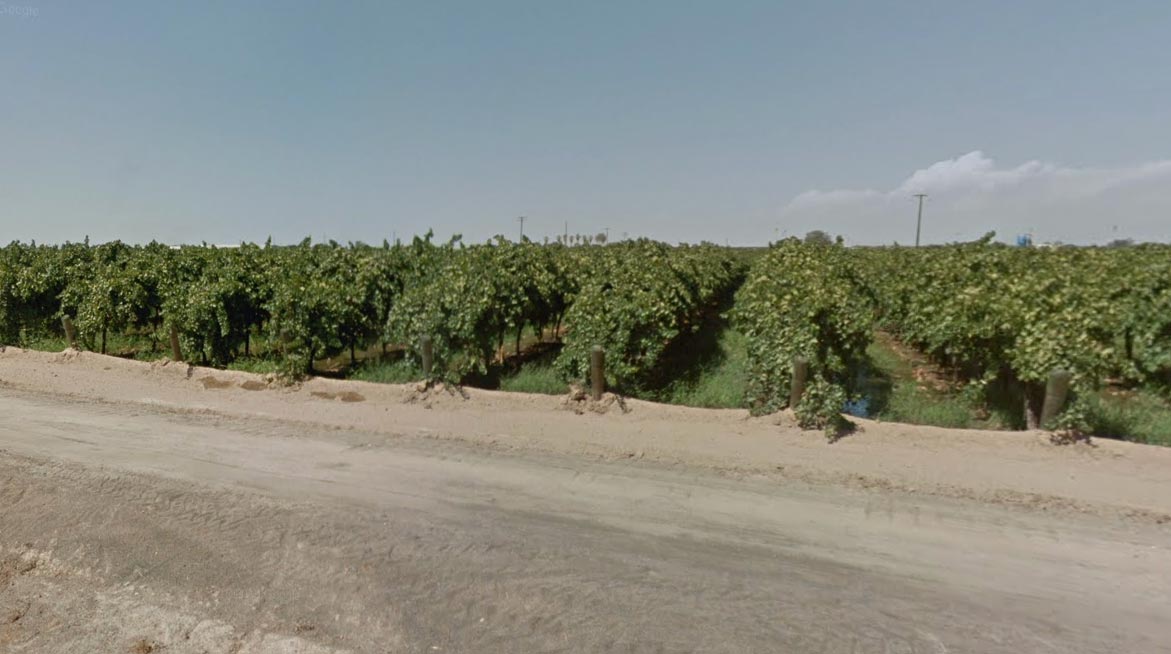
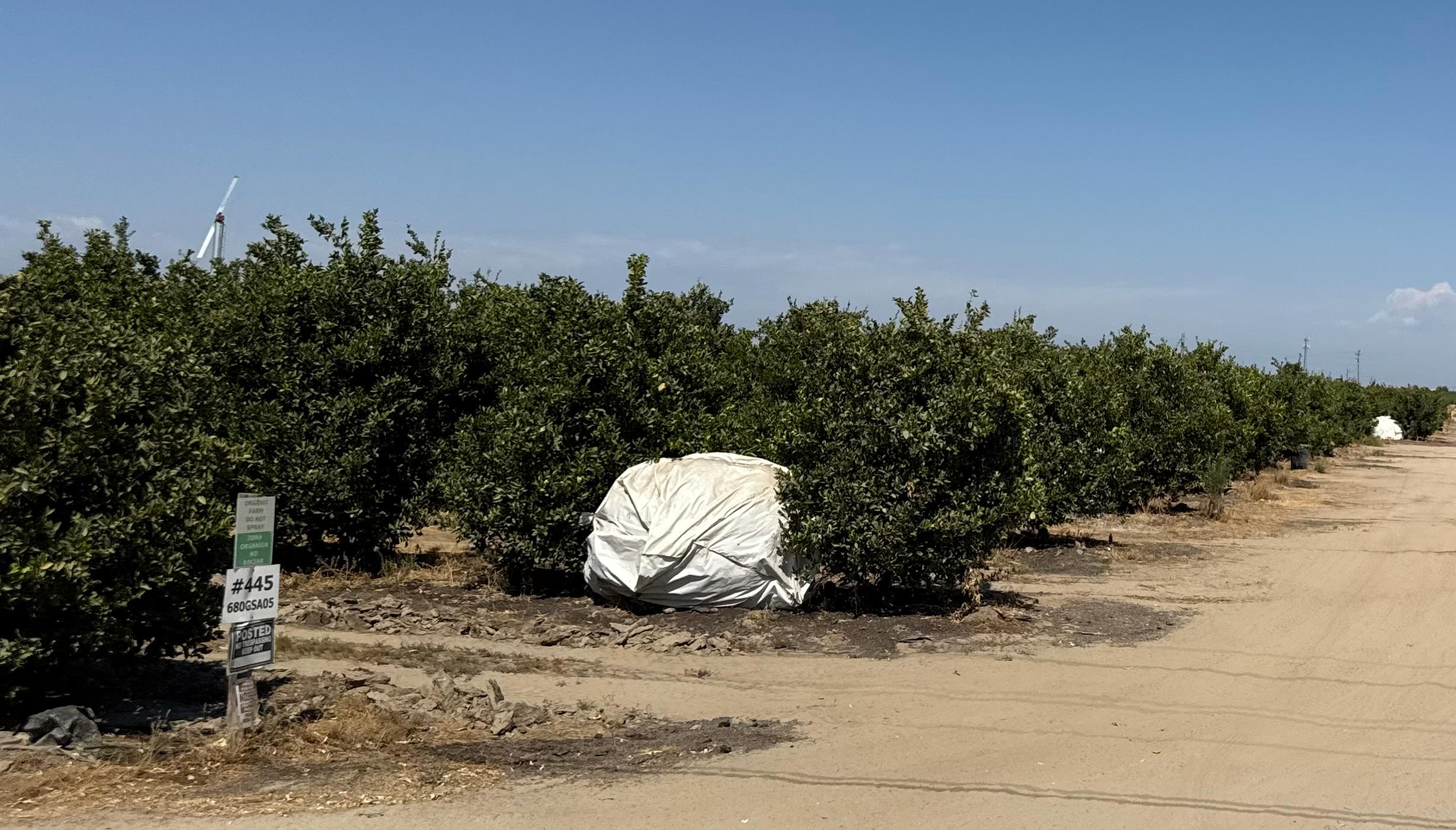 I set out, in the summer of 2025, to drive to Del Rey to investigate the different possibilities which might explain such a large methane event. The most likely site of the event is in the middle of agricultural land. Driving past {36.66, -119.61}, one would notice nothing remarkable, and the citrus orchard that currently occupies the spot is apparently almost identical to those throughout the central valley. The nearest landmark is the Pom Wonderful pomegranate processing facility, at36.66, -119.59. Within the 15km radius circle that denotes the area in which the methane event took place, there are streets, more fields, and, beyond Del Rey, a natural gas power plant in Sanger, CA, at {36.68, -119.55} as well as a natural gas transmission pipeline, whose closest point to the emission site is located at {36.68, -119.61}.
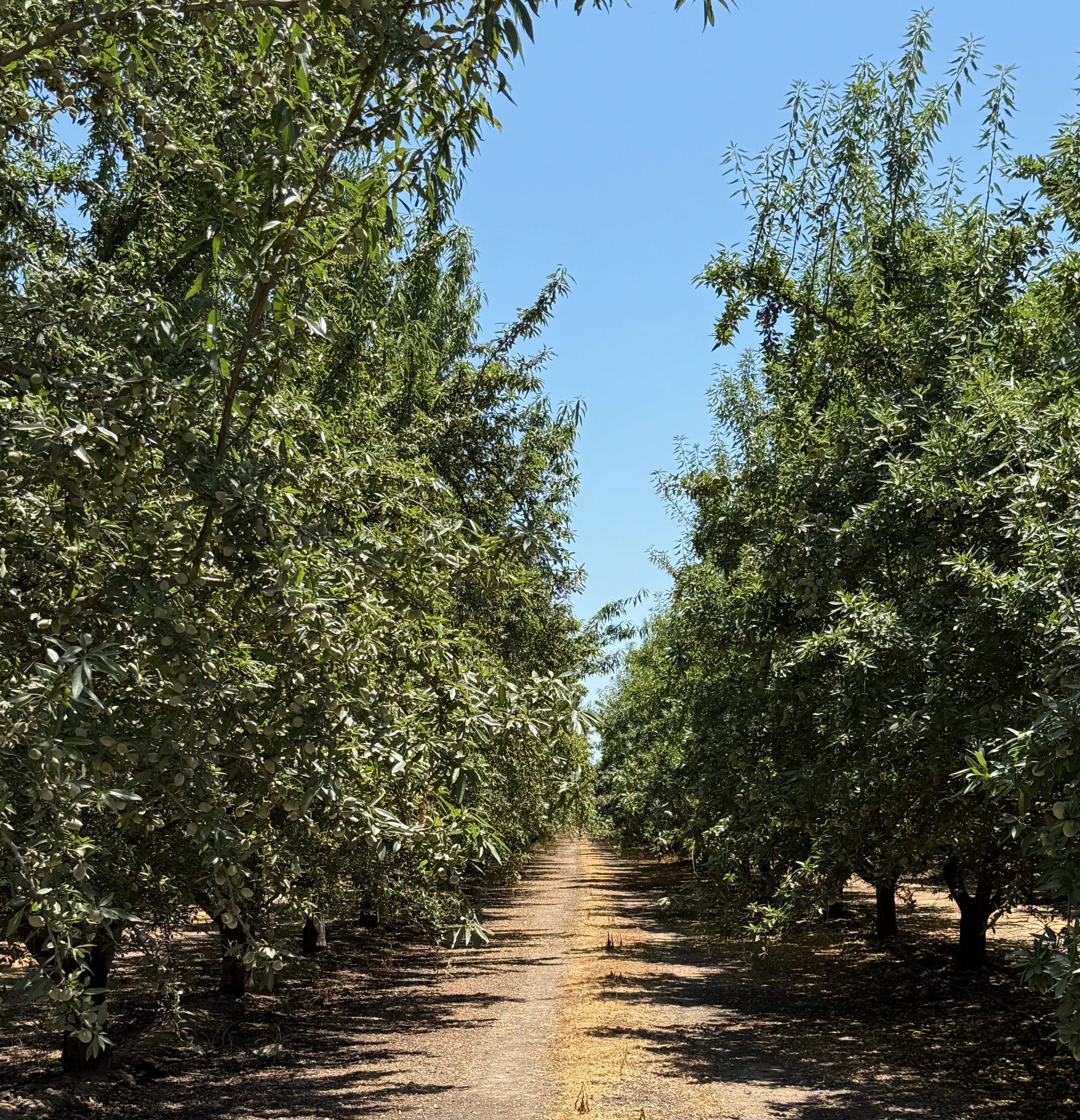
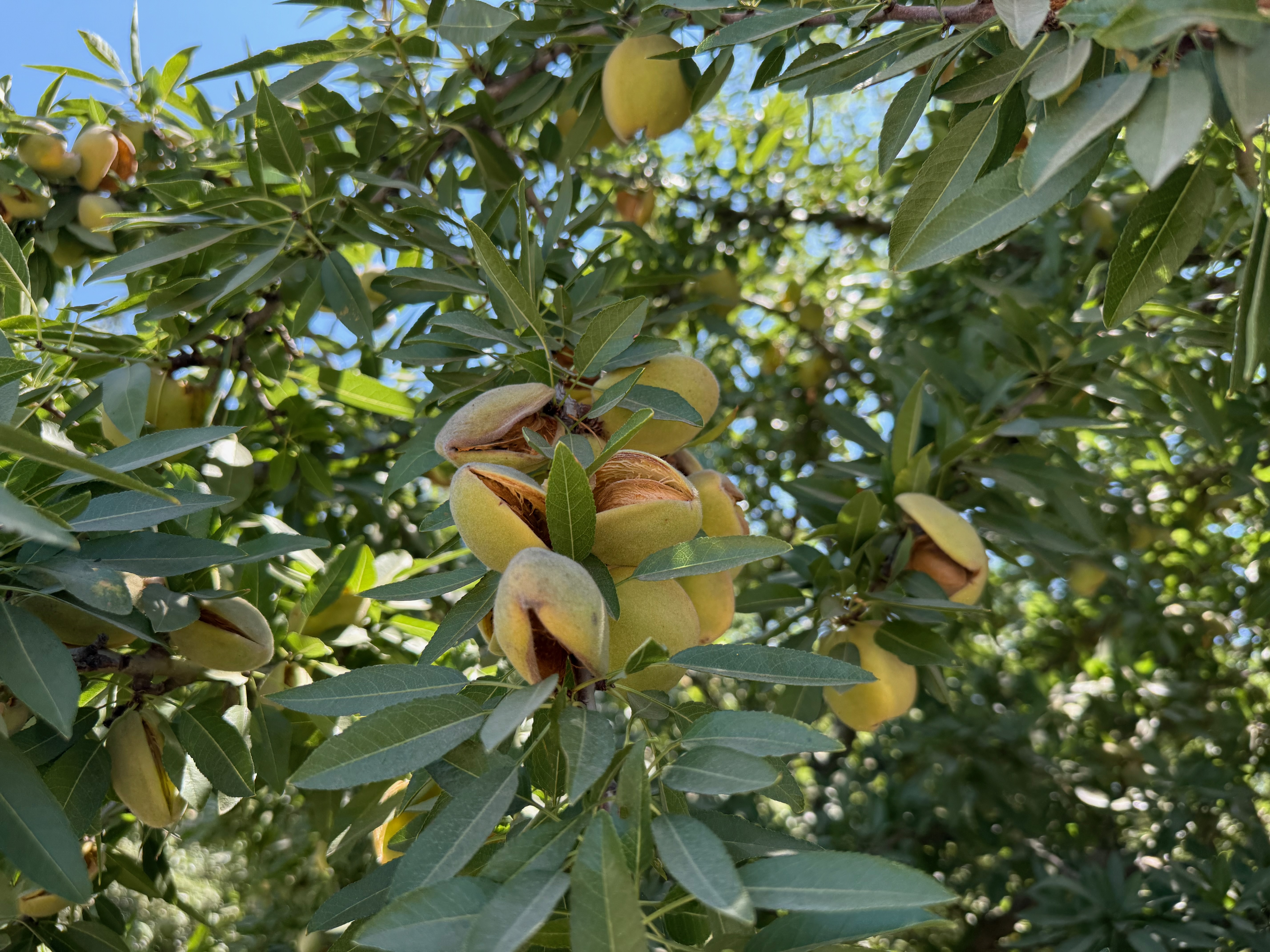
Del Rey itself is a community with its own history, challenges and hopes. With a population of around 1,500 residents, 89% identifying themselves as Hispanic, the town has a median household income of $57,000 and a poverty rate of 24.8%. These numbers are worse than the median for Fresno County, home to over 1,000,000 people and with an economy centered on agriculture. Agriculture is a major component of both the economy and the culture. With 1.88 million acres of fields generating $8.54 billion in commercial value, agriculture supports 20% of jobs in the county. Driving from downtown Fresno to Del Rey in the summer of 2025, I encountered a wide variety of commercial crops: almonds, persimmons and citrus, among others.
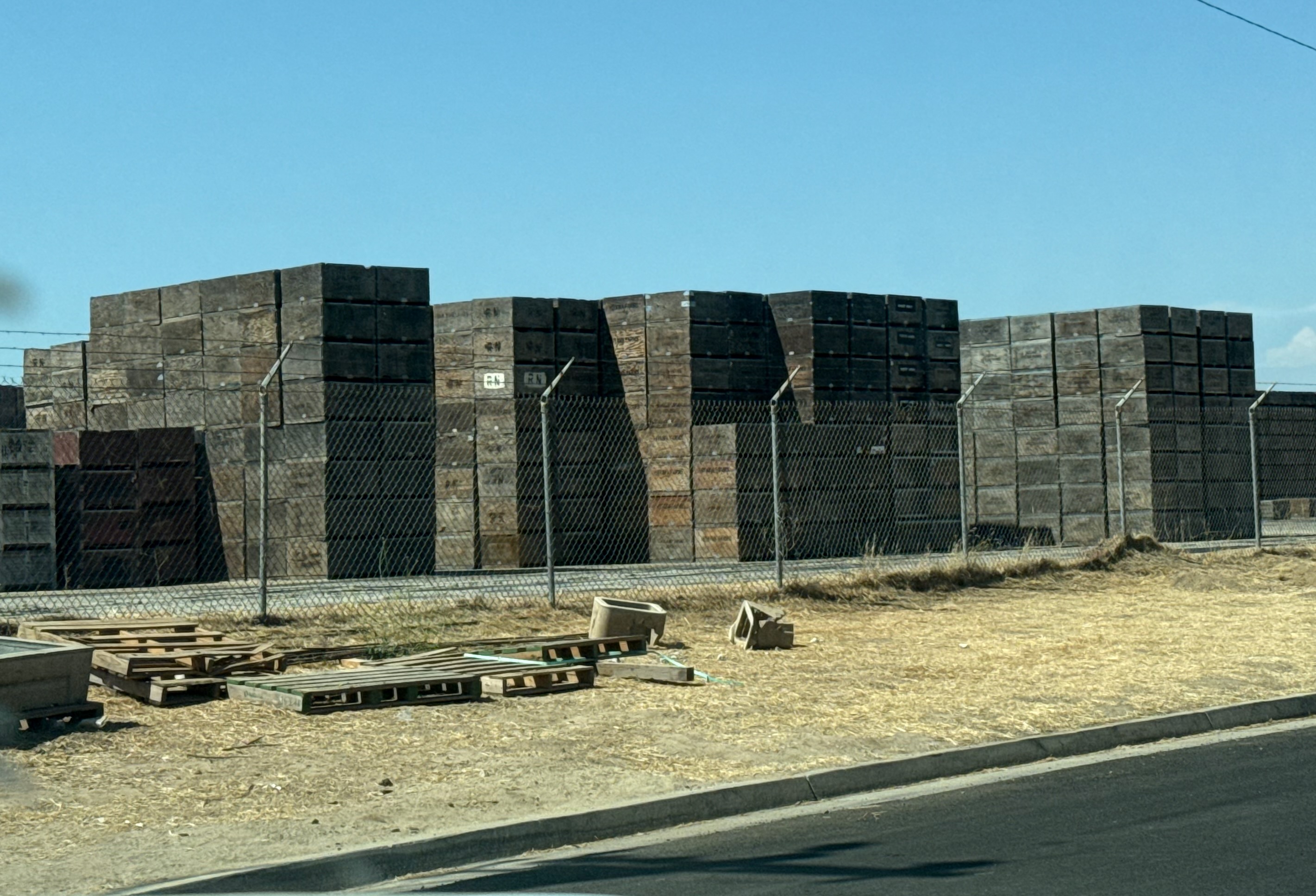
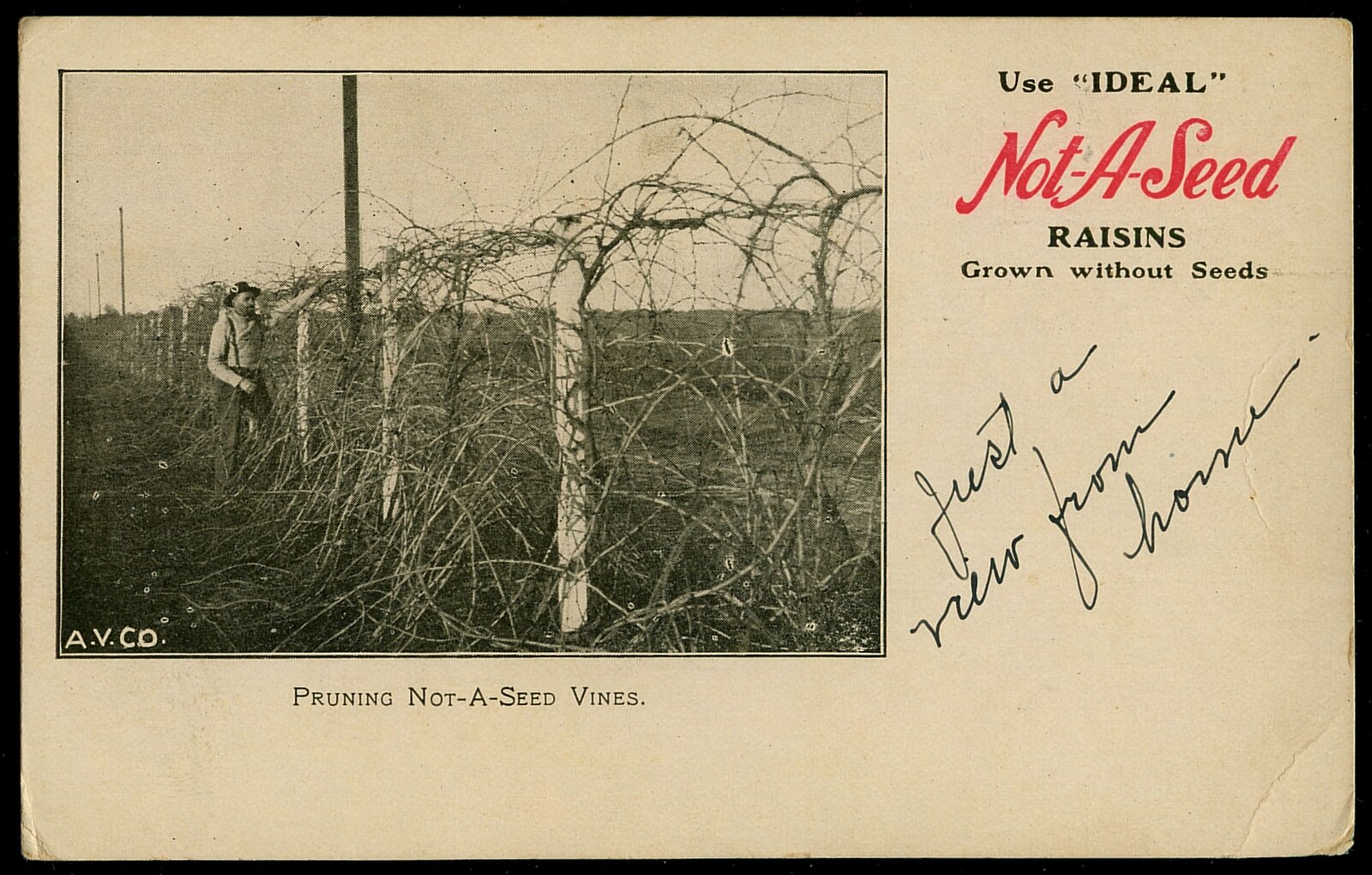
For a small community, Del Rey carries a rich history. Renamed from Clifton to Del Rey in 1898, the town's location along the Santa Fe Railroad established it as a prime location for the raisin industry and raisin packing houses. While today only two raisin packing houses remain in operation, the industry thrived in Del Rey and was even the inspiration for a professional baseball team in the 1920s, The Ideals. (The name of the team, who played in the Raisin Belt League, originated from the "Ideal Not-a-Seed" variety of raisins grown by the now-defunct American Seedless Raisin Company.) Local people I spoke to, who have lived in Del Rey since the 1950s, remember the town having more than 6 independent raisin packing houses. Work in the industry was attractive to a wide variety of migrants, creating a multiethnic town that included Danish, Japanese, and Armenian nationals. The railroad helped facilitate the growth of the town, and while maps indicate that the railroad remained active until the 1980s, satellite imagery indicates that by the early 2000s, the railroad was out of service. The same locals noted that the town began to experience economic difficulties when many of the packing houses closed during the late 1990s and early 2000s.
Like many places in the San Joaquin Valley, Del Rey struggles with water contamination caused by 1,2,3-trichloropropane (TCP). Historically, TCP was a byproduct found in soil fumigants used between the 1940s and the 1980s, with nearly 20% of wells in the valley detecting levels of TCP. One long-time resident we spoke with shared that they lost their mother to cancer at age 49, and that in the 1960s and 1970s, eight individuals living on their block had some form of cancer.
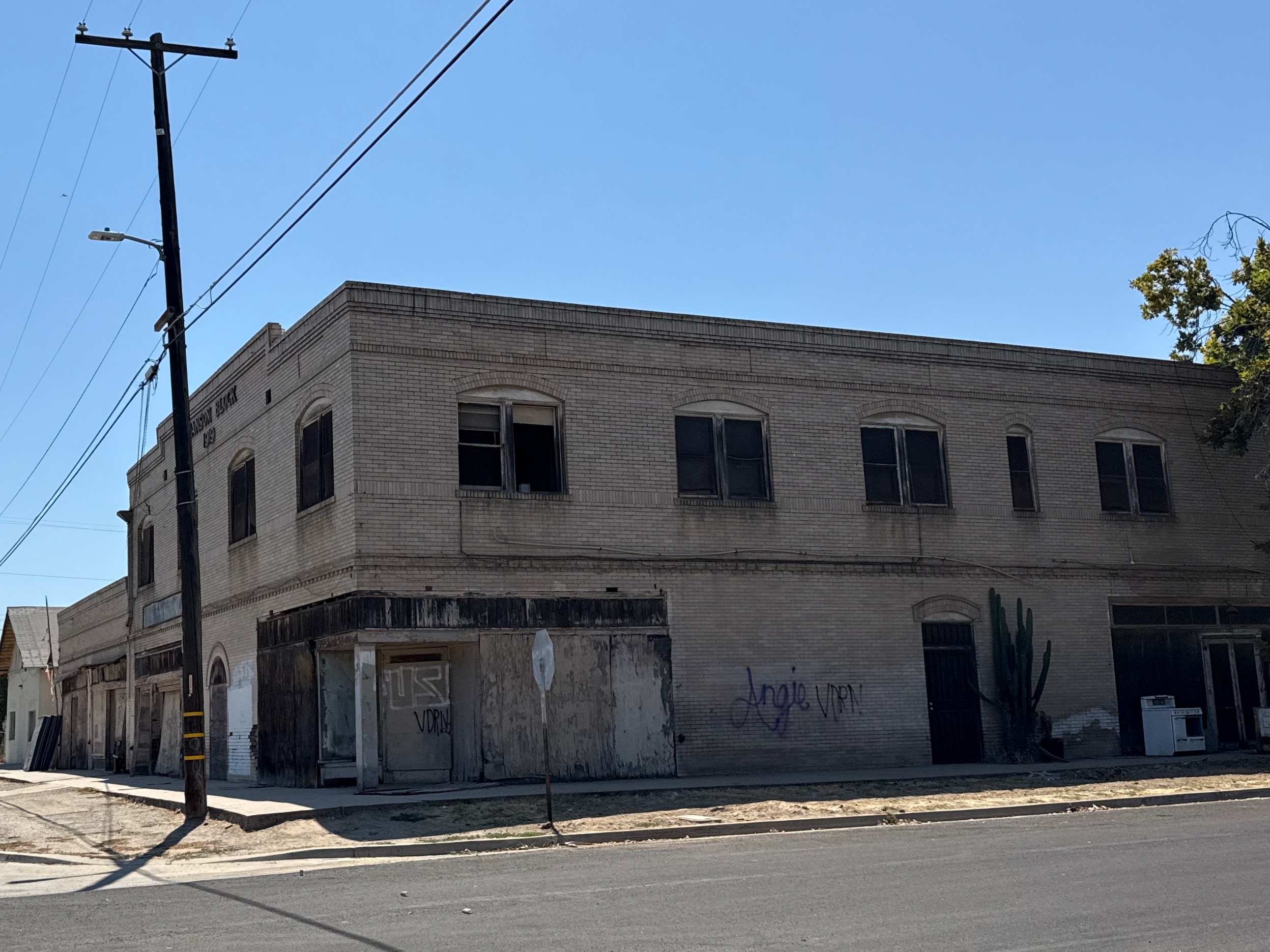
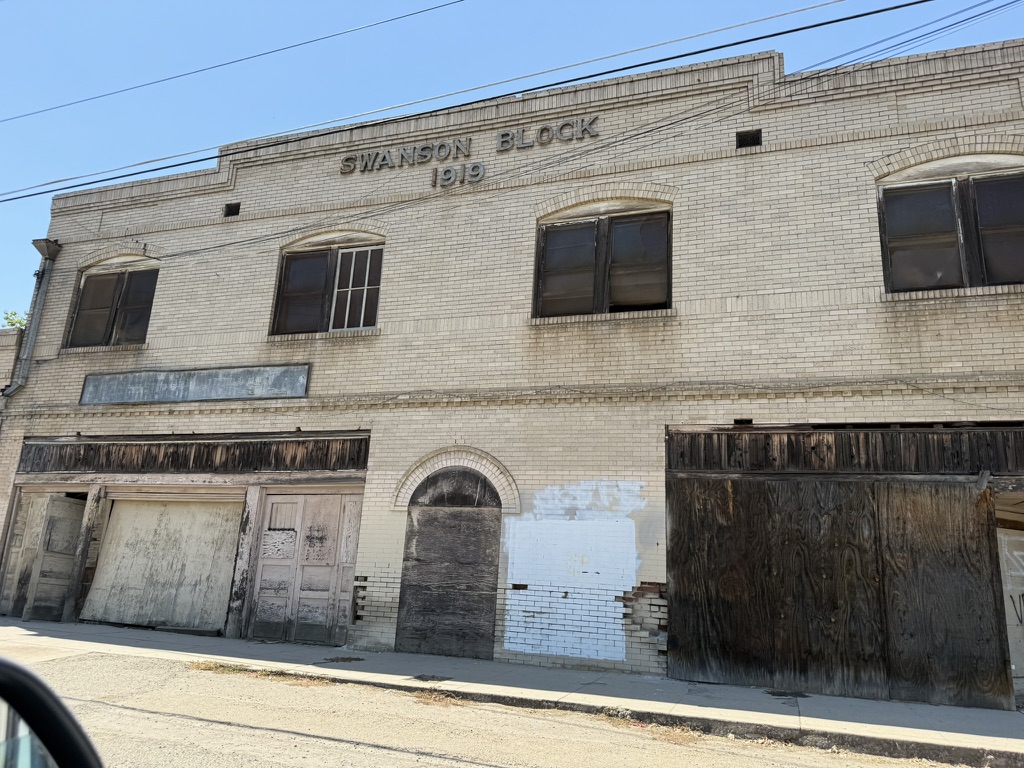
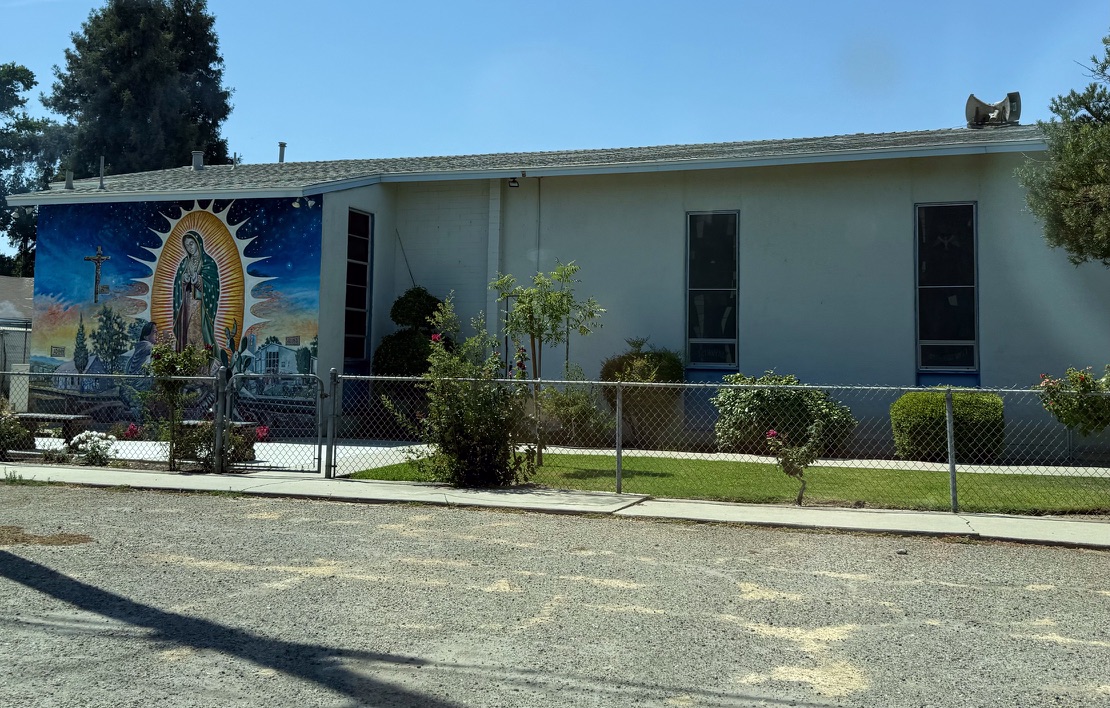
Agriculture played an important role in connecting Del Rey to the Chicano rights movement during the 1960s and 1970s. Del Rey was the headquarters of El Teatro Campesino, the entertainment wing of the United Farm Workers. According to Juan Esparza Loera, the opinion editor and longtime reporter for the Fresno Bee, the group would entertain and perform songs and dances, boosting the morale of striking workers. During this period, Antonio Bernal, one of the most well-known Chicano activists who also performed in the troupe, created the first Chicano mural in Del Rey. It was composed of two painted plywood boards and hung on the outside of El Teatro Campesino's headquarters in the now abandoned Swanson building. One panel depicted historical indigenous peoples wearing Aztec dress, and the other depicted numerous 19th and 20th century figures, including Cesar Chavez, Dolores Huerta, Reies López Tijerina, Malcom X, and Martin Luther King.
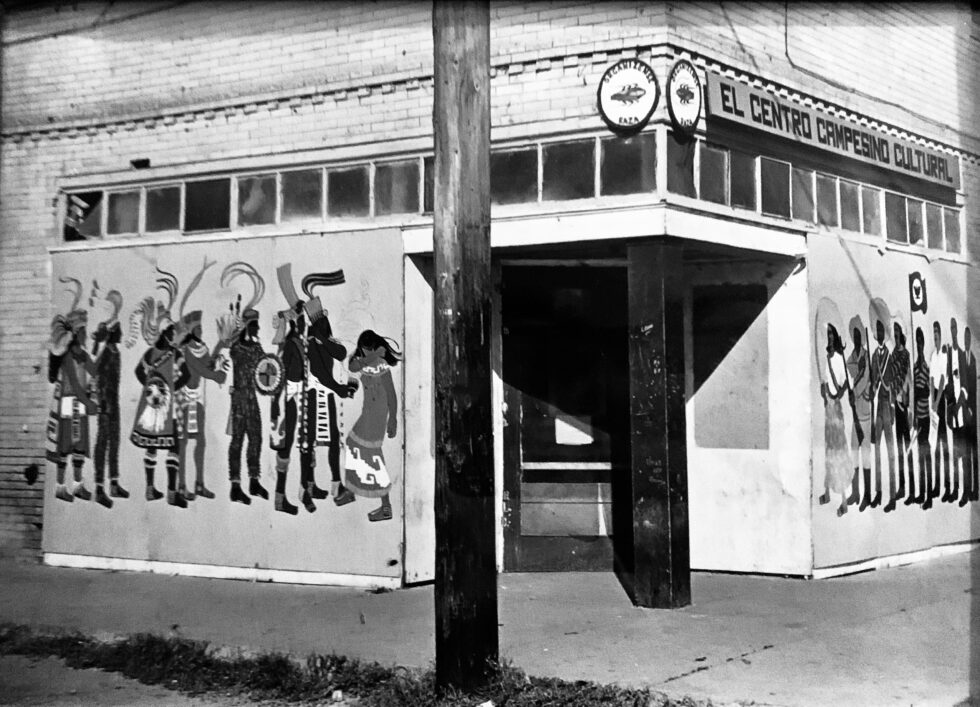
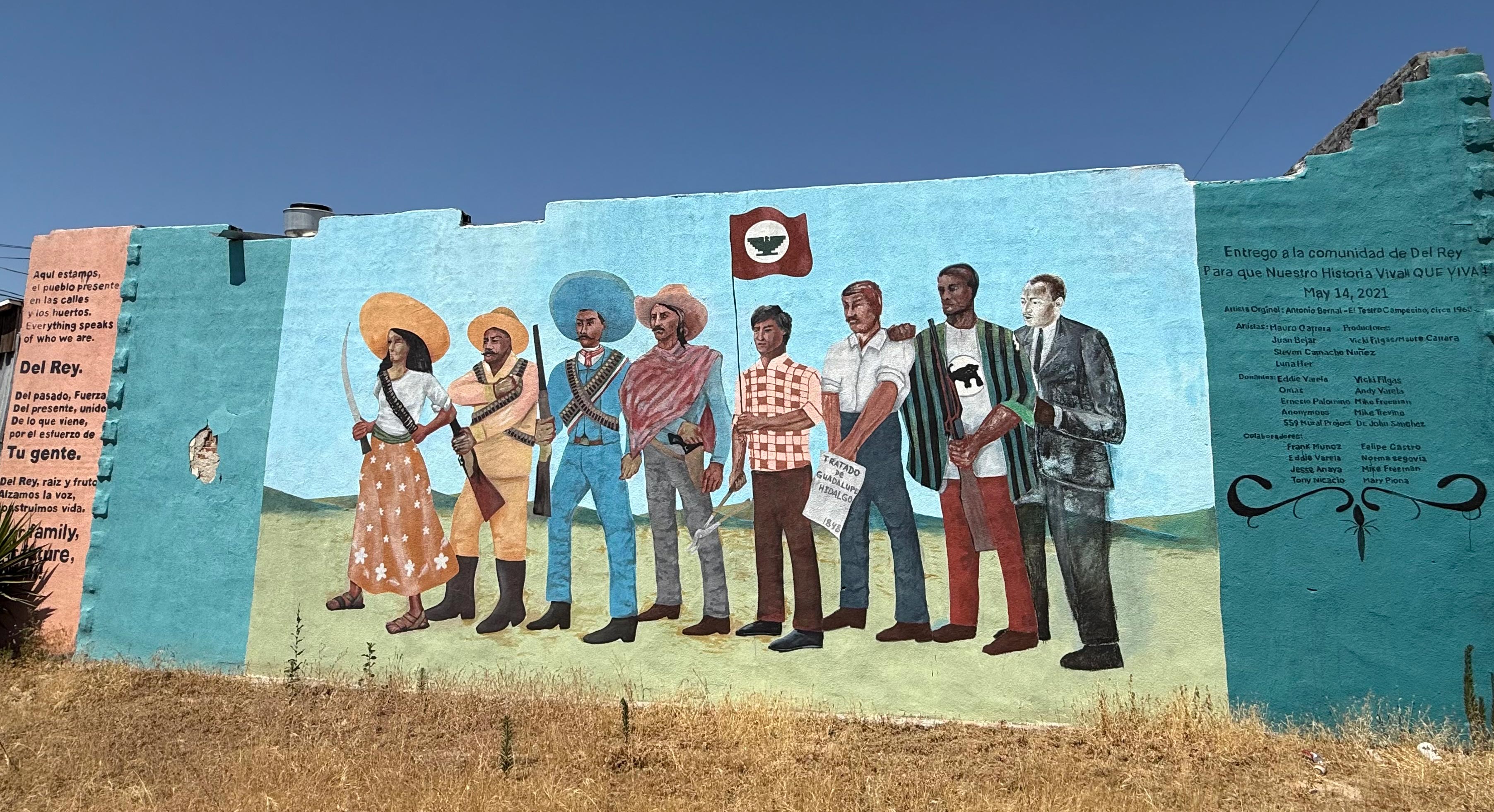
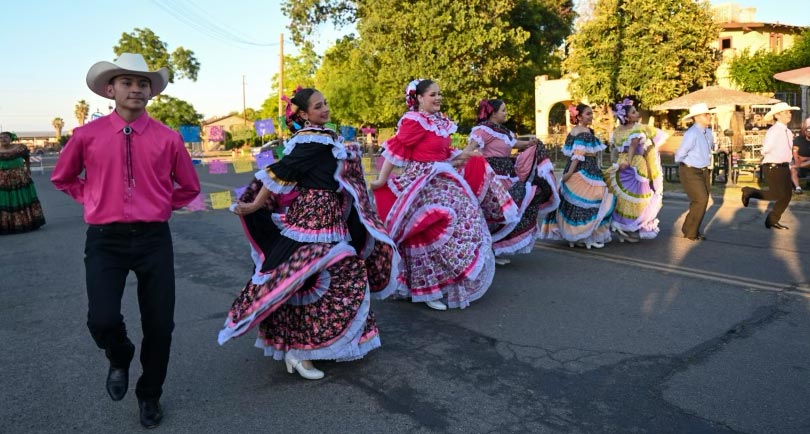
Although the original plywood no longer hangs on the exterior of the Swanson building, local community members united in 2021 to recreate the mural. Vickie Trevino, one of the leaders of the project, whose family has lived in Del Rey since 1951, fondly recalls the original plywood from her childhood when her father was the town constable. Trevino fundraised and mobilized volunteers, creating a beautification process that included recreating the panel honoring the civil rights activists of the 1960s, hosting a community celebration attended by the original artist, Antonio Bernal.
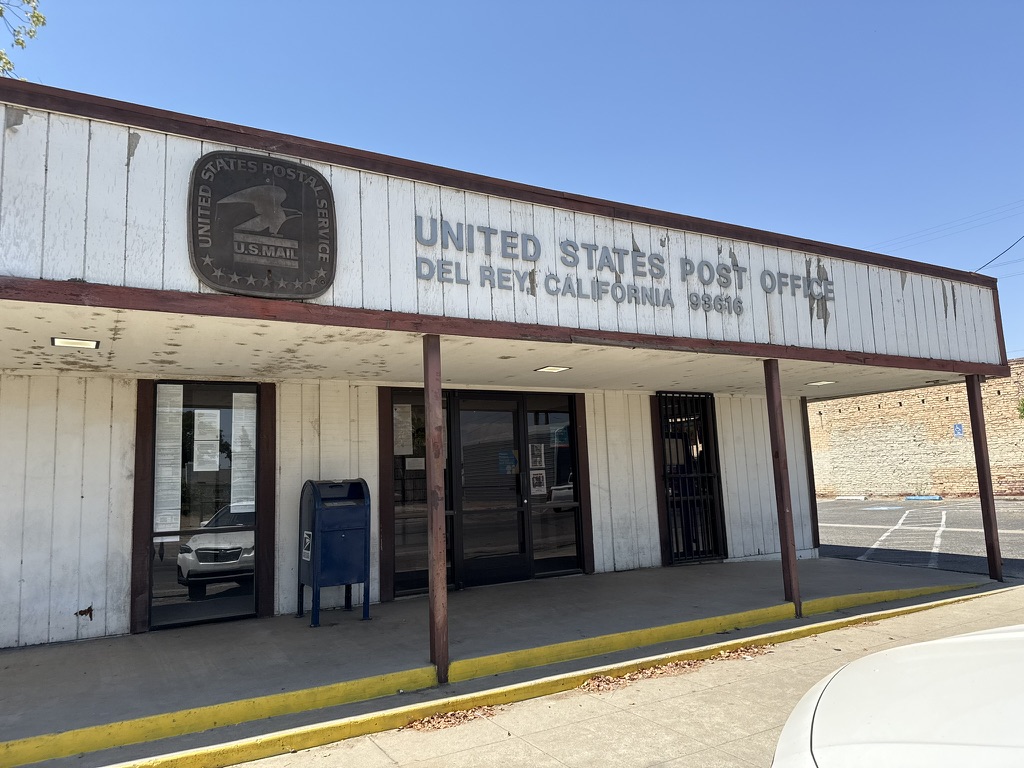
The historical significance of Del Rey is not immediately apparent when you visit the town today. Del Rey's businesses consist of two convenience stores and a flower shop, in contrast to local memory of a more vibrant downtown. The town's population has remained much the same, but it used to include a theater, a pharmacy, a grocery store, cafes, a restaurant, a gas station, and a hardware store. Numerous interviewees remembered when the flower shop building used to be a Bank of America, and some attributed its closure to a lack of law enforcement presence in the town. The Swanson building, in addition to once headquartering El Teatro Campesino, used to offer rooms to rent on the second floor as a hostel. The building is now condemned, but residents recall when the building was occupied by Cesar Chavez and other farmworkers.
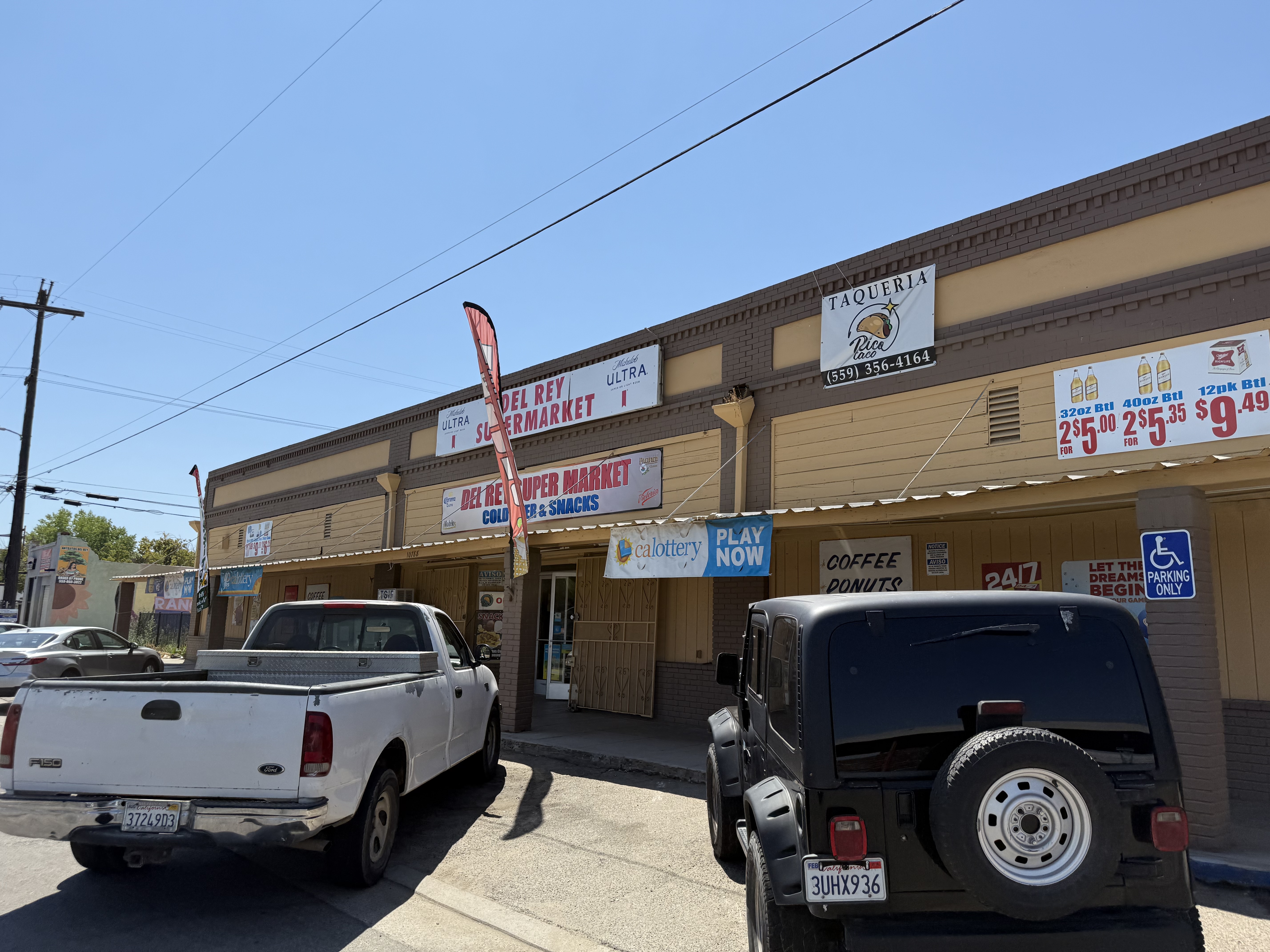
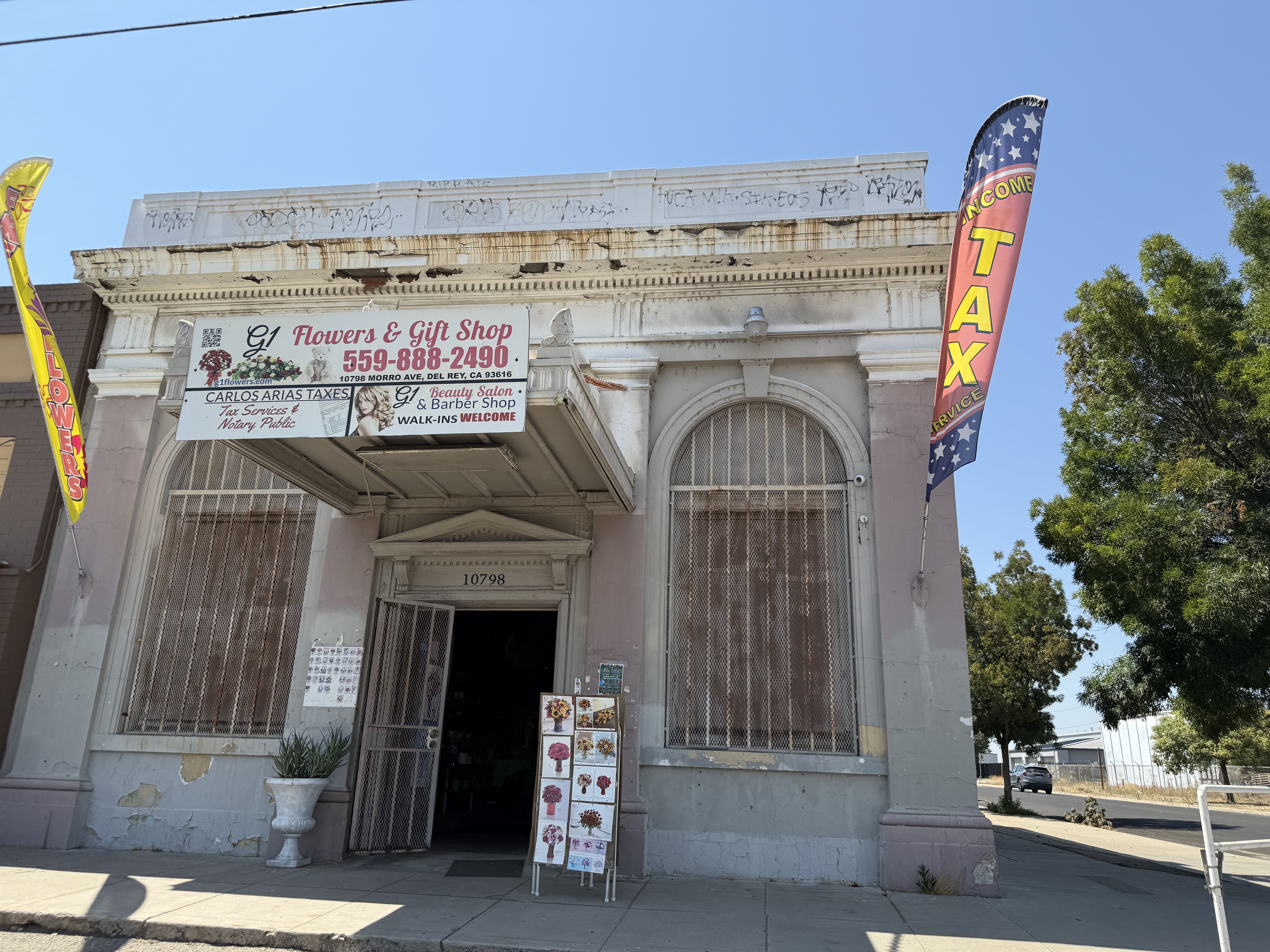
Today, the lack of goods and services within the town leaves many residents traveling to Sanger and Fresno for their groceries, gas, and other essentials. The disappearance of the businesses paralleled the closing of the railroad as well as the decline of the raisin packing houses. But the place that was once the center of packing houses is now home to another fruit that needs processing, pomegranates.
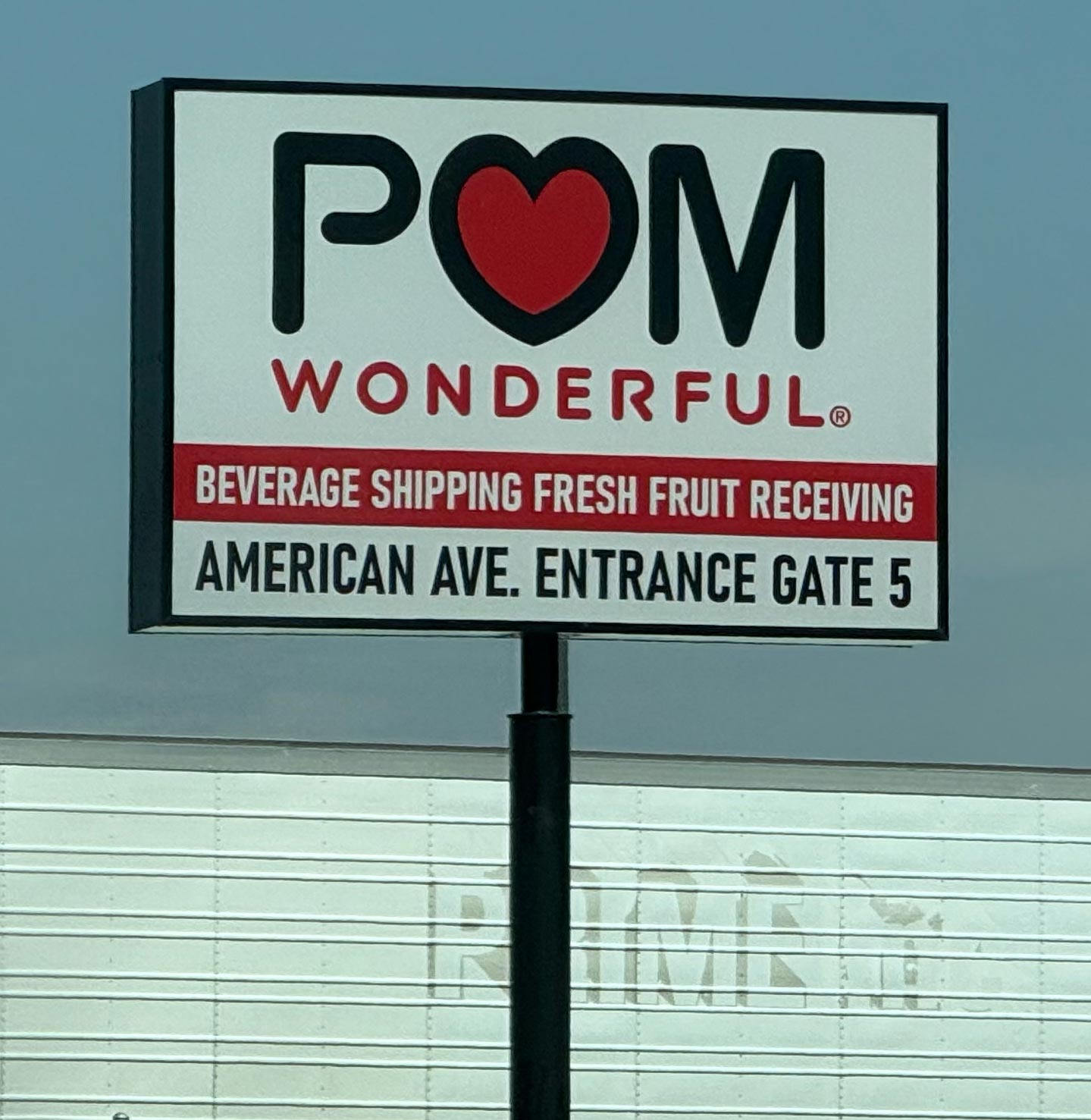 In 2003, Paramount Farming, owned by Stewart and Lynda Resnick, began operations at a new pomegranate processing plant on the eastern side of the town. The plant was expected to process between 20,000 to 30,000 tons of fruit per season. Local public officials welcomed the opening of the plant, according to contemporary newspaper accounts, and the economic opportunities it offered to the community of Del Rey after the decline of the raisin industry. The pomegranate business has been successful and the plant has continued to grow: since 2003 the plant has been expanded several times, and Paramount Farming has been rebranded as POM Wonderful. While the total amount of fruit per year processed is not publicly disclosed, figures from 2020 indicate that the plant produces 125,000 tons of waste per year, suggesting that the total amount of fruit processed is even greater. According to news reports, during the peak processing season of October through December, the plant has more than 1,500 workers.
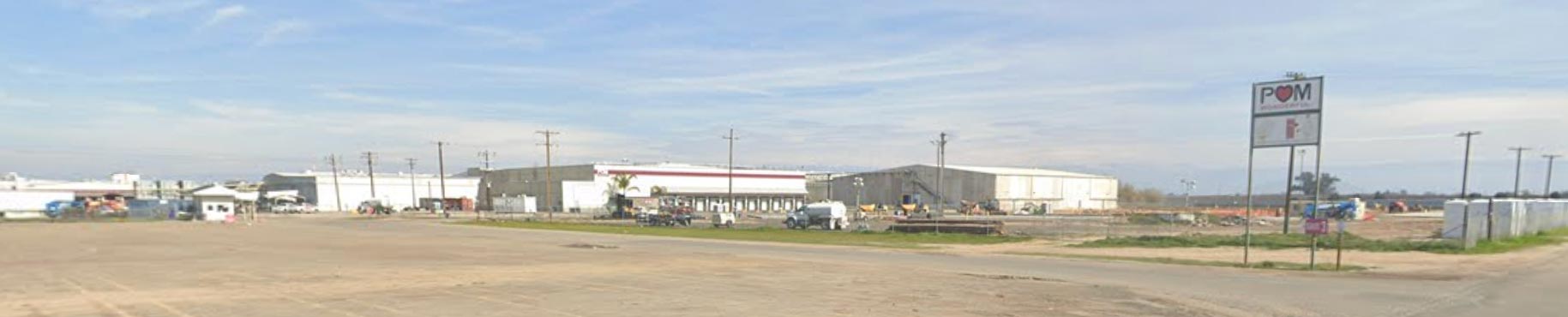
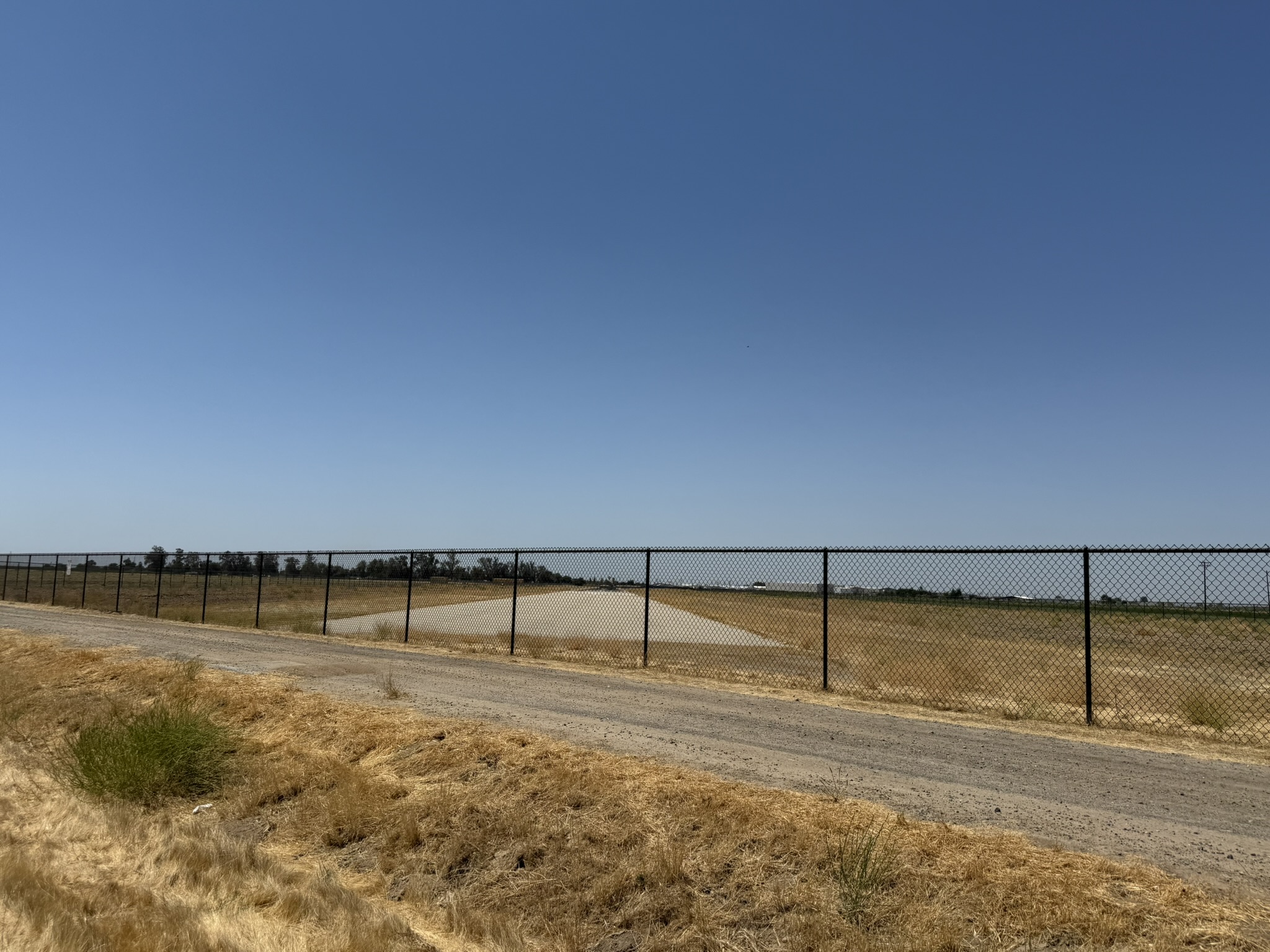
Originally anticipated with excitement, today the presence of POM Wonderful yields mixed reviews. According to the outgoing Community Services Director of the district, Carlos Arias, POM has been a positive contributor to the town's overall well-being. He cites their donations to the town arts festival, and their contribution as the largest rate payer. One resident complained that POM Wonderful was not willing to go beyond matching local funds raised for a scholarship fund. Others regretted that many of the employees at the Del Rey plant live in Sanger and Fresno and not in Del Rey. One resident suggested that the company had altered the town to meet their needs without consulting locals. The example that came up in numerous conversations was the construction of a runway on land adjacent to the processing plant.
So how can we make sense of the methane event of September 21, 2020, in or near an unremarkable orchard? One potential explanation is the POM Wonderful plant itself, and the potential for methane emissions that arises from the wastewater pond necessary to process large quantities of pomegranates. Another explanation is a leak of methane from the natural gas powerplant located in nearby Sanger, the Algonquin Power Plant (now renamed Liberty Power). A third potential source is a leak from the natural gas transmission pipeline listed on the National Pipeline Mapping System, located 1.3 miles north of the emission site.
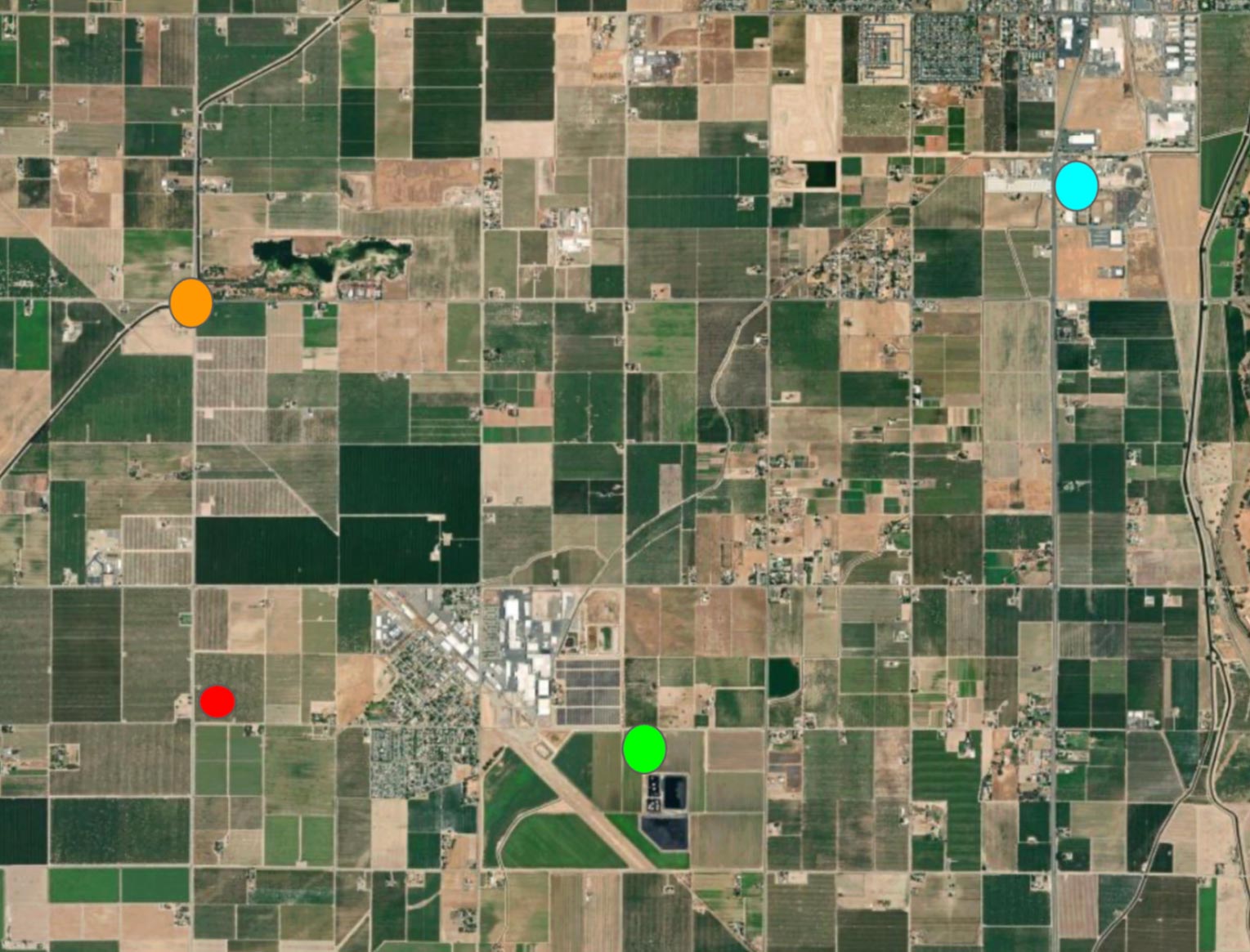
The most proximate source is a release of methane from the wastewater pond at the POM Wonderful facility. The pond handles all wastewater related to Pomegranate processing, including from washing, rinsing and juicing. It has undergone significant expansion over the years, increasing its capacity to process and store wastewater. According to Fresno County documents, it was first built in 1993, and allowed wastewater to be used for irrigation. The pond was expanded in 2006, and further modifications were approved in 2012 to increase the average daily discharge to 900,000 gallons per day during peak processing season. This expansion included the addition of two storage ponds with a combined capacity of 68 million gallons, which was completed in 2014. Research suggests that wastewater treatment plants, particularly those processing food waste, can be significant sources of methane emissions. Studies have shown that the addition of food waste to wastewater treatment plants can enhance methane production by up to 60%. Given the POM Wonderful facility's role in processing pomegranates, it is likely that the wastewater pond receives substantial amounts of food waste during peak harvesting and processing seasons.
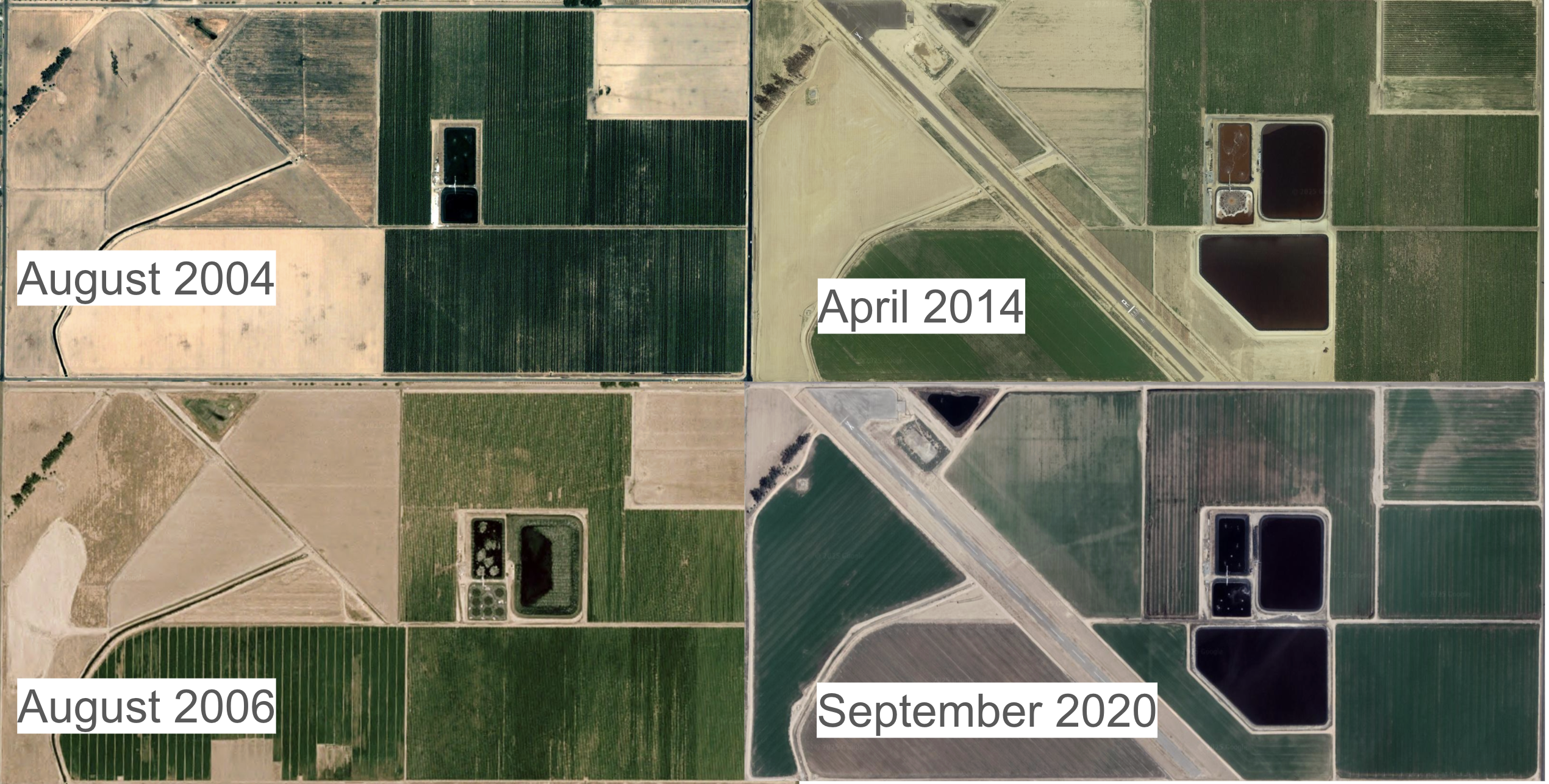
The timing of the methane super emitter event aligns with the peak harvesting and processing season for pomegranates. According to the President of the Fresno County Farm Bureau, harvesting typically occurs between September and finishes before Thanksgiving. In 2020, the year of the super emitter event, Fresno County saw a significant increase in pomegranate production, with tons harvested increasing from 28,900 in 2019 to 53,700 tons. Similarly, in neighboring Tulare County there was an increase from 10,400 to 21,300 tons of pomegranates harvested. Although not all pomegranates harvested are sold to POM Wonderful, the company saw a 34% increase in sales in the 2020 season. This increased production would have likely resulted in a higher volume of wastewater being processed at the POM Wonderful facility, potentially leading to increased methane emissions.
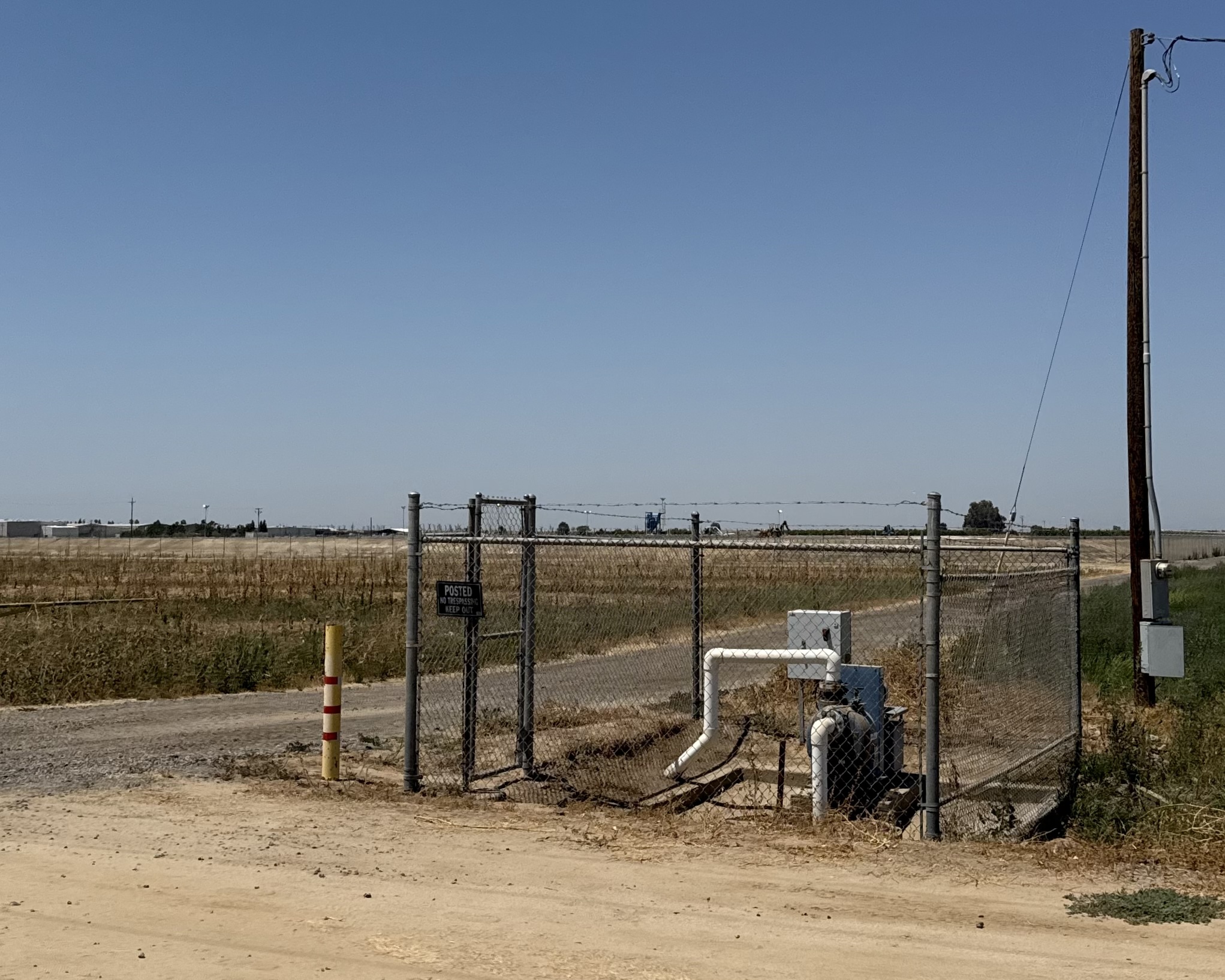
The same year of the methane super emitter event, POM Wonderful sought approval from Fresno County to construct an anaerobic digestor at their plant. This digestor would have the capacity "to process up to 125,000 tons of pomegranate waste and pomegranate juice wastewater per year from the onsite extraction facility to produce bio-methane for pipeline injection." While the plans were approved, when I visited Del Rey and examined the location, I did not see any evidence of an anaerobic digestor. In March 2025, and again in fall 2025, I attempted to contact POM Wonderful through phone calls. I was successful once, and was directed to email their corporate public relations office. I did this on October 14, 2025, and have not yet received any response, or confirmation as to whether the anaerobic digestor was built.
The second possible explanation for the methane plume, suggested by Professor Thomas Lauvaux, is a leak from the nearby Algonquin power plant at 36.6842, -119.5522. Originally opened in December of 2007, the plant today operates under the name of Liberty Power. According to publicly available data, during September 2020, the month of the unexplained methane event, the plant produced 12,903 megawatt hours of electricity, all generated by natural gas. While the annual EPA greenhouse gas report indicates that only 0.53 metric tons of methane were produced, far less than was identified through the satellite, it is possible that the amount of methane produced from the super emitter event could have been an unidentified leak. I was unsuccessful in attempting to reach representatives from Liberty Power after calling the phone number on the sign multiple times.
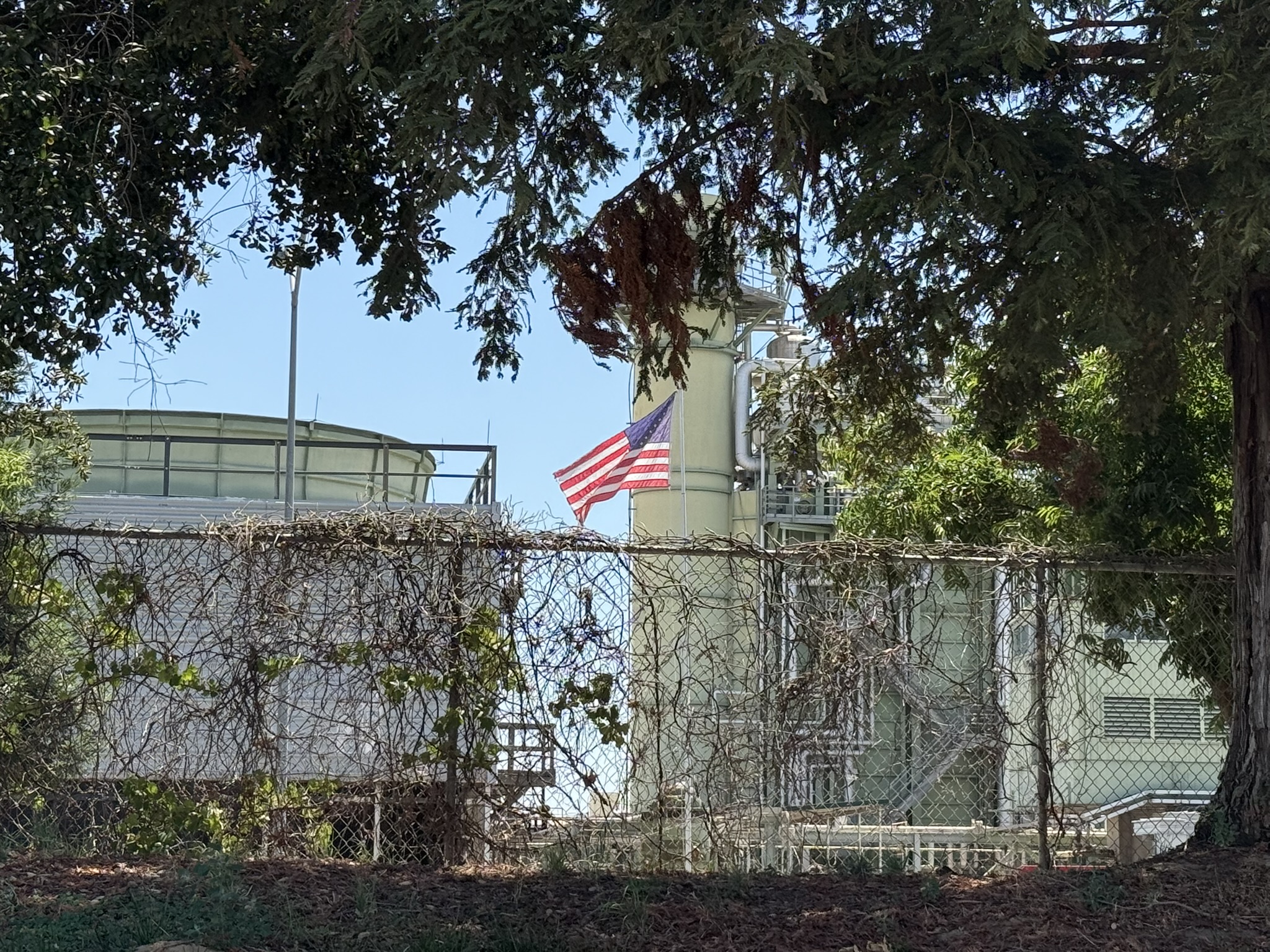
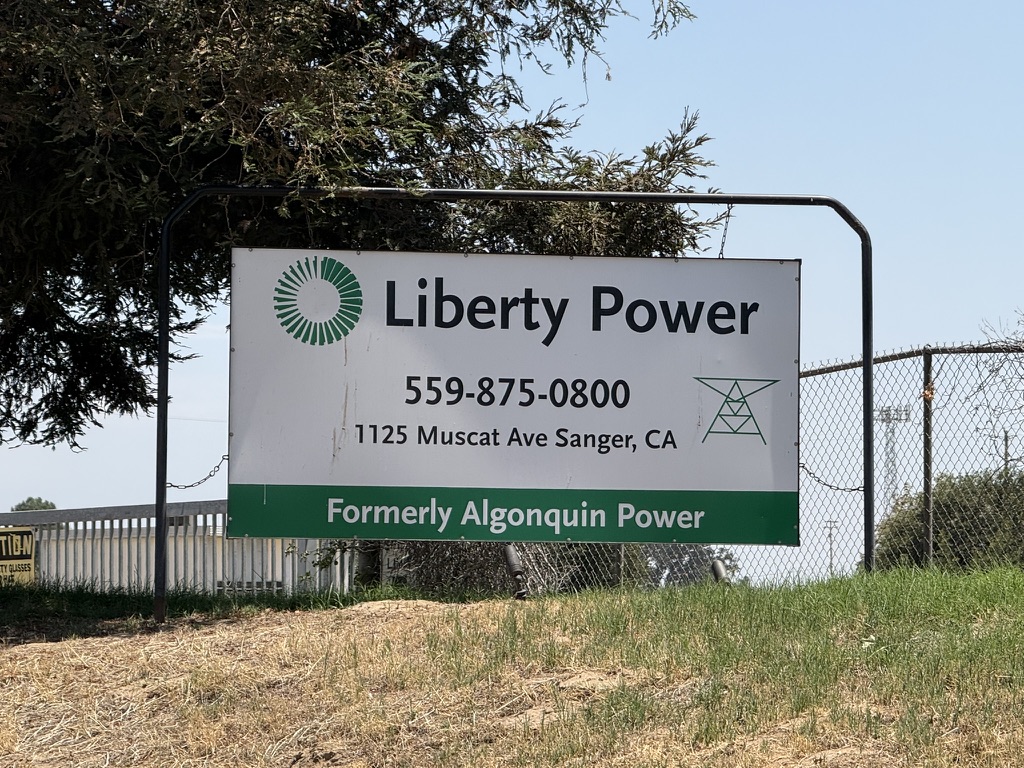
Leaks of methane from natural gas power plants have been identified as serious areas of concern. Recent research examining both oil and gas operations show that emissions from intentional vents and unintentional leaks lead to $1 billion in lost commercial energy value for producers, and the annual cost has been estimated to rise to $10 billion when harm to the economy and human health is taken into account. In relation to greenhouse gas emissions, in some instances, "methane leakages drive emissions parity between gas and coal, especially through the gas supply chain." The methane emission plume in Del Rey may also have originated from the powerplant in the form of uncombusted fuel leaking into the atmosphere.
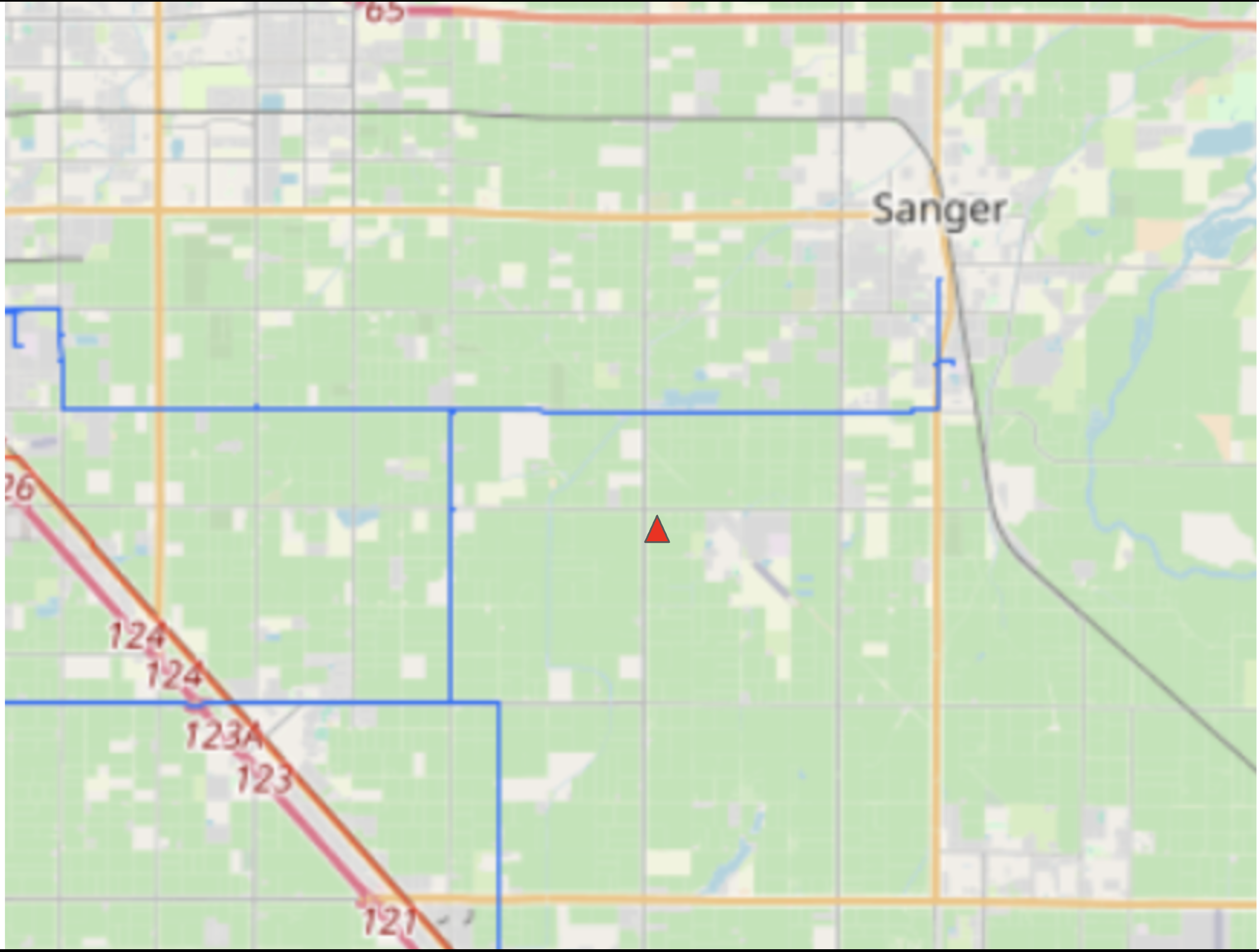 A third possibility is a leak from a gas transmission pipeline. The National Pipeline Mapping System indicates that there is a network of gas transmission pipelines which are run below the streets close to the methane super emitter site. The pipeline connects the Algonquin (Liberty) power plant with nearby cities, including the downtown Sanger region as well as the city of Fresno. In order to connect the power plant to Fresno, a pipeline exists along East Central Avenue. This marks the nearest coordinates along the route of the pipeline at 36.677528, -119.610222, a mere 1.3 miles away from the most likely site of the ultra emission. In Del Rey, as across the entire worldwide landscape of the 1800 Histories project, pipeline leaks are among the most plausible sources of ultra methane emissions.
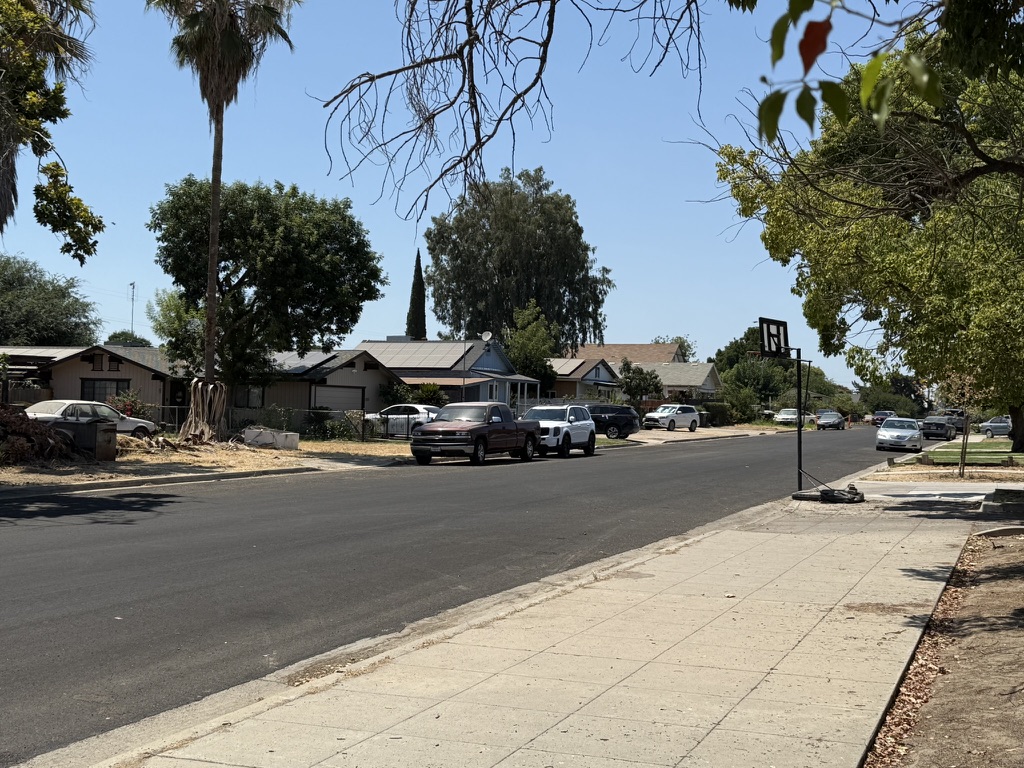 The explanation for the source of the methane super emitter event at {36.66, -119.61} remains undetermined. But Del Rey's own future now hangs in the balance, threatened by a complex array of challenges. Economic development and affordable housing are pressing concerns, with the community seeking to attract essential businesses and provide opportunities for its youth. Land on the outskirts of town would be used to build additional housing, attracting residents and in turn encouraging the growth of local businesses. Homebuilders remain skeptical that there is a market, and as of September 2025, according to Carlos Arias, the only homebuilder in communication with the community services district is the self-help housing program, aimed at building houses for those who qualify with sufficiently low incomes.
The longstanding issue of water contamination meanwhile continues to affect residents. Since 2013, the California Rural Legal Assistance, a nonprofit law firm, has worked with residents of Del Rey to resolve these issues. Most recently, their case workers have been focused on making sure that the funds received as part of a recent settlement be utilized to continue monitoring efforts as well as the installation of carbon filters. Case managers are also trying to ensure that the water debt residents face does not translate into a lien on their property, a problem that they expected will grow given the high potential for water rates to increase across California.
As the community looks to the future, it is clear that Del Rey is at a crossroads, navigating the intricacies of growth, sustainability, and the well-being of its residents. Through the lens of this methane event, we have caught a glimpse of a community seeking a path forward, one that honors its history, and seeks progress for its people. It is a story that is far more than an array of coordinates, seen from space.
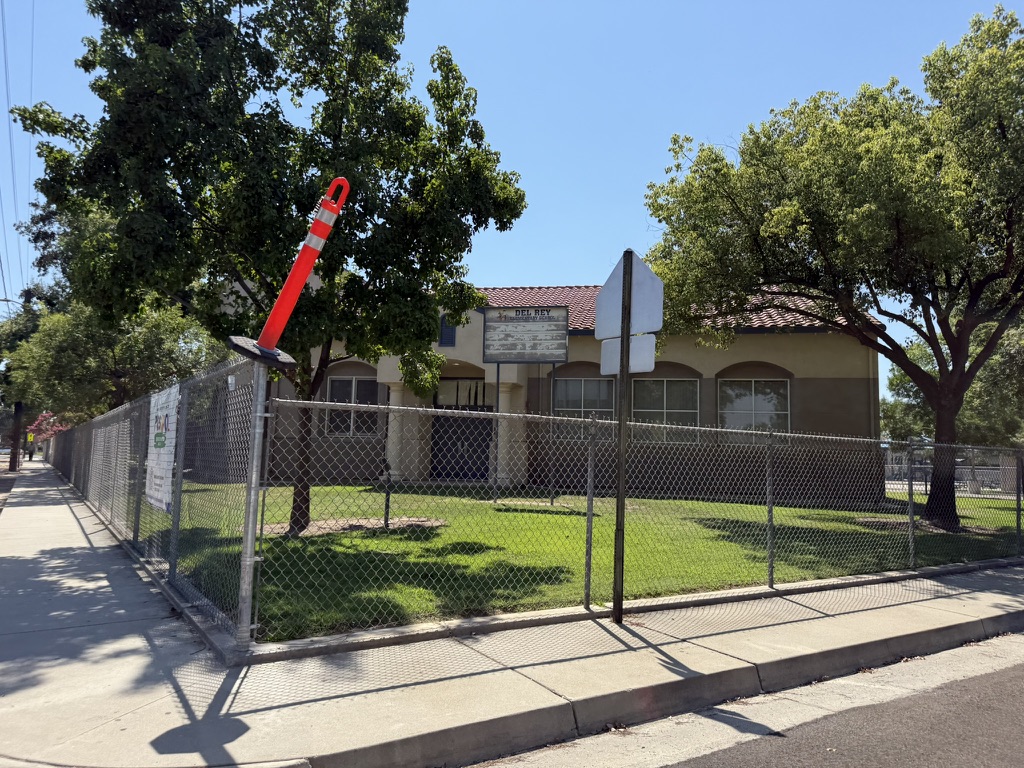
A special thanks to the kind residents and individuals who took the time to share with me their memories of Del Rey. Their stories are the reason why I was able to tell a part of the history of Del Rey.