
Fire at the Ghazipur Landfill: The "Burning" Issue of Landfills and Waste Segregation at Source
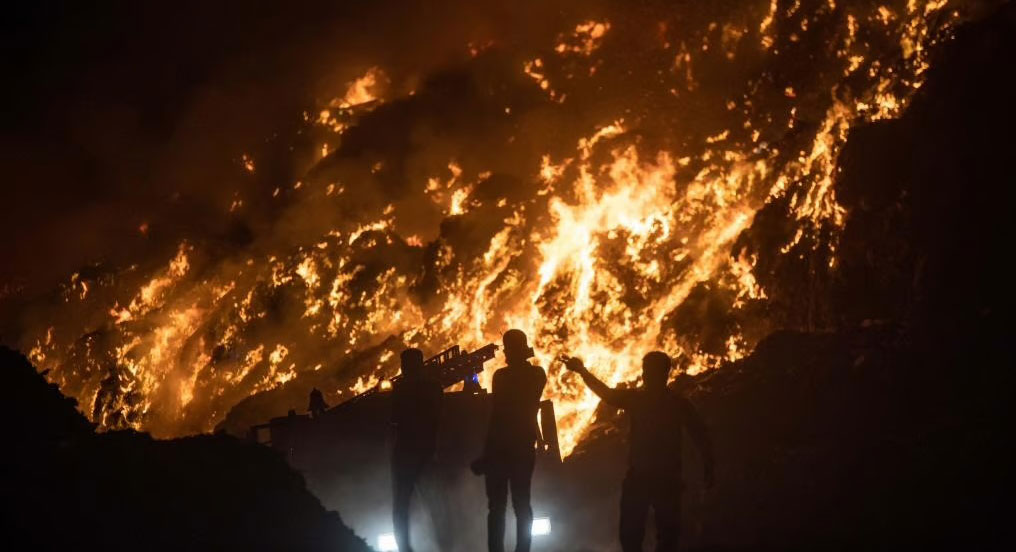
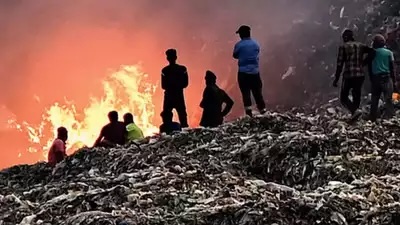
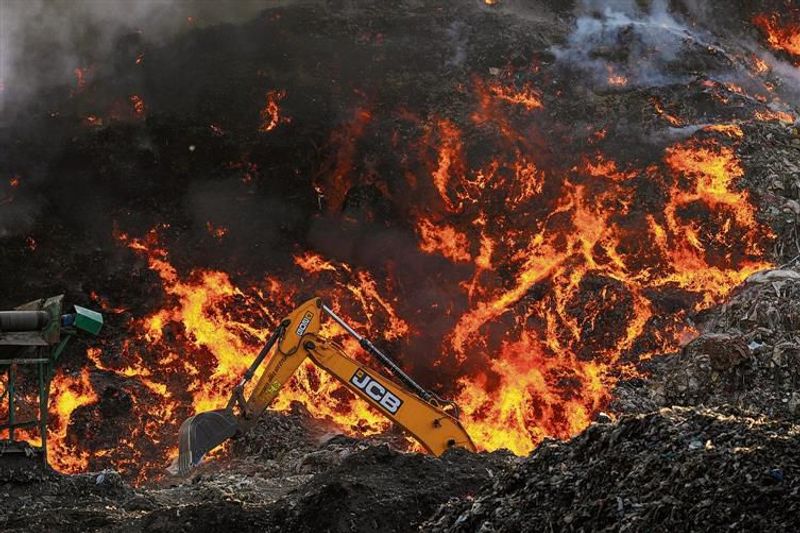
On the evening of 22 April 2024, a fire engulfed the Ghazipur landfill in Delhi. With flames licking up at the skies from the mountain of garbage that sits like a blot on the eastern side of the capital city of India, it was an ominous and scary sight to behold. The fire released toxic fumes, engulfing the nearby residential areas, emitting methane into the atmosphere, and adding to Delhi's already scorching heat and air pollution.
The Garbage Mountain of Ghazipur
The Ghazipur landfill stands as one of India's largest repositories for waste disposal. Towering over 65 meters high, it spans an area equivalent to more than 40 football pitches. Established in 1984, the landfill was originally designed to hold waste up to 20 meters high, but it had far surpassed this capacity by the time of its expected closure in 2002. Today, twenty-one years past its life span, the landfill has grown into a massive "garbage mountain" that poses significant environmental and health hazards. In the absence of a new site, waste dumping continues even now. And yet the Municipal Corporation of Delhi has pushed the deadline to flatten the garbage dump from December 2024 to 2026.
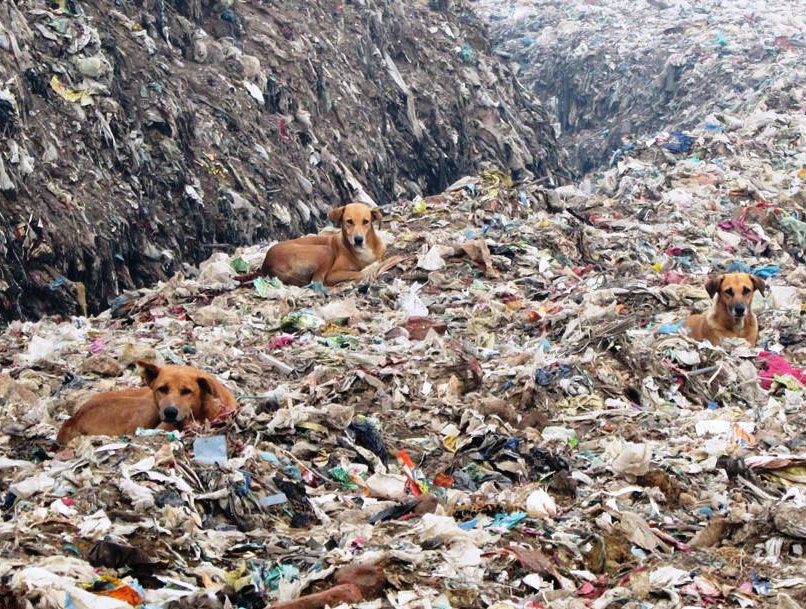 The high volume of organic waste decomposing anaerobically within the Ghazipur landfill emits substantial amounts of methane, a potent greenhouse gas that contributes to air pollution and global warming. Methane emissions from Ghazipur -- like the one detected by TROPOMI at (28.62, 77.40) -- are a major concern for Delhi, a city already grappling with severe air quality issues and extreme heat weather conditions.
In addition to methane, the decomposition process and frequent fires release toxic gases and particulate matter, further degrading the air quality and posing severe health risks to the population. Leachate, the liquid that drains from landfills, often contaminates the local groundwater and surface water. In addition, the frequent fires in the landfill release toxic gases and particulate matter, severely affecting air quality in the surrounding areas. Local residents face numerous health issues, including respiratory problems, skin diseases, and other illnesses due to all of this pollution. There are other kinds of accidents, too, at the dumpsite. In September 2017, a major section of the dump collapsed after heavy rains. Nearly 50 tonnes of garbage came crashing down like an avalanche that swept away a car and three two-wheelers on a nearby road, killing two people and injuring five.
Fires at Ghazipur
 Fires have frequently erupted at the site, especially during summer. One particularly significant such event was on 31 March 2022, captured on video by the BBC. Every year, as mercury levels soar during summers, the city's landfills burst into flames. A 2024 report by the Guardian carried out an analysis of data from Kayrros, the environmental intelligence company, and suggested that Ghazipur, along with the other two dumpsites in Delhi, has become a vast methane reservoir with frequent and massive leaks. "In Ghazipur, the data indicates the dumpsite has been the source of 37 major methane leaks since 2020, the worst in November 2021 when 156 tonnes an hour were recorded... An even larger leak was recorded in June 2019, when the site emitted 360 tonnes an hour."
The Many Woes of the Waste Pickers of Ghazipur
Many waste pickers work at the landfill or at sites in the surrounding areas, segregating waste that they collect from the landfill. Unlike in Bhalaswa, not many waste pickers live around the landfill at Ghazipur, but about 300-400 walk to the landfill from neighbouring areas to collect waste from the landfill. Anwar, a waste picker from Ghazipur and a father of four, shared his story about the conditions at the Ghazipur landfill. He detailed the harsh realities faced by waste pickers, worsened by recent events and ongoing challenges. Anwar recounted the severe impact of the fire in April 2024, which significantly disrupted their work. "The fire last month had a huge impact on our work," he said.
The current heatwave (in 2024, Delhi witnessed a brutal summer with scorching heat and temperatures reaching 49C in some parts) has brought new and intense challenges. Anwar explained, "Because of the heatwave, we can't even think of going near the landfill. The intense heat causes the waste to emit gases, making the landfill extremely hot and hazardous." He recounted, "If we go during the day, the water bottle that we carry our drinking water in becomes so hot that we cannot drink from it. With temperatures hovering at 45 degrees and above in the past two weeks, how can anyone work without water in such scorching heat?" To mitigate these dangers, Anwar and his fellow waste pickers have had to adjust their working hours. "We try to go during the early morning when the sun is not there," he shared. "Sometimes we go late in the evening, almost at night, and we have to put up temporary lights to see."
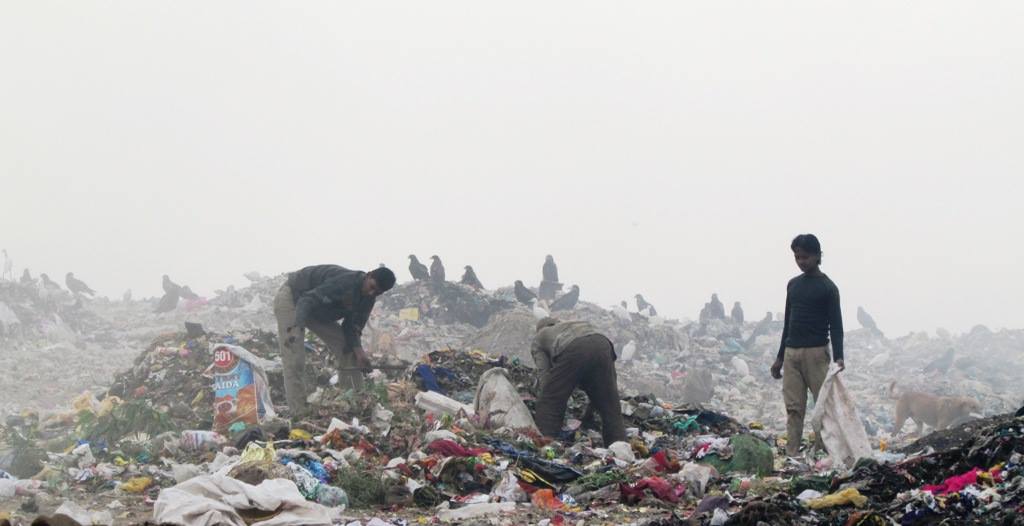
Despite these adjustments, the situation remains perilous, and the work has become significantly more difficult. "It's difficult; this heat has majorly affected our work," Anwar admitted. "Since the fire in April and the subsequent heat wave, our livelihood is gone. We haven't earned in these two months, forcing us to look for alternative employment opportunities, which don't exist for us." The combination of the heat and hazardous conditions has made an already tough job nearly unbearable.
Towards Solutions
Most fires that break out in these mountains of trash are caused by high concentrations of landfill gas, formed by the decomposition of organic waste. Reducing the amount of organic waste that ends up in landfills can significantly decrease methane production. This can be achieved through composting, recycling organic materials, and encouraging waste reduction at the source. By implementing these strategies, it is possible to mitigate the environmental and health impacts associated with landfill methane emissions and improve overall waste management practices.
Urban centres and metropolitan cities face a daunting challenge of waste generation and management, due to burgeoning populations and rapid urbanization. The national capital, with a population of 35 million, generates approximately 11,000 tonnes of municipal solid waste daily, the highest among Indian cities. According to government data put out by the Ministry of Environment in Delhi, over half of this waste ends up in landfills. While a sanitary landfill -- a landfill that poses fewer health and environmental hazards -- seems like the obvious answer to this problem, it is an expensive and technically sophisticated method of dealing with waste. It should be considered the last resort, especially in India, where more than half of household and commercial waste is biodegradable and can be composted instead of ending in landfills.
Recognition and Integration Of Waste Pickers in the City's Waste Management Systems
 Solid waste management hinges significantly on segregation at the source, a critical process involving the separation of recyclable materials from general waste. Integral to this process are waste pickers, who diligently sift through waste to salvage valuable materials like plastic, paper, and metal for recycling. In Delhi, reports suggest that waste pickers operating within the informal economy manage to recycle around 20-25% of the city's daily waste output (TOI, 2017). Their meticulous efforts not only alleviate the strain on landfills, but also promote resource conservation and energy efficiency.
By facilitating the separation of recyclable materials at or close to the source, waste pickers help optimize the efficiency of waste collection and processing systems. This in turn enhances resource recovery, reduces environmental pollution, and fosters a culture of responsible waste management. By diverting recyclable materials from landfills, waste pickers reduce the need for costly waste disposal systems, mitigate the environmental degradation associated with landfill operation, and extend the lifespan of landfills.
Waste pickers need to be integrated into the solid waste management systems of their cities as mandated by the Solid Waste Management Rules of 2016. Our cities need to be designed to include spaces for localized and decentralized waste segregation and recycling. Decentralised allocation of space for wet waste composting and for informal waste work is integral to strategies for increasing source segregation of dry and wet waste.
Decentralized Spaces for Waste Segregation
Dhalaos, the neighbourhood waste collection points, serve as crucial sites for waste segregation. However, in recent years, there has been a concerning trend of many dhalaos being closed or repurposed to accommodate compactor machines, reflecting a broader shift towards privatization within the waste sector. While the adoption of compactor machines may seem like a modernization effort, it presents several drawbacks. These machines lack the capability to segregate high-value recyclable materials, diminishing the potential for material recovery. Furthermore, their operation entails significant energy and financial costs for the municipality. Moreover, this transition jeopardizes the livelihoods of waste workers who were previously engaged in valuable environmental services such as waste recovery, and adds considerably to the landfills.
Circular Economy Principles
Embracing the principles of a circular economy for waste management is an approach that is rapidly being adopted globally. This approach is focused on retaining resources and materials in use for as long as possible and finally recovering them for use in manufacturing other items, thus keeping them out of the waste stream. It is globally recognised that this role has been traditionally undertaken by workers in the informal sector, who do the bulk of collection and sorting of waste to later sell as recyclables. Indian cities boast a robust network of waste recyclers, and it is imperative to safeguard and promote their contributions.
However, amidst discussions of waste management strategies, it is essential not to overlook the role played by waste pickers. These individuals are the cornerstone of urban waste management, segregating and recycling waste to alleviate the strain on landfills, mitigate pollution, and maintain cleanliness in the city.
The trash mountain at Ghazipur is just one of around 3,000 Indian landfills that are overflowing with decaying waste and emitting hazardous gases, according to a 2023 report from the Centre for Science and Environment. Effective waste management strategies are crucial in mitigating methane emissions and moving towards a more sustainable future. It's time for us to recognize the informal waste segregators and integrate them into our cities' solid waste management systems.
| « The Case of Landfills in Delhi | Life on the Uruli Landfill » |