Tonopah
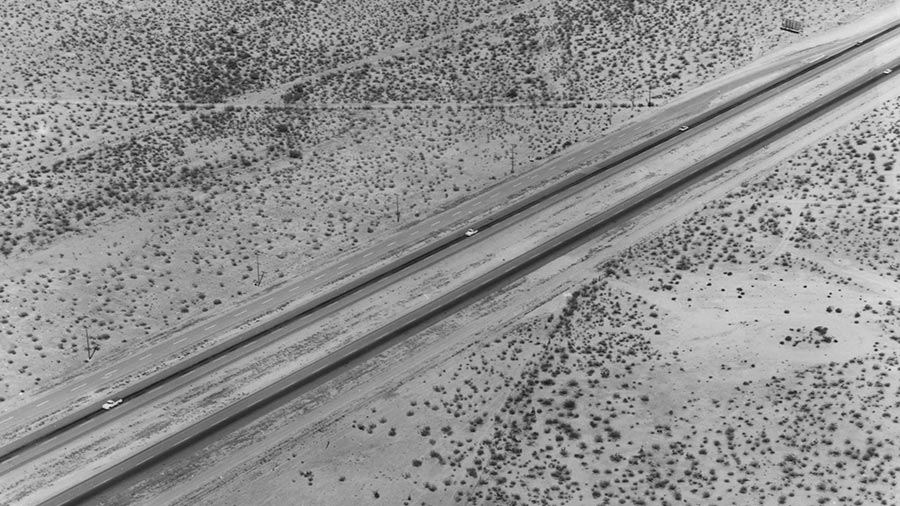
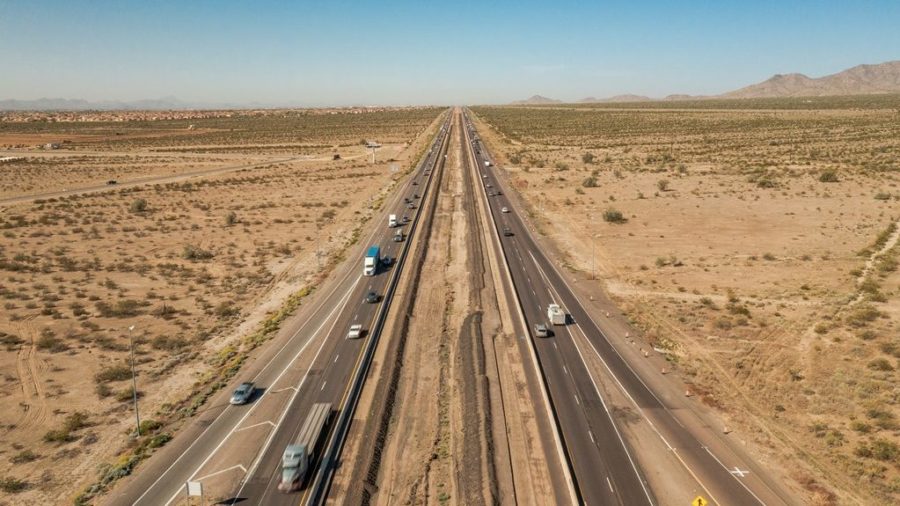
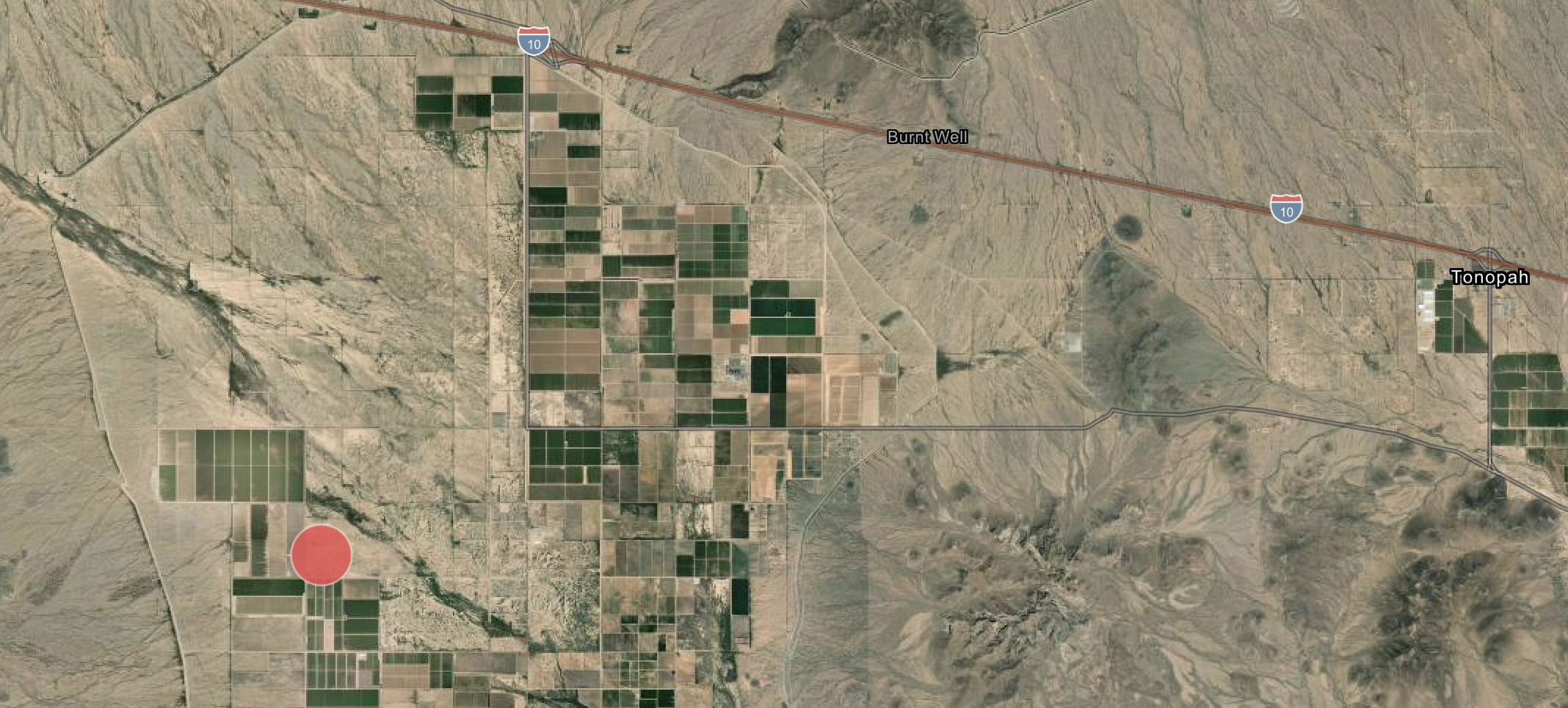
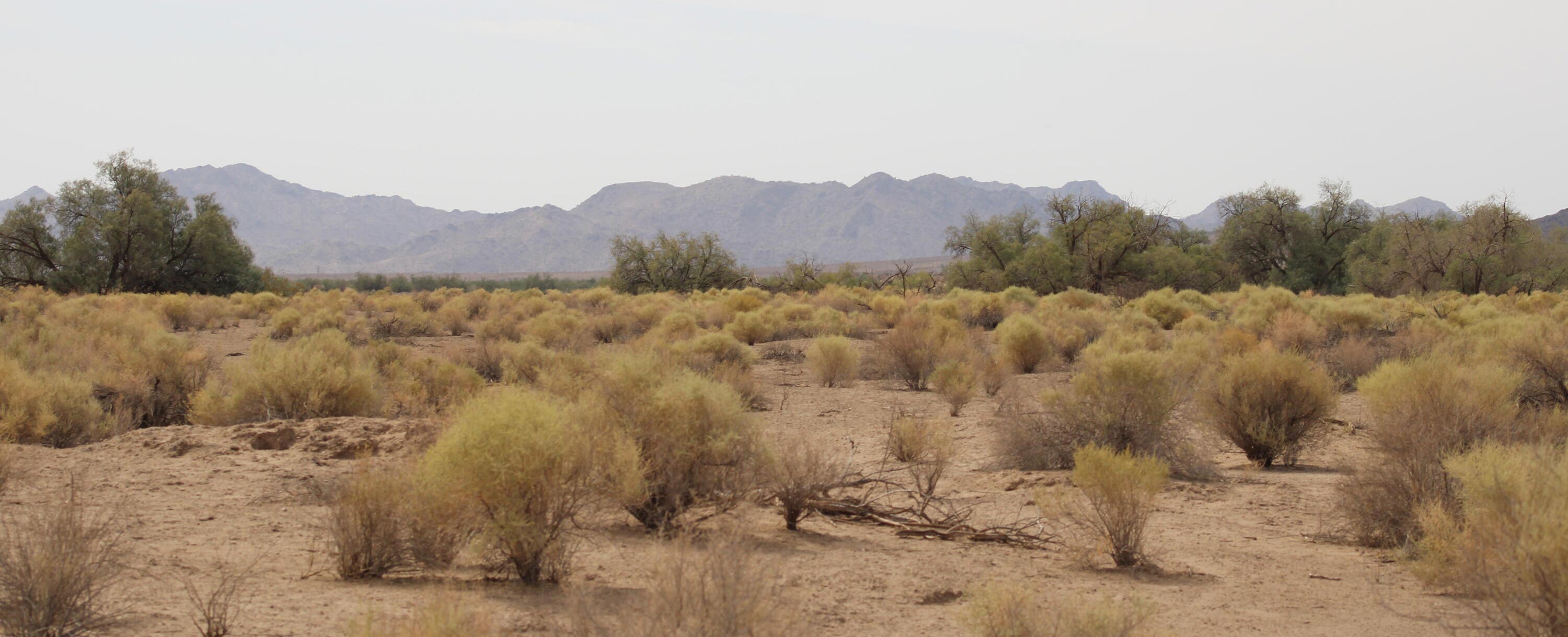
The methane plume at {33.44, -113.21} was detected on September 17, 2020 to the south of Interstate 10, near Tonopah, AZ. This is at first sight in the middle of nowhere, in the "long and lonely country" of the highway from Los Angeles to Phoenix; "brown and tan and copper and pale beige," in the description of Dorothy Hughes's novel of 1963, The Expendable Man. Dorothy B. Hughes, The Expendable Man (1963) (New York: New York Review Books, 2012), p. 3.
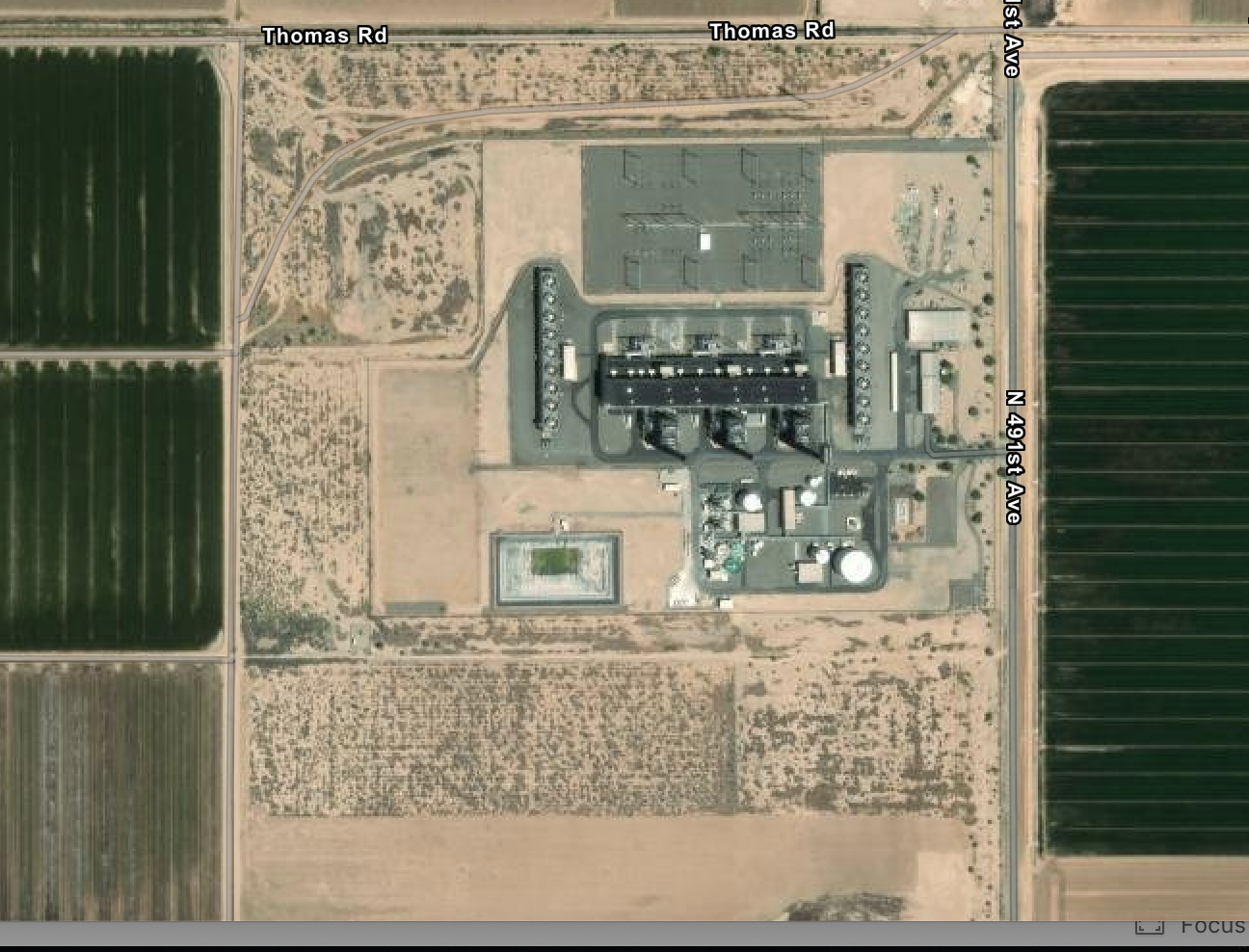
The most plausible explanation for the September 2020 plume, as in the case of so many emission sites in the United States, is that it was caused by the leakage of methane either at the junction of two natural gas pipelines, near {33.51, -113.12}, or from the Harquahala gas-fired generating plant, at {33.48, -113.11}.
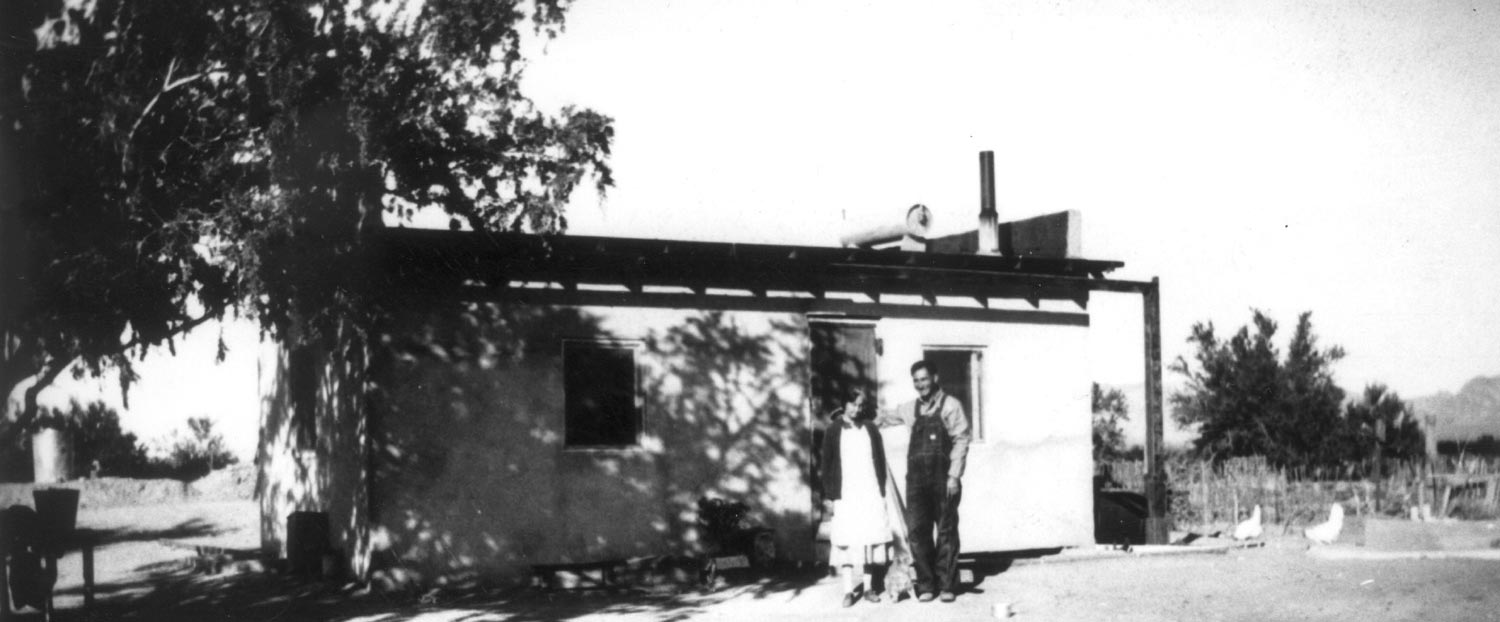
But Tonopah (population 14), which was settled, in a transient sort of way, in the early 20th century, has since 2020 become a place of unlikely importance in the energy history of the United States. It was named after a mine, which was itself named after the possibility of a bonanza: a lead and silver mine that began to operate in 1920, and was named the "Tonopah-Belmont mine," in honor of the Tonopah mine in Belmont, Nevada. The mountains to the north were named "Belmont;" as in the Tonopah-Bonanza newspaper, later the Tonopah Times-Bonanza and Goldfield News.
By the early 1940s, the (Arizona) Tonopah-Belmont mine had ceased operations. Its ruins and dumps are now a tourist attraction, part of the heritage of Arizona's more than 13,000 abandoned mines. The name "Tonopah" is believed to have been derived from the Shoshone word "Tonampaa," meaning "hidden spring."
It was the expansion of Phoenix in the late 20th century that brought new economic opportunities to Tonopah and the other small settlements of the valley. The population of Maricopa County, which extends from beyond Tonopah in the west to the eastern suburbs of Phoenix, increased from 971,000 in 1970 to 2,102,000 in 1990 and 4,673,000 in 2024. Oil consumption expanded, in a metropolitan area organized around motor vehicle transport, There were 30 vehicle miles travelled per person in the Phoenix-Mesa area in 2022, compared to 18 per person in the San Francisco-Oakland area. Please see here. and so did electricity consumption. Arizona utilities reached a new record of demand for electricity in 2025 (on August 6-7, when the temperature in Phoenix was 117-118f. [47.2-47.7c.])
By 2020, there were 167 power plants US Energy Information Administration, "Form EIA-860 detailed data," Plant Data for 2020, available here. in operation in Arizona, of which 62 were in Maricopa County. Six of the plants were in Tonopah, and one -- the largest in the state -- was in Wintersburg, a few minutes' drive to the south of Interstate 10. The power plant closest to the ultra emission site was the natural gas facility at Harquahala (from the Yavapai "ʼHakhe:la", or "running water high up.")
.jpg "Harquahala Generating Project.
(https://www.veoliawatertech.com/en/case-studies/implementing-zld-solution-power-plants)")
The Harquahala plant has been in operation since 2004. It was constructed, starting in 2001, for PG &E, the established California utility (incorporated in 1905.) Its business history has followed the twists and turns so characteristic of the power industry. By 2014, the Harquahala facility was one of the assets in the bankruptcy of an energy company called "MachGen" (owned by "affiliates of Credit Suisse Group AG and Bank of America Corp among others"); in 2016, its purchaser, a Houston energy company, was reported to be considering "moving all or part of [its] generating equipment" to the East Coast. It suffered from "design deficiencies," and its entrances were numbered "haphazardly." In 2024, the plant was acquired jointly by the BlackRock investment firm and another enduring institution of the energy industry, the Alberta-based Capital Power corporation, established in 1891 with letters patent from "Queen Victoria's representative to the North West Territories."
The other five power plants listed in Tonopah in 2020 were much smaller, and all were solar facilities. Their joint capacity US Energy Information Administration, "Form EIA-860 detailed data," 2020 Generator Data for plants 55372 (Harquahala), 57707, 60307, 60308 (Mesquite 1,2 and 3), 58213 (Saddle Mountain) and 58262 (Badger), available here. was 450 MW, or one third that of the Harquahala gas-fired plant. But they too have an intricate industrial, financial and regulatory history. Three of the solar plants, or "farms," were part of the "Mesquite Solar Complex" -- the name "Mesquite," from the Nahuatl "mizquitl," is an allusion, as so often in the South-West, to the sources of underground water, of which Mesquite trees are supposed to be an indication. (The names recur, and there is a different, gas-fired power plant, the "Mesquite Power Plant," a few kilometers away in Arlington, AZ, that is listed as one of "Arizona's dirtiest power plants.")
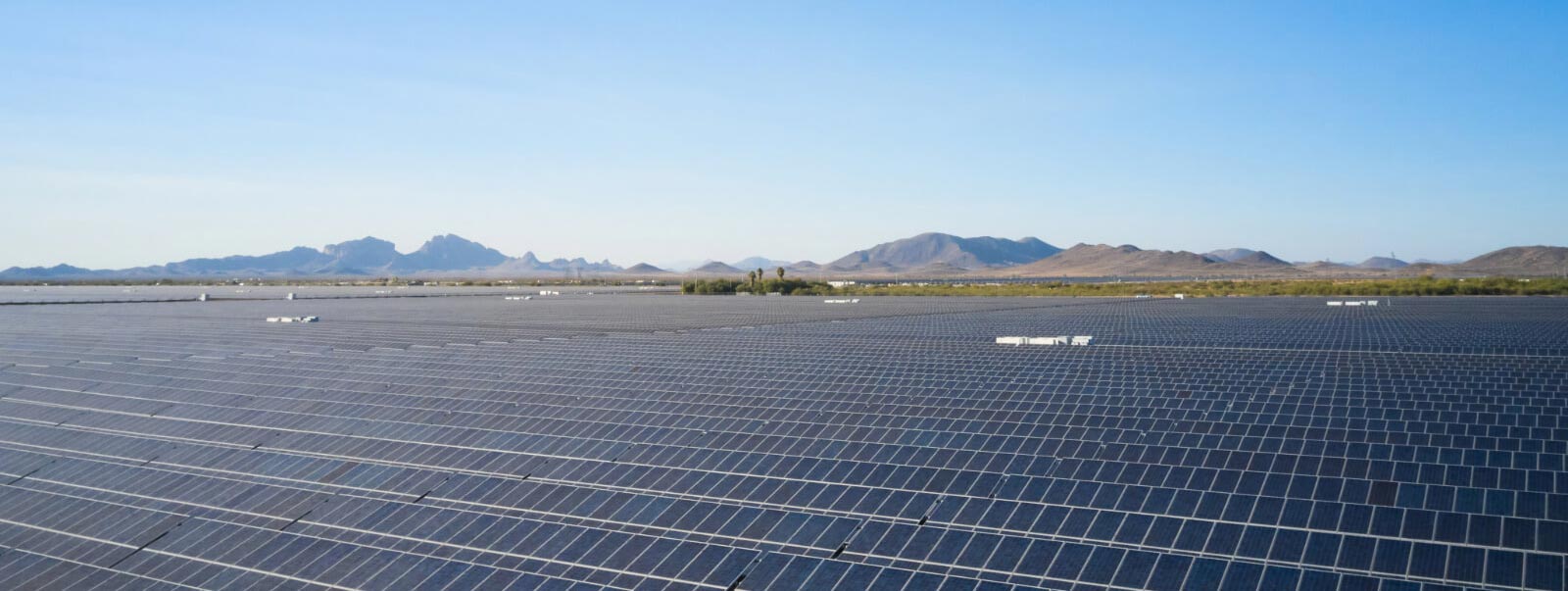
The Mesquite Solar Complex in Tonopah "was one of the first utility-scale PV [photovoltaic] solar projects to begin operating in the United States," in the description of the US Department of Energy, which in 2011 provided a $337 million loan guarantee for the plant, under Title XVII of the Bush-era 2005 Energy Policy Act. It was developed by a utility from San Diego, together with a subsidiary of Consolidated Edison, the New York energy company that traces its corporate history to the introduction of gas lighting in lower Manhattan in 1823. By 2018, Con Edison owned the entire project, and in 2022, it sold the Mesquite Complex to "RWE Renewables America." Tonopah, AZ entered, here, into the monumental history of European industry; RWE is the Rheinisch-Westfälische Elektrizitätswerk, founded in Essen in 1898, and pioneer of the coal-burning power plants of the mid-20th-century Ruhr.
The largest power plant in Arizona is immediately adjacent to the Mesquite Solar Complex. It is the Palo Verde Nuclear Generating Station (PVNGS), extending south of Interstate 10, across the town lines of Tonopah, Wintersburg, AZ and Arlington, AZ. (The address is given as Wintersburg, in US Department of Energy statistics, US Energy Information Administration, "Form EIA-860 detailed data," Plant Data, available here. and as Tonopah, in the plant's own listing of current job openings.) Current Openings, Please see here. Accessed on January 23, 2026 The facility consists of three pressurized water reactors, and was first commissioned in 1985. Only one nuclear plant in the United States, on the Savannah River in Waynesboro, GA, has a larger capacity.
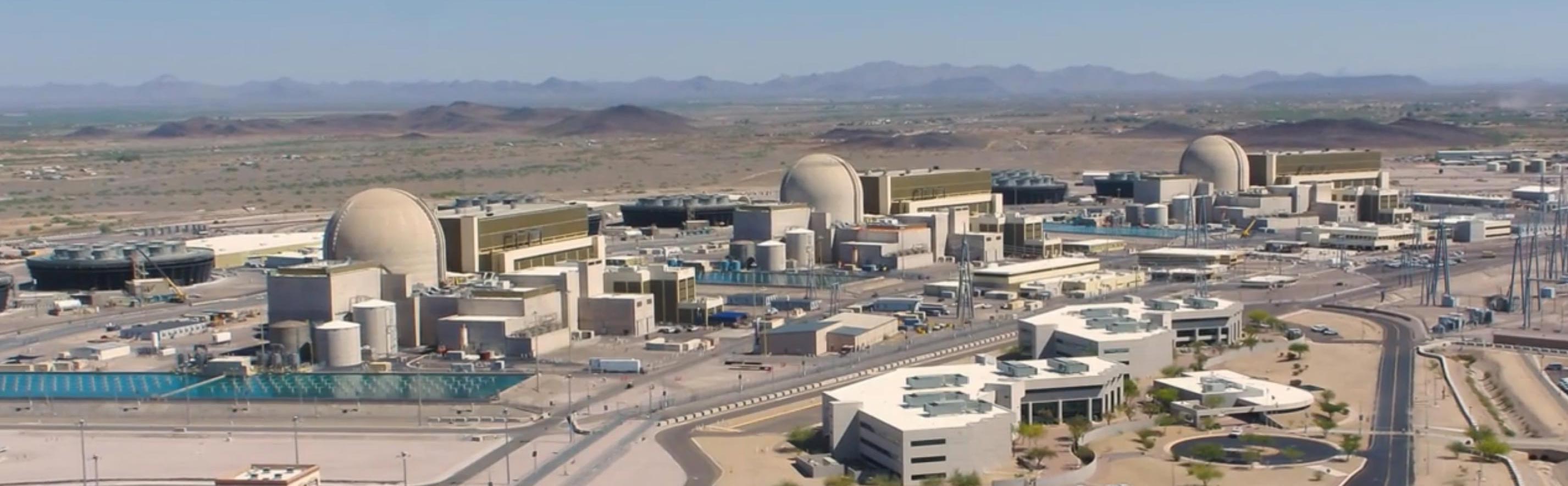
Palo Verde is a vast enterprise, in the "driest subdivision of the Sonoran Desert." The site covers 17 square kilometers, and employs around 2,500 people. The buildings are painted in "desert beige and sage green." It is described by the Maricopa County government as "the only 'desert' nuclear plant in the western hemisphere - an engineering feat," and it produces electricity for "Arizona, California, New Mexico and Texas." Palo Verde used 3 million cubic meters of groundwater each year from its own onsite wells, at the time when its operating licenses were renewed US Nuclear Regulatory Commission, "Generic Environmental Impact Statement for License Renewal of Nuclear Plants: Draft Report for Comment, Supplement 43, Regarding Palo Verde Nuclear Generating Station," August 2010, pp. 41, 82, 91, 96, 148,199/383. Available here. in 2011, and 73 million cubic meters of "treated effluent," or municipal waste water -- "grey water" -- much of it from a water treatment plant on 91st Avenue in Phoenix.
PVNGS is at the material and economic center of the Tonopah/Arlington landscape. Its capacity US Energy Information Administration, "Form EIA-860 detailed data," Plant Data for 2020, Generator Data for 2020, available here. was more than twice that of the six power plants listed in Tonopah in 2020, and greater, too, than the capacity of the additional seven power plants, four natural gas-fired and three solar, listed in Arlington, AZ. These are tiny, sparse "towns;" Tonopah with its resident population of 14, Arlington with 60, Wintersburg with 110. They are connected by a single highway, "W. Elliot Road:" a desert road, as shown in the similarly sparse real estate listings -- "water source: none," "mountain views," "no sewer," "distance to cable: none" -- that is identified by the US Department of Energy as the address for nine different power plants.
In a report called 2020 Eye to the Future: Tonopah/Arlington Area Plan, published in 2000, Maricopa County Board of Supervisors, 2020 Eye to the Future: Tonopah/Arlington Area Plan (2000), pp. 62,72/98, and, on the definition of the "Tonopah/Arlington planning area," p. 18/98. the Maricopa County Board of Supervisors was optimistic about the years ahead; "in the long term," "Tonopah/Arlington" -- or the "unincorporated communities of Tonopah, Wintersburg, Hassayampa, Arlington, and adjacent lands" -- "appears to be a prime area for industrial development." "The economic basis of this 364 square-mile [896 square km.] planning area [was] modest," the Supervisors wrote, and the median household income was "much lower" than in the county as a whole. The presence of the Palo Verde plant was not an attraction for the "tourist and retirement industries" -- "PVNGS will have a negative impact on the marketing of the Tonopah/Arlington area, especially for ecotourism." But it was at the same time the source of future industrial expansion.
Palo Verde is proximate both to the material infrastructure of electricity distribution -- the Hassayampa and Palo Verde switchyards that process power for transmission to distant markets -- and to the economic infrastructure of wholesale electricity markets; the Palo Verde market hub. In the planners' optimistic view 2020 Eye to the Future: Tonopah/Arlington Area Plan (2000), p. 74/98. of 2000, the "area offer[ed] many opportunities for energy companies seeking to locate 'merchant' power plants" -- or plants that sold power on the wholesale market, following the deregulation of electricity generation and transmission in the 1990s -- "near a major electrical switching area in the western energy grid." There are old established utilities in Tonopah -- PG&E, ConEdison, RWE, or their successor companies -- and there are also "merchant" plants; the weightiest of industrial structures, in a disorienting metaphor, moving with all the existential lightness of early modern peddlers.
In 2020, there were six power plants in Tonopah, according to the US Department of Energy, US Energy Information Administration, "Form EIA-860 detailed data," Plant Data for 2020, 2021, 2022, 2023 and 2024, available here.and fifteen in the larger Tonopah/Arlington area. In 2021, there were eight plants in Tonopah, in 2022, there were ten, and in 2023, there were twelve. In 2024, there was a total of fourteen power plants in Tonopah and twenty-five in the larger area, of which one was the nuclear facility, five were natural gas-fired, and nineteen were solar or battery facilities.
The energy bonanza continued in 2025, and construction has outpaced the ordinary processes of daily life; four of the newest plants have street addresses listed as "TBD," to be determined. In the most recent US Department of Energy listing of generators, there are twelve new generators 3_1_Generator Data_2024, available here. The "early release 2025 data" is expected in June 2026; accessed January 22, 2026.listed as "proposed" in Tonopah/Arlington, of which seven were solar and five were gas-fired. This is an energy-intensive landscape of production. In the United States as a whole, there are more than half a million residents for every twenty-five The US Department of Energy lists 16,132 power plants in operation in the United States in 2024. Please see here.power plants; in Tonopah/Arlington, there are a couple of hundred.
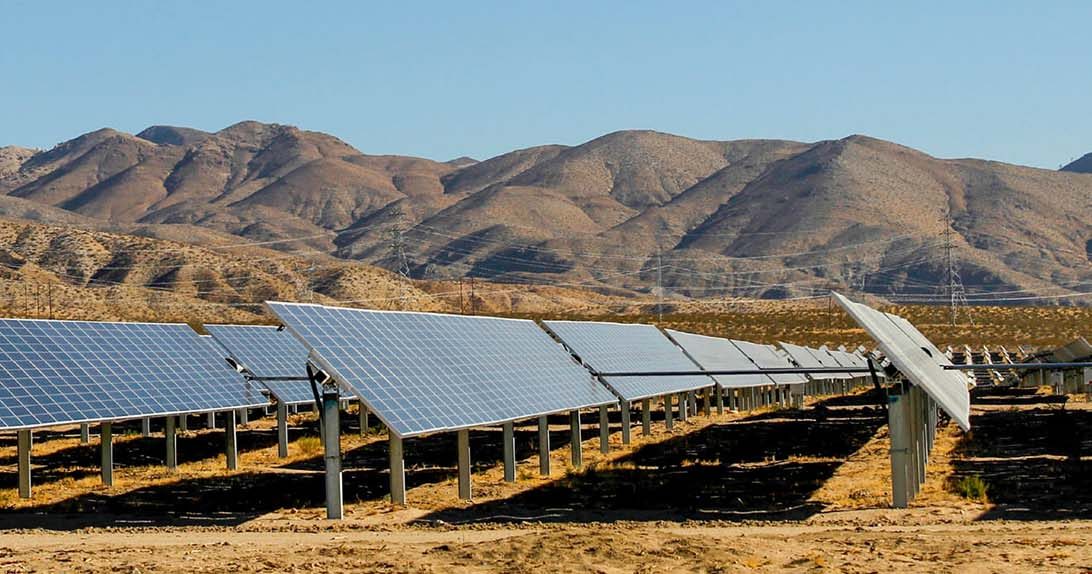
The most imposing of the new projects -- to return to the vicinity of the almost invisible event of September 17, 2020 -- is the "Harquahala Sun Solar Project." The plant, a "solar farm," started operation in 2025, at almost exactly the location of the methane plume of five years earlier. The street address is undetermined, but its location is given in US Department of Energy data as {33.44, -113.13}. This is even closer to the location of the plume -- at {33.44, -113.21}-- than the two sites of natural gas production, the generating plant (at {33.48, -113.11}) and the junction of two pipelines near ({33.51, -113.12}), that were the most plausible sources The TROPOMI coordinates indicate a 15km radius circle within which the emission took place, and all four of the locations are cose to the center of the circle. Please see here.of the ultra emission of 2020.

Harquahala Sun is "a series of hybrid solar photovoltaic and battery storage power plants," in the description of the project's developer, "Copia Power." The "total investment" is estimated to be "over $350 million," and the project "will provide approximately $100 million in additional tax revenue to Maricopa County over its lifetime." It is a capital-intensive venture: according to the "Project Narrative" "Harquahala Sun: Major Comprehensive Plan Amendment Project Narrative CPA2021007," October 8, 2021, p. 9/31, available here.that was approved when the designation of the land was changed from "Rural Development Area" to "Utilities," the "operation of the site will employ approximately 5 full time employees daily."
"Copia Power" is itself a capital-intensive enterprise. It is a "Carlyle Portfolio Company," founded in 2021 by the Carlyle group, which is in its self-description "one of the world's largest and most diversified global investment firms, with $474 billion of assets under management." Copia's object was to deliver "multi-gigawatt energy and digital infrastructure projects across the US," with a particular interest in "the rising power needs of data centers and other large industrial consumers."
The company's "timeline," as recounted on the History section of its website, is a string of numbers: December 2023, "Harquahala I and Harquahala II... close a $1.2B construction loan;" July 2024, "Copia closes a $135mm tax equity commitment for Harquahala I;" November 2024, "Copia closes a $519mm tax equity commitment for Harquahala II." Copia's partner, in the Harquahala project, was the Spanish bank Santander. "Tax equity," as defined by the US Congressional Research Service, consists of "transactions that pair the tax credits or other tax benefits generated by a qualifying physical investment with the capital financing associated with that investment... The exchange is sometimes referred to as 'monetizing,' 'selling,' or 'trading' the tax credits."
There is meanwhile an even larger project in view. This is the "Maricopa Energy Center," to the west of Harquahala, within a new "energy campus." It is a "solar photovoltaic and battery storage power plant," expected to "begin operation in 2026." Copia Power, here, has announced new partners -- including BNP-Paribas, Wells Fargo, and the French banking group BCPE "Natixis CIB," a "corporate and investment" bank with an "innovative asset-light model," is the "Documentation Agent" for the Maricopa Energy Center project, is "part of Groupe BPCE," formed out of the old-established Banque Populaire and Caisse d'Epargne. -- and a $1.71 billion loan.
Tonopah, and the Tonopah/Arlington/Wintersburg/Hassayampa area, have been transformed almost beyond recognition by the energy bonanza of the past few years. There is a new landscape of infrastructure, or what the Maricopa County Planning Department described Report to the Planning and Zoning Commission, Prepared by the Maricopa County Planning and Development Department Case: CPA2019012 – Papago Solar, Hearing Date: December 12, 2019, p. 20/27, available here. Accessed on November 23, 2025. in 2019 as a "visual context of electricity generation." This was in relation to one of the multiple decisions to change the land use designation from rural to utilities, in this case for a relatively small facility, "Papago Solar," which in the description of the Planning Department was not close to "heavily traveled roads," "not expected to affect the visual quality of the area," and "consistent" with the new visual context, or the vista of power plants in all directions. Harquahala Sun, with its "400,000 solar modules," will according to its project narrative "Harquahala Sun: Major Comprehensive Plan Amendment Project Narrative CPA2021007," October 8, 2021, pp. 3,13/31, available here. "have minor visual impacts," with "adequate visual relief" from a "minimum 6-foot opaque fence."
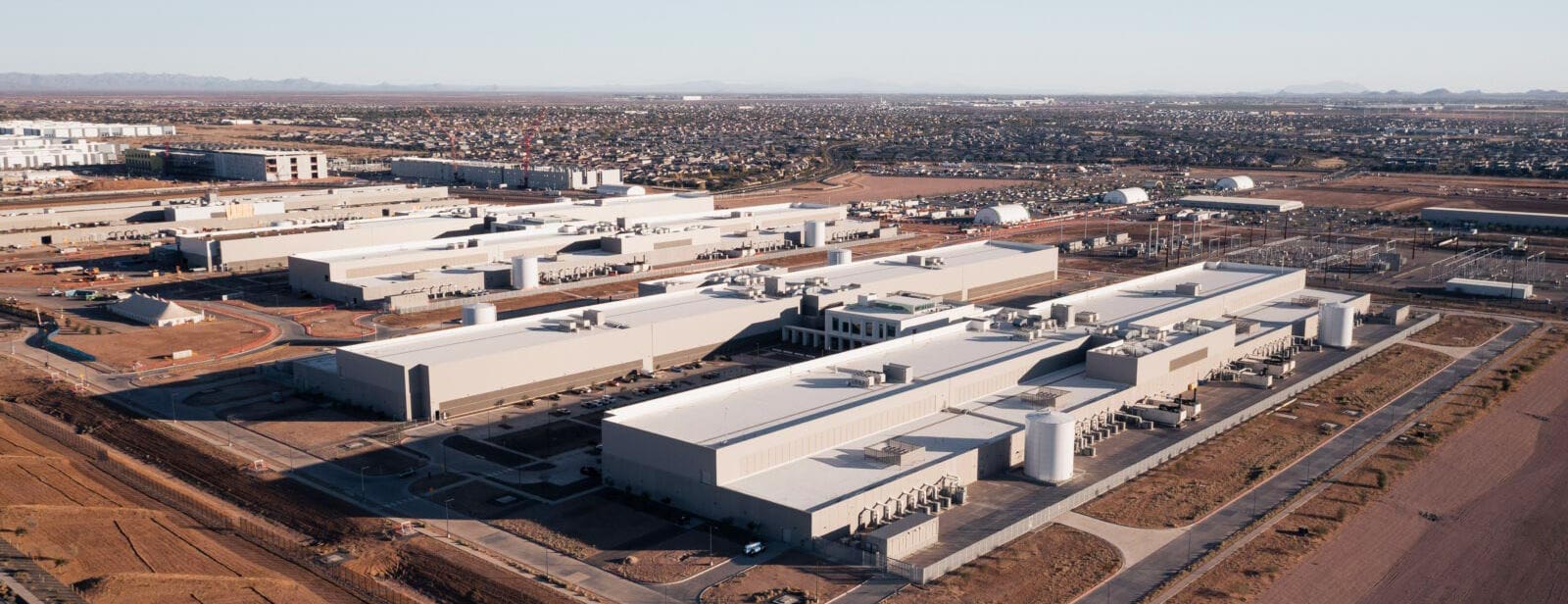
The landscape of electricity is itself, in turn, only part of the new investment economy of Tonopah/Arlington. Maricopa County is one of the fastest growing markets for data centers in North America, and the two major utilities in Arizona expect Projections provided by the electricity utility providers Arizona Public Service (APS) and Salt River Project (SRP), May 2025, City of Phoenix Planning and Development Department, Health and Safety Impacts: Data Centers (2025), 587/727, in City of Phoenix, City Council Formal Meeting, July 2, 2025, available here. that future industrial energy demand in their service areas will be "more than 90% for data center development." There are an estimated 155 data centers in Phoenix, for which the City of Phoenix, in the summer of 2025, introduced new zoning requirements. These followed extensive hearings City of Phoenix, City Council Formal Meeting, July 2, 2025, 589-595/727; see also here. about the possible effects of further expansion: "constant humming and buzzing noises;" increased heat (in a city where there were 70 days in 2024 in which the temperature exceeded 110f. [43.3c.]); heavy water use; air pollution from back-up diesel generators; risks to grid stability because of the "bad harmonics" associated with the "unpredictable energy spikes" of AI use; and risks of data center fires -- "dense corrosive smoke," burning of lithium-ion batteries, "toxic heavy metal particulates," "contaminated run-off" -- as described by the City of Phoenix Fire Department and the International Association of Fire Fighters.
In and around Tonopah, the boom in data centers is at the edge of the horizon. There is a new development just north of Route 10 that is in the process of being approved -- "a $25 billion data center is slated for this tiny Arizona community" -- on the evocatively named Tonopah Salome Highway. "This was as the desert should be, this was the desert of the picture books, with the land unrolled to the farthest distant horizon hills," in the vista Hughes, The Expendable Man, p. 23. of the protagonist of The Expendable Man, as he and his ill-fated passenger approached the "new resort motel of Salome-Where-She-Danced." (Salome, AZ, around 70 km to the west, was known to a correspondent of Motor Life, in 1922, for "the most remarkable automobile service station it has been my good fortune to encounter," and subsequently for Salome, Where She Danced, The movie was described by the New York Times in May 1945 as "probably the most fantastic horse-opera of the year."a western melodrama about Bismarck, Robert E. Lee, and Yvonne de Carlo, who flees to Arizona from the Austro-Prussian war of 1866.)
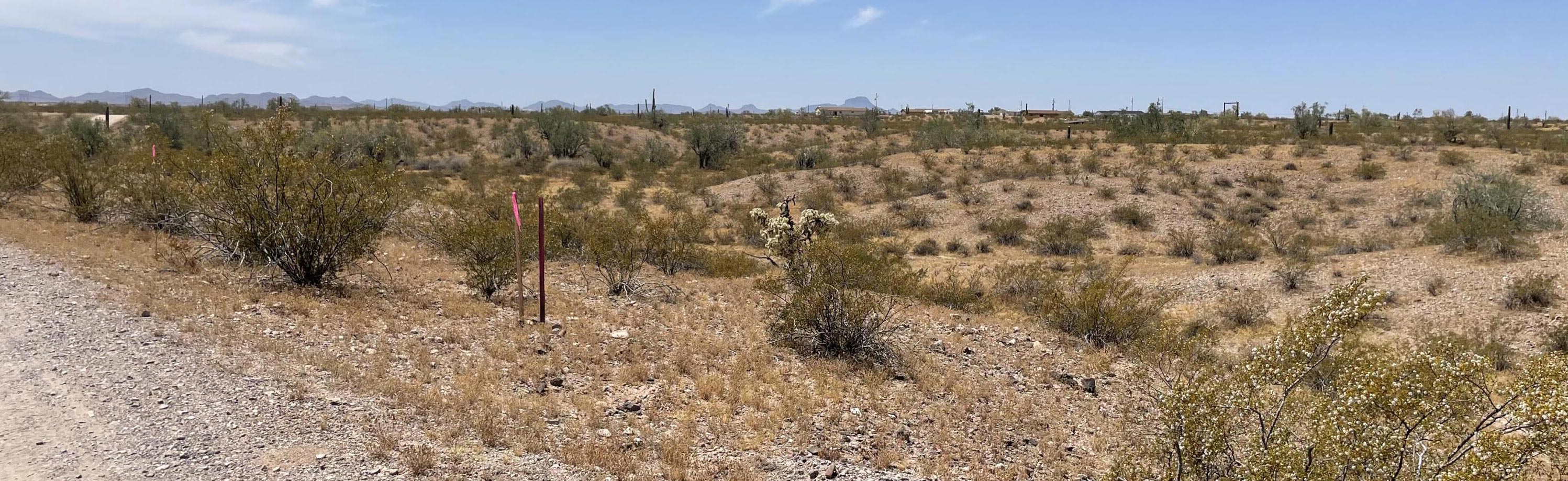
The Tonopah-Salome data center to the north of Route 10 will be on the land of the former Hassayampa Ranch -- the name "Hassayampa," from the Yavapai "Hasaya:mvo," means "the river that flows upside down" -- and in November 2025, This was the approval by the Maricopa County Planning and Zoning Commission of a major comprehensive plan amendment, for the approval of a new land use designation. "Report to the Planning and Zoning Commission Prepared by the Maricopa County Planning and Development Department Case: CPA250008, Hassayampa Ranch,Hearing Date: November 6, 2025, p. 2/33, available here; and Please see here. the Maricopa County Planning and Zoning Commission approved a change in land use from residential to "industrial;" "$25B data center project clears hurdle." In December 2025, the Maricopa County Board of Supervisors ratified On the zoning application, see the comments by Wendy Riddell at c. 42:00, on behalf of the landowner, and on the wastelands, comments by Kathleen Fletcher at c. 54:00. the change in land use, over the opposition of adjacent property owners, and a zoning application was expected in "30-60 days."
To the south of Route 10, there will be a similarly vast industrial project, See Report to the Board of Supervisors Prepared by the Maricopa County Planning and Development Department Board Hearing Date: December 10, 2025, Case #/Title: CPA250002 and Z250015 – Harquahala Energy Generation and Industrial Complex, p. 50/73, available here.associated with Copia Power, to provide for "the storage, processing, and transmission of the massive volumes of data that are generated every second;" a change of zoning was approved at the same meeting of the Maricopa County Board of Supervisors in December 2025. In the neighboring town of Buckeye, a few miles from the Hassayampa electrical switchyard, the Hassayampa Municipal Landfill (in operation from 1961 to 1980), and the Hassayampa Superfund Hazardous Waste site, there will be a "$20 billion data center campus," approved The Buckeye City Council documents show some of the mechanics of data center development: "If the data center campus does not come to fruition, PU-2 [the plot] may be developed with commercial uses, light industrial uses, or some combination thereof...The developer will receive 20 percent of the tax revenues generated by data center uses only, over the project over a term of 20 years, which may be extended if certain revenue performance requirements are met, capped at a maximum of $50 million dollars, as reimbursement towards the significant transportation, water, sewer, and public safety infrastructure costs associated with the project." CITY OF BUCKEYE REGULAR COUNCIL MEETING AUGUST 6, 2024; Please see here and here. pp. 1487,1489/1823. by the city of Buckeye in August 2024.
Beyond the data centers, there are even more dreamlike investment opportunities. In 2017, Bill Gates (or his "investment firm") bought land in or around Tonopah -- north of Route 10 and near the exit to the Palo Verde Generating Station, a few miles to the south -- with the prospect of building an entirely new city. It was to be called "Belmont" (after the mountain on the horizon that was named after the mine in Nevada), and would have a population of around 182,000 people. It was to be a "smart city," built around "a flexible infrastructure model." There would be "cutting-edge technology, designed around high-speed digital networks, data centers... autonomous vehicles and autonomous logistics hubs;" there would be public schools; technology would serve as the "backbone" of the city, and "not the purpose of its existence."
This was a great moment for Arizona real estate; in the words of the promoter of the Hassayampa Ranch data center, "Bill Gates puts remote Arizona area on map, sparks real estate rush." The idyll Please see here and here. was of living in nature, and the city was expected to have "huge appeal to young families with a healthy mix of employment opportunities, parks and recreation as well as what will probably be the coolest schools in America;" for "outdoor enthusiasts," the "land is in close proximity to White Tank Mountain Regional Park."
The construction of the Belmont settlement is still in the future, in early 2026, and so is the prospect of finding a secure These prospects were discussed from the outset of the project; see here. and long-term water supply, the new technologies of "advanced water recycling" and "rainwater harvesting" notwithstanding. There have been "questions," "The idea is to roll out lightning-fast internet, self-driving shuttles, solar farms, and smart water systems—all while training workers and teaming up with small shops. Of course, questions about cameras, data control, and who makes the rules keep popping up." even from enthusiasts, about "who makes the rules." The Palo Verde group of the Sierra Club describes Please see here. Accessed on November 29, 2025. Belmont as a "sprawl monster:" "a 1990s era subdivision on a grand scale," and a site "almost as big as Paris with a proposed population The population of Paris was 11.3 million in 2025, and the population of Tempe, AZ was 191,000. Please see here and here.as large as Tempe." "It has little to do with Bill Gates," and is a "low density, auto-dependent development;" "a defining instance of freeway dependent sprawl," whose "supposed advantage is that it sits at the intersection of I-10 and the proposed I-11 [the long-projected highway from Las Vegas to Phoenix.]"
But the development dream is still there. There is an even larger "master planned community," north of route 10, that is expected to have a population of 300,000. It is called "Teravalis," and it is about 11 miles to the north of the projected data center at Hassayampa Ranch on the Tonopah Salome Highway. Teravalis is a development -- like The Woodlands north of Houston, not far from the site of another ultra emission of methane that was observed from the skies in September 2020 -- of Howard Hughes Communities, with its "holistic approach to development where nature provides resilient ecosystems [and] community fosters meaningful connections." Teravalis, in particular, will be organized around "biophilic design," which "focuses on connecting our daily living spaces directly with nature, creating environments that support health, reduce stress, and foster overall happiness."
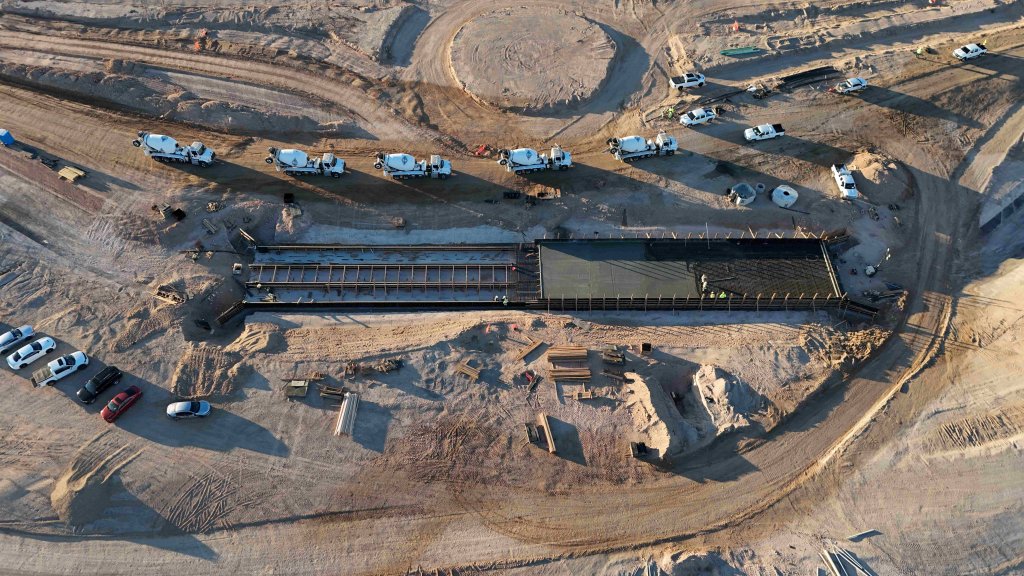
The Teravalis development, unlike "Belmont," has actually started construction. In November 2025 -- following an initial "ground-breaking" in 2022, a report in 2023 by the Arizona Department of Water Resources about future "unmet demand" for groundwater, and national controversy over the project's water requirements -- there was a "grand opening" of the first Teravalis village, "Floreo." Construction had begun in the cool hours before dawn; "Before sunrise in mid-October, roosters crow and nail guns can be heard in the distance. Construction workers are already at the job site on a day in which the temperature will exceed 100 Fahrenheit."there were initial residents ("it's really nice and quiet around here") and green lawns.
"In this valley, dreams of every kind will bloom," the developers wrote. There was "natural beauty" and "modern living" and "stunning desert landscapes." They had secured a 100-year supply of water for the first 8,500 homes (out of a projected 100,000); the houses would be water-efficient, and there would be a water reclamation plant. But the water, in the end, will come from the ground; the Hassayampa Basin aquifer.
So the final investment bonanza in and around Route 10, after electricity generation and data centers and new cities, is the investment that does not exist, or the investment in water. The name "Tonopah" ("hidden spring") is associated, as it happens, with one of the most spectacular project of public engineering in the Sonoran desert. This is the "Tonopah Desert Recharge," on 423rd Avenue, about 9 miles north-east of the Harquahala natural gas generating plant, and the methane emission seen from space in September 2020
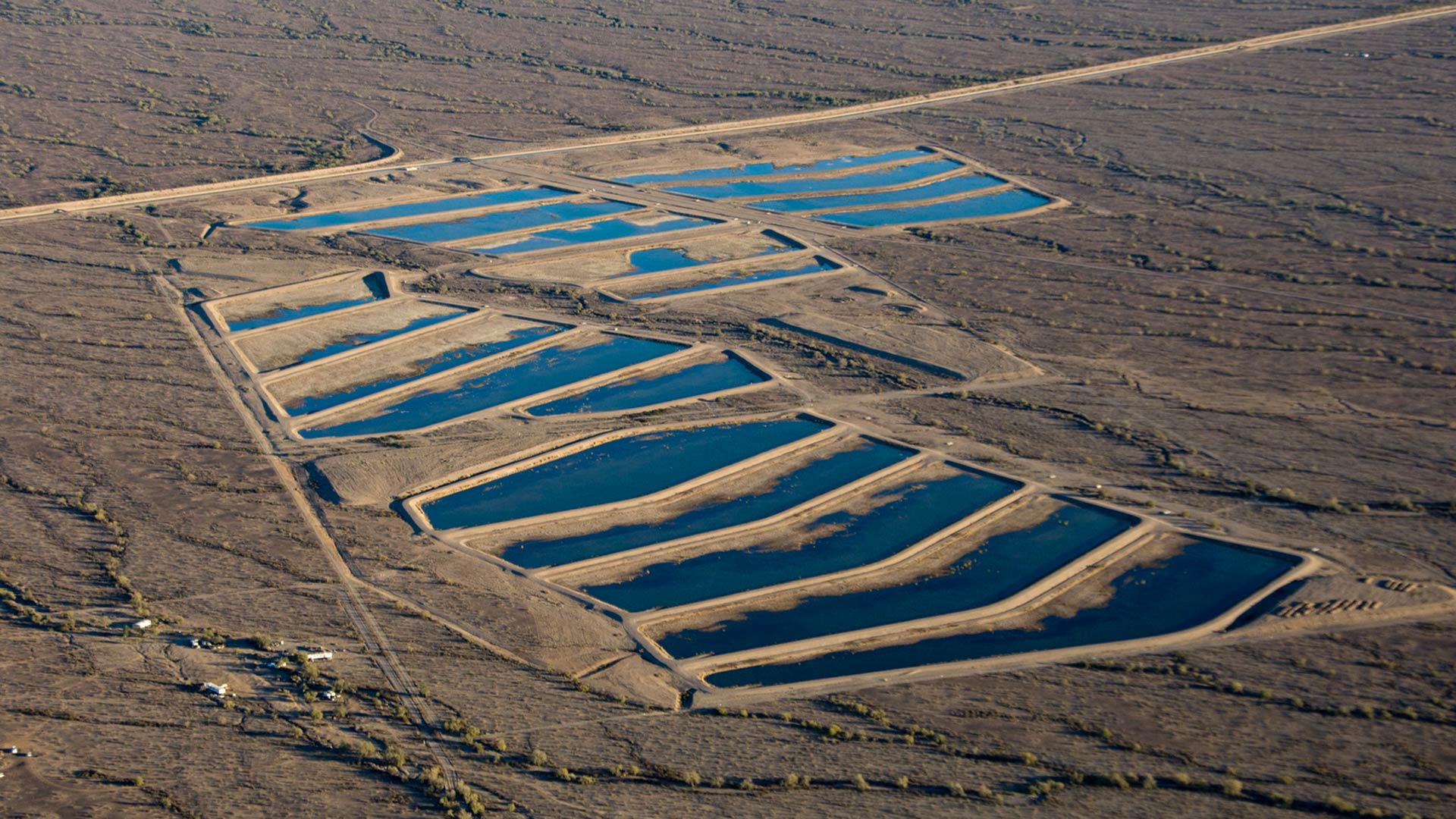
The Tonopah Recharge is an array of 19 horizontal basins, sometime dry and sometimes a brilliant blue, where the Central Arizona Project (CAP) -- the authority that supplies water to Arizona from the Colorado River -- stores and releases river water. It is a modest project, by the gargantuan standards of the green-financial bonanza of the 2020s; it cost $13 million to construct, started operations in 2006, and is troubled, in 2026, by difficulties with recovering the stored water, by the contamination of the contiguous groundwater (by fluoride and arsenic), and by dangerously low levels of water at Lake Mead, on the Arizona-Nevada border.
36 percent of Arizona's water Groundwater accounts for 41 percent of the supply, "in-state rivers" for 18 percent, and "reclaimed water" for 5 percent. Please see here Accessed on December 7, 2025.comes from the Colorado River, and its future has been the subject of dispute for more than a century. The CAP, which manages a system of dams, canals and lakes over a 336 mile (540 km) expanse of arid landscape, was authorized Please see here. in 1968, and was the eventual outcome of the Colorado River Compact of 1922. It is the Colorado River that marks the border between Arizona and California, west of Tonopah. When the hero of The Expendable Man, the 1963 novel of Route 10, crossed Hughes, The Expendable Man, p. 18. the bridge into Arizona, it was "full and lush and green, from green-white winter snow of northern mountain, from spring rains that never fell on this parched earth."
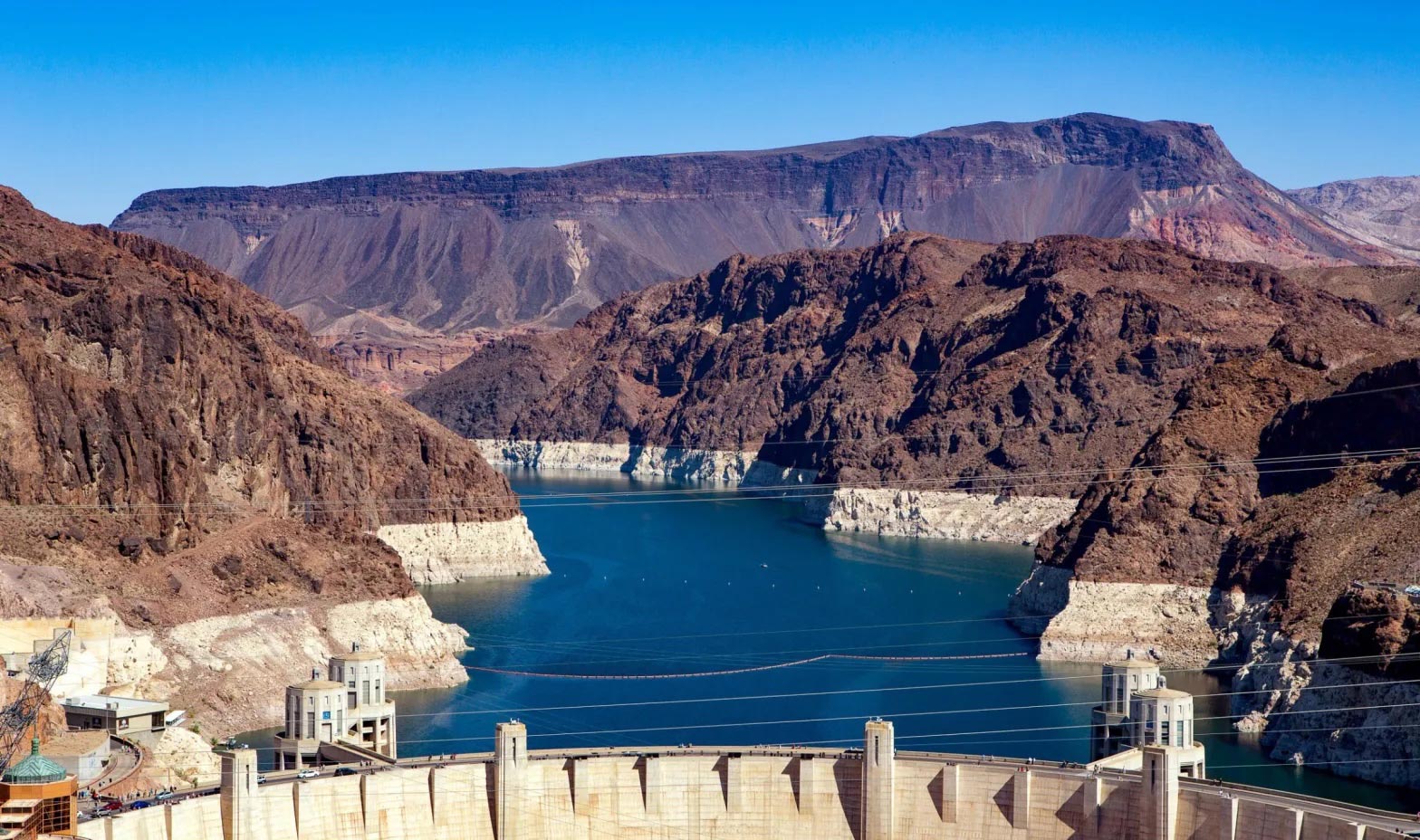
In 2026, there is an "unprecedented drought" in the Colorado River Basin. Lake Mead "Lake Mead is projected to stay in a Level 1 Shortage Condition, with an expected elevation of 1,055.88 feet—20 feet below the Lower Basin shortage determination trigger. This condition necessitates significant water reductions as indicated by the 2007 Interim Guidelines and the Lower Basin Drought Contingency Plan in the United States and Minute 323 and the Binational Water Scarcity Contingency Plan in Mexico. This calls for Arizona to contribute 512,000 acre-feet, about 18% of its annual apportionment, Nevada to contribute 21,000 acre-feet or 7% of its annual apportionment, and Mexico to contribute 80,000 acre-feet or 5% of its annual allotment." US Bureau of Reclamation, "Reclamation announces 2026 operating conditions for Lake Powell and Lake Mead: Latest projections stress the need for robust operational agreements for the Colorado River after 2026," August 15, 2025. Accessed on December 7, 2025. Please see here.is in a "Level 1 Shortage Condition," with a consequent legal obligation for "significant water reductions." The drought, and the mandatory reductions in water use, have coincided almost exactly with the expansion of the electric economy in Tonopah. The US government declared a water shortage at Lake Mead for the first time in August 2021, "Historic Drought Impacting Entire Colorado River Basin." US Bureau of Reclamation, "Reclamation announces 2022 operating conditions for Lake Powell and Lake Mead," August 16, 2021. Accessed on December 7, 2025. amid national Please see here and here. and international See Comisión Internacional de Límites y Aguas entre México y los Estados Unidos, August 16, 2021. Accessed on December 7, 2021. consternation. There is a remarkable oral history interview CAP Oral History Project, "Ted Cooke Transcript," undated, 26-27/40. The interview is available here and here. with Theodore Cooke -- an accountant who came to CAP from the California electric utility industry, retired as General Manager of the Central Arizona Project in 2022, and was himself nominated Cooke's nomination as US Commissioner of Reclamation, with responsibility for the Colorado River, was announced in June 2025, and withdrawn in September 2025; Please see here and here. On the long history of the Bureau of Reclamation, Please see here and here. in 2025 as Director of the US Bureau of Reclamation -- in which he describes the atmosphere of those years:
We're teetering, the lakes are as low as they can get. We're looking at another miserable runoff year... It's not going to get better by itself, it will not. We can have a good year, but it's not going to make a big difference. So there are still some folks out there that are saying, 'well maybe we don't have to do this. Maybe 2023 will be great. So, let's wait till April, and we'll see what 2023 is looking.' We can't wait anymore. We've waited as long as we can wait, we have to take some action. Or we're faced with hitting the wall literally in summer of 2024.
The intricate geopolitics of the Colorado River remain the subject of protracted negotiations, which have engaged the "Lower Basin" states of Arizona, California and Nevada and the "Upper Basin" states of Colorado, New Mexico, Utah and Wyoming, and since the US-Mexico Water Treaty of 1944, the United States and Mexico. One deadline was missed in November 2025 for the seven states to agree on "permanent, voluntary water usage cuts;" after "intense" negotiations over "the serious and ongoing challenges facing the Colorado River," the US states were "still snagged." In February 2026, for the Los Angeles Times, the "water deadlock spirals downward."
It is in this setting of scarcity that the dreams of Tonopah have bloomed. Water is an historical pre-condition for electricity generation, and the US Department of Energy inventory Table 2___Plant_Y2024, available here. Accessed on December 8, 2025of generating plants includes a column for "water source:" for the Palo Verde nuclear facility this is listed as "Phoenix Area Sewage Effluent," and for the five natural gas facilities in the Tonopah/Arlington area, it is respectively "Well," "Central Arizona Project/Well," "Municipality," "Wells," "Wells."
The nineteen solar and battery plants in the area, all of which use photovoltaic or PV module technology, are not required to list their sources of water. Photovoltaic cells convert "sunlight directly into electricity," unlike thermal plants -- fossil fuel or nuclear or "solar thermal" -- which heat water to produce steam. (The very few Of the solar generators in the United States in 2024, less than 2 percent are solar thermal, across eight separate plants, all of which list their sources of water. Tables 3_1_Generator_Y2024 and 2_Plant_Y2024, available here. solar thermal plants in the US, of which one is in the ur-Tonopah, This is the Crescent Dunes Solar Energy facility of "Tonopah Solar Energy LLC," at {38.238889, -117.363610} on 11 Gabbs Pole Line Road in Tonopah NV; its water source is "wells." It consists of an eerie, luminescent tower, surrounded by a large circle of sun-tracking mirrors. Tables 2_Plant_Y2024 and 3_1_Generator_Y2024.in Nevada, do list their water sources.) PV is "the most water-efficient solar generation technology available," according to the approved "Narrative" "Project Narrative CPA2021007," October 8, 2021, available here, and accessed on December 8, 2025; see pp. 12,14/31.for the Harquahala Sun project, and the continuing operations of the entire project, with its estimated cost of $350 million, are expected to require no more than "10 acre-feet of water [12,300 cubic meters]" per year, "for module washing and maintenance." (There would be "portable restrooms" for the people who come to do the washing.) At the tariff "For the first time in this drought-stricken century, a new price for water in the West has been set – and it's 25 times higher than what farmers have paid for the last 75 years. Arizona, Nevada and California recently agreed to reduce their water consumption from the Colorado River by 13% through 2026. The federal government will pay their irrigation districts, Native American tribes and cities $521 for each acre-foot of water they don't use." established in the Colorado River negotiations of 2023, the water would cost no more than $5,210 per year.
A representative of Copia Power, at a siting hearing Arizona Corporation Commission, "DOCKET NO. L-21304A-25-0169-00248, LS CASE NO. 248, VOL. I BEFORE THE ARIZONA POWER PLANT AND TRANSMISSION LINE SITING COMMITTEE," September 29, 2025, p. 42/175, available here. for the Harquahala transmission line and switchyards, even suggested that an "ancillary service" of the project would be that it leads to reduced water use: "it's essentially converting some of these active agricultural lands to nonagricultural uses, essentially saving -- drastically reducing the groundwater use or water use and preserving the Harquahala groundwater basin." About 70 percent Please see here. Accessed on December 10, 2025. The figures given are for 2017, when 72 percent of water was for agricultural use, 22 percent for municipal use, and 6 percent for industrial use.of the water Arizona uses is for agriculture, and there were 83 farms in Tonopah, over the period from 1995 to 2024, that received subsidies from the US Department of Agriculture. (One of the Tonopah farms -- at {33.42, -113.16}, a short distance south of the methane emission site -- was the winner of a contest "Arizona farm has top corn yield in contest," Successful Farming, Iowa edition; Des Moines Vol. 95, Iss. 5, (Mid-Mar 1997). The 1996 winner, "Windancer Farms," is listed in the Dun and Bradstreet directory as located at 3220 S Harquahala Vly, Tonopah, with one employee. Accessed on December 10, 2025. for the highest yield of hybrid corn, "far from the Corn Belt.")
The change in the land from rural development to utilities, and to the "visual context of electricity generation," is plausibly, on this view, an improvement in prospects for water conservation. But there are other risks. In the same hearing Arizona Corporation Commission, "DOCKET NO. L-21304A-25-0169-00248, LS CASE NO. 248, VOL. 2," September 30, 2025, pp. 82-83/206, available here. Accessed on December 10, 2025. for the Harquahala transmission line, one of the members of the siting commission (a member appointed to represent the "general public") commented that "this is evolving into a significant industrial complex," and asked whether "there was a security plan for this area.... Just a thought." Another member (also representing the public) then raised a different sort of risk: "That brings up another subject that we don't often talk about anymore -- we used to a lot -- and that is what type of fire protection has been discussed for this whole area. How far away are the fire departments? Are they aware of what they're facing here? Has there been any discussion about that with all of these battery systems?"
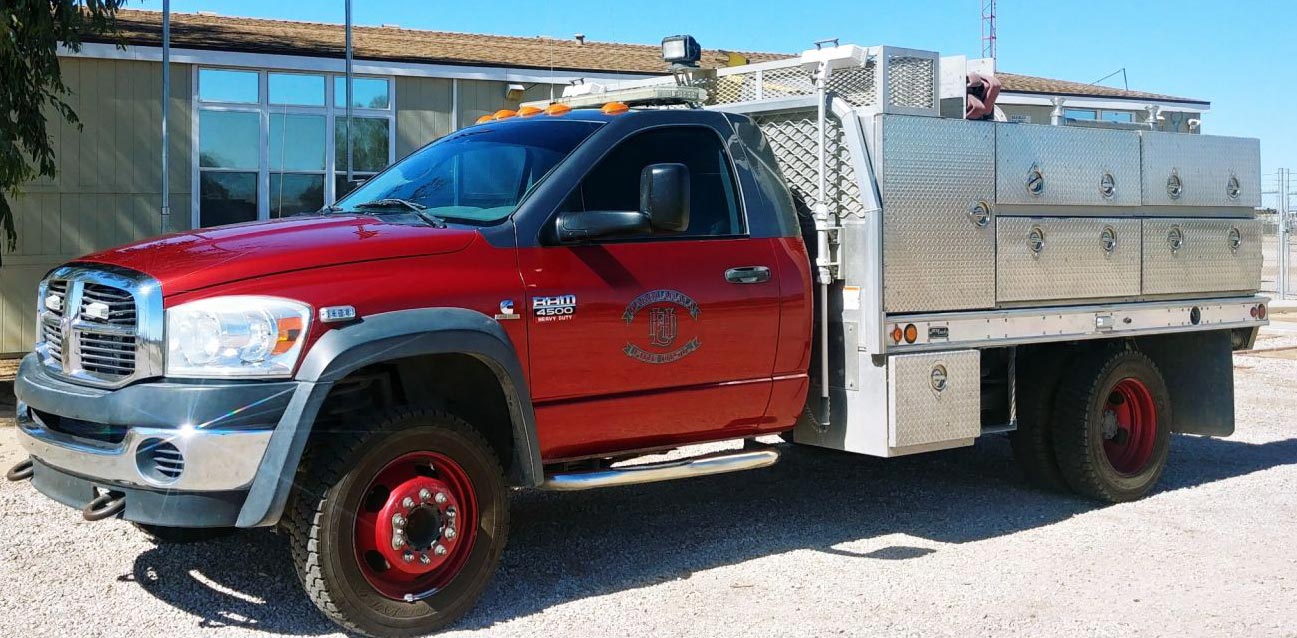
"Does that include any kind of emergency helicopter or firefighting operations that need to be with respect to other infrastructure in the area? The nuke plant comes to mind," a different member asked. Arizona Corporation Commission, "DOCKET NO. L-21304A-25-0169-00248, LS CASE NO. 248, VOL. I ," September 29, 2025, pp. 139-140/175, available here. The company's response was again reassuring: "Yeah. We're approximately 15 miles away from the nuclear power plant, and Copia has connected with the local fire department and has support for them for both our data center, our transmission and generation projects. So I believe we're covered off there and in a good spot." "And that would be the Harquahala Valley Fire District?" "That's correct." The "local fire department" for the Harquahala Valley, on W.Tonto Street in Tonopah, has a coverage area of 450 square miles (1,165 square kilometers), and 12 full-time members. The emergencies of the new energy landscape, in the arid climate of the Sonoran Desert, and in the aftermath of the Vistra battery fire of January 2025, are meanwhile exigent even for the much larger fire departments of Phoenix and Buckeye to the east.
Then there are the water requirements of the proposed new cities, with their populations of 182,000 (Belmont, with its "coolest schools") and 300,000 ("Teravalis"), at a time of continuing conflicts over water supplies for existing homes. In the "Rio Verde Foothills" development, to the north east of Phoenix, households were left without water in 2022, and are now supplied by "hauled water," following new Arizona legislation in 2023. Please see here and here.There are the new data centers, or the "$25 billion" project to the north of Route 10, the Harquahala "Industrial Complex" just to the south, and the "$20 billion" project further to the south. Here, too, the Maricopa County planning documents are reticent, except, as in the case of the battery plants, to insist that the water use for the data centers would be "significantly less than a residential community or agricultural use." In the data center Report to the Planning and Zoning Commission, Prepared by the Maricopa County Planning and Development Department Cases: CPA250002 and Z250015, Harquahala Energy Generation and Industrial Complex, Hearing Date: November 6, 2025, available here. "The developer will be evaluating setting up a closed loop liquid system;" "staff's position is that this facility is appropriate but that alternative cooling methods should be utilized that do not require high water use as a cooling method, especially when there will be only a few workers on site at any one time." pp. 9,10,17,18/73.to be associated with the Copia Power Harquahala project, the "facility will require very little water."
In the crisis of the Colorado River water of 2022-2023 -- with the prospect, in the words CAP Oral History Project, "Ted Cooke Transcript," undated, 24,27,37-38/40.of Ted Cooke of the Central Arizona Project, of "hitting the wall literally in summer of 2024," "when you turn on the tap... nothing is going to come out" -- Arizona was confronted with mandatory reductions in water use. The state is again implementing substantial cuts in the use of CAP water, in the current impasse among the Colorado River states. See the letter of Arizona Governor Katie Hobbs to the US Secretary of the Interior, November 11, 2025, available here and here. So the possibility of investment in new sources of water is again of immediate importance. In Cooke's words:
How long will it take us to get to the next thing? Whether that's a desalination plant or plants, whether that's importation via pipeline from somewhere else, whether that's mining groundwater, which is another finite thing. All those things need to work together. I think there is some real cognitive dissonance in that area as well, in that folks are going to be reluctant to pay the price that it's going to take to get that stuff. For instance, we could have a desalination plant in two years probably, but that is not going to, the two years is not going to start until there are customers with money at the end saying, 'We're willing to pay $2000 or $3000 an acre-foot (1,233 cubic meters] for that water.' No one is going to invest in that project until there are customers at the user end that are saying, 'We're willing to pay that much.' Today, there are not.
The Water Infrastructure Finance Authority of Arizona, in November 2025, announced that it had "advanced" water importation plans into a "study phase." These included proposals for a desalination plant in Sonora, Mexico, with "infrastructure" for "binational conveyance," put forward by a Spanish construction company; and for another desalination plant in Baja California, with a pipeline "to deliver the water north," put forward by a Canadian utility. There are no announced customers, "at the user end;" the projects are still to come.
So this is the final investment in the Tonopah/Arlington bonanza, or the investment that is not there. There is no salination plant, 300 kilometers or so to the south, that is part of the business plan for the Copia-Harquahala complex, and no water "augmentation" project that is part of plans for "Teravalis," with its biophilic design, or for the Hassayampa Ranch data center. There is land, in the Sonoran desert; there is solar radiation; and there is the memory of water.
The history of Tonopah, AZ, over the five years since the ultra emission event of September 2020, has been a fantastical story. It is a story, as so often in the history of climate change, that can be told as a utopian and a dystopian epic. But it is also an important story. Thinking with history is a way of understanding climate change, and thinking with climate can be a way of understanding history.
The utopian epic is easy to see. The development of Tonopah/Arlington is a success of the green economy and of "green finance." It is an embodiment of the high-energy, low-carbon society that has been the objective of so much US policy since the Clinton administration: the electrification of the "Southwestern deserts" to which Al Gore looked forward in November 2008, Al Gore, "The Climate for Change," November 9, 2008. in response to the "electrifying redemption" of Obama's election. Of the twenty-five power plants in the area, nineteen are solar. The Palo Verde plant is "clean and carbon-free." Please see here. Accessed on January 23, 2026. There are water-saving technologies, "smart" homes, and the prospect of autonomous vehicles; there will be data available for all the conveniences of daily life, and for the cosmic opportunity of artificial general intelligence.
Green finance is an elusive condition. It is "any structured financial activity that's been created to ensure a better environmental outcome," in the definition of its enthusiasts. The "structure," here, is constituted by public regulation. It is the consequence of the multiple tax incentives and reporting requirements imposed over the past generation by the US government, state governments, the European Union, and other public authorities. The outcome, for the Tonopah/Arlington area -- as in the "tax equity" of Copia Power -- has been a vertiginous sequence of investments from large financial institutions: Credit Suisse, Black Rock, the Carlyle Group, Santander, BNP-Paribas, Wells Fargo, BCPE.
The development of Tonopah/Arlington as an electric desert, or an electricity province, with its new "visual context of electricity generation," can even be seen as matter of (long-distance) environmental justice. The little settlements, with their little populations, were an approximation to empty spaces, for the projectors of the new investments. "Preliminary site investigations," in the words of the approved narrative "Harquahala Sun: Major Comprehensive Plan Amendment Project Narrative CPA2021007," October 8, 2021, available here and here, p. 13/31, and also p. 15/31.for Harquahala Sun, "have not identified any significant, unique, or critical wildlife habitats, endangered and/or protected flora/fauna species, or significant cultural resources within the Project area." The endangered Sonoran desert tortoise had been "documented within 3 miles" of the "Harquahala Industrial Campus"; during the work CPA250002 and Z250015 – Harquahala Energy Generation and Industrial Complex, p. 60/66, available here; "DOCKET NO. L-21304A-25-0169-00248" September 29, 2025, p. 156/175, available here. on the transmission lines for the "Harquahala Complex," "we have not found any desert tortoise...yet."

In the long, utopian history of economic development, these are the sorts of places where there should, after all, be solar power plants and data centers, exporting their sunlight and solitude to the crowded parts of the nation. The epic is global, and Tonopah -- like Sweetwater County, On Sweetwater County in Wyoming -- one of the "Upper Basin" states -- and the micro-history of methane emission sites and trona mines. The new trona mines in Sweetwater are expected to affect the Colorado River system through activities at the "northern end of the Flaming Gorge National Recreation Area," and through the possible "diversion of water from the Green River."WY to the north, at the other end of the Colorado River basin -- is in prospect a resource colony On the possibility that Wyoming or Nevada -- and even Arizona --can become the equivalent of the "hewers of wood" so often discussed in nineteenth-century disputes over free trade and protection, Please see here.for the more industrialized societies of Europe and Asia, connected by the networks of long-distance finance and by the EU's requirements for "corporate sustainability due diligence."
"Old social institutions have to disintegrate," a group of eminent economists wrote Measures for the Economic Development of Under-Developed Countries, Report by a Group of Experts appointed by the Secretary-General of the United Nations (United Nations: Department of Economic Affairs, May 1951), pp. 15, 31, 93. The experts included W.A.Lewis and T.W.Schultz.in 1951, of the "preconditions" for the development of "Under-Developed Countries;" "large numbers of people who cannot keep up with progress have to have their expectations of a comfortable life frustrated." This is the precondition, too, for the sustainable or "green" or climate-neutral development of the 21st century.
The nine households who were within the immediate proximity of the Hassayampa Ranch development are unmodern, in this perspective. A rural community was being transformed into "industrial wastelands," one of the two people Kathleen Fletcher and Cherisse Campbell, interventions at c. 46:00-47:00, 54:00 of the 3:29:28 meeting.who spoke in opposition to the project said at the December 2025 Maricopa County Board of Supervisors meeting. The other speaker talked about her own small business, an organic hatchery, about the noise of data centers, and about the importance of "stress-free existence" for free-range chickens; she could not imagine "putting my birds through such trauma." These, I suppose, are the individuals who have become too comfortable for the epic of green development.
The other, dystopian epic of Tonopah/Arlington is similarly easy to see. It is the same story, seen from a different view. The solar plants are there, mile after mile, by the side of the road. The data centers, if they exist, will be noisy. They will use large amounts of water for cooling, and the water they discharge may be contaminated. On discussion of a proposed data center near Tuscon, AZ, and the risks of contamination with PFAS, see Sharmila Dey, "Local Opinion: Project Blue must not be allowed to threaten health," October 23, 2025, Arizona Daily Star. The risks of wildfires and battery fires and water pollution are still to be evaluated. The photovoltaic modules will become, eventually, no more than hazardous waste.
There will be almost no jobs, after the initial (dusty) months or years of construction. "Prompt engineer, AI ethicist/officer, AI trainer/curator, AI auditor, AI experience (AIx) designer": these are the jobs that are listed (by AI) in response to the prompt, Google, interrogated on December 18, 2025."what jobs does ai create?" But the jobs Arizona Office of Economic Opportunity, Annual Occupation Employment and Wage (OEWS) Data Tables. These were major occupations in which employment increased substantially from 2023 to 2024. Other major occupations, with smaller increases, included "management," "business and financial operations," "sales," and "healthcare practitioners." that people in Arizona are most likely to have, like people elsewhere in the US, are less ethereal: "food preparation and serving," "construction and extraction," "healthcare support."
Of the twenty-five power plants in the Tonopah/Arlington area in 2024, nineteen (or 76 percent) were solar. Of the fifty-four individual generators that constitute the power plants, thirty (or 56 percent) were solar, twenty-one were natural-gas-powered, and three were nuclear. Of the overall generating capacity in this new electricity province, only 16 percent was from solar and battery sources. The "nameplate capacity" See US EIA, Electric Generator Inventory. of the twenty-one natural gas generators was 4,500 MW, of the three nuclear generators 4,210 MW, and of the thirty solar generators only 1,651 MW.
Palo Verde is clean and carbon-free, in its own self-description. But the production of reactor fuel and the mining of uranium "require large amounts of energy," in the summary "Nuclear reactors do not produce air pollution or carbon dioxide while operating," Nuclear explained: Nuclear power and the environment. Accessed on January 23, 2026. of the US Department of Energy, and the plants require "large amounts of metal and concrete, which require large amounts of energy to manufacture." Most of the landmarks in this micro-history of Tonopah -- the Harquahala Generating Station and the ultra emission site of 2020, the Mesquite Solar Complex, the Hassayampa Ranch data center development, the "local fire department" on W. Tonto Road -- are within the 30km radius circle around Palo Verde in which "residential proximity" to nuclear power plants has been associated Alwadi, Y., Evans, J.S., Schwartz, J. et al. 'Residential proximity to nuclear power plants and cancer incidence in Massachusetts, USA (2000–2018)'. Environmental Health 24, 92 (2025).with increased incidence of cancer.
The promise of green finance -- in which the largest financial institutions were able to make short-term profits in long-term investments in power plants, and the mission of the PG&E corporation, in its 2024 10-K Please see here, p. 12. filing to the SEC, was to "deliver for [its] hometowns, serve the planet, and lead with love" -- is less than convincing in 2026. It was "structured" by public regulation, and it was unresilient Please see here. in the presence of new, different regulations.
In his 2008 vision of the electrification of the Southwestern deserts, Al Gore looked forward to "a nationwide fleet of plug-in hybrids," to save "America's automobile industry" and "solve the economic crisis." The new, smart cities to the north and south of Route 10, with their sprawl and their autonomous vehicles, at the intersection of the (future) Route 11 corridor, have been planned for this modern reinvention of the auto-industrial age. They are the vindication, two generations later, of choices made in the 1950s and 1960s -- in multiple decisions about land use and zoning, by the US federal government, with the Interstate Highway System, and by state and local governments -- which have made automobile travel a necessity for almost all Americans.
There will be individuals in the new Tonopah who do find employment in the ethereal occupations of modern times; who work "hybridly" from home, and are driven in their (autonomous) hybrid vehicles only to go out to a restaurant, or for "wildlife-related recreation" (in the expression of the Arizona Game and Fish Department, in a comment Maricopa County, "Report to the Planning and Zoning Commission: CPA250002 and 2250015: Harquahala Energy Generation ans Industrial Complex," November 6, 2025, 60/66.on the proposed Harquahala Industrial Campus.) Palo Verde has positions open (for a "Nuclear Assurance Vendor Audit Team Lead," among other specialists.) But the high-energy, low-carbon, high-data society will in the dystopian epic be a diminished sort of existence.
Life will be cool at home, and it will be almost too hot to go out over the summer months. There will be the distant sound of humming. "Teravalis" is being built (before sunrise, from time to time) "between the stunning High Sonoran Desert landscapes of the White Tank Mountains and Belmont Mountain Range." It will have its own "parks and trails," "allowing everyone to stay connected while enjoying the outdoors just outside their front door." ." As in an earlier project Please see here. On Anita Verma-Lallian, "Vermaland," and Arizona Land Consulting, see Sharon Goldman, "At the edges of the AI data center boom, rural America is up against Silicon Valley billions," Fortune, December 2025. in Tonopah, called "Verma Vistas," "mountain ranges... offer spectacular views."
But the mountains will be no more than a view. At the Hassayampa Ranch industrial site, there will be "good landscaping" and "view corridors:" Wendy Riddell, representing the landowner, remarks at c. 42:00 of the meeting.lines of sight into the desert. To the northeast, at the northern edge of Phoenix, there is a different industrial-residential community, also with a romantic name, and a promise of "elevated living." It is called "Halo Vista," and it is the "integrated ecosystem" to be built around the large chip manufacturing facility of TSMC (the Taiwan Semiconductor Manufacturing Company.) "She misses the convenience of Taiwan," one new resident of Arizona told the New York Times, although "she does not miss the crowds;" "she looks out her dining room window and revels in the view of mountains on the horizon."
So what does the micro-history of Tonopah, AZ mean, beyond the mirror-image epics of climate hope and climate despair? It is a history in reverse, in that it begins with an "event" -- an ultra emission of methane -- that took place in Tonopah in September 2020, and it is concerned not with why the emission happened there, but with what happened next. It is a story of the weightless, invisible economy of the 2020s, in which methane pollution is becoming (in principle) a thing of the past. It is also a material history, of grading and topography and fire stations; a history from below of the unbearable lightness of modern life. On the external costs associated with different sorts of capital and the unbearable lightness of the post-modern economy, see Emma Rothschild, "Capital and Climate," Hobsbawm Symposium, University College, London, May 1, 2014.
The history of the new economy -- of endless data, endless electricity and endless solar radiation -- has for the most part been told, or is being told, in the rhetoric of the entirely unprecedented; new technologies, new possibilities, new policies, and new (unimagined) risks. The solar boom was itself made possible by technical change and by reductions in the cost of solar panels; in the conclusion of a 1976 "Arizona Town Hall" 028th Arizona Town Hall, ARIZONA ENERGY: A Framework for Decision, Research Report prepared By the University of Arizona, April 1976, p. 80/196, available at the Arizona Memory Project. on energy, in 1976, "it is the capital cost of solar power plants that makes them unattractive."
But the Tonopah story of 2020-2025 is also part of a much older history of change in the US economy, in the role of government, and in ways of thinking about nature. It provides a glimpse, in turn, of how this long economic history has itself shaped the contemporary (and evolving) energy economy.
The Tonopah micro-history is difficult to locate, in the first place, within the disparate sectors of the US economy. It is only fleetingly a construction boom. In the narratives associated with the amendments in land use, the "construction phase," with its grading machines and "fugitive dust control," or its "topography... subject to hillside, ridges, washes, and floodplains," is no more than a prelude. See "Project Narrative CPA2021007," Harquahala Sun, 6,9,13/31, and, on topography, CPA250008, Hassayampa Ranch. It was expected to last "approximately 12 months," in the case of the Harquahala Sun development, and create up to 240 jobs; the site would revert, thereafter, to its "operations phase," with "approximately 5 full time employees daily."
The dramatic tension, in the Tonopah story, or the economic opportunity, is elsewhere, and the cast of characters emanate from a different, larger and more obscure industry. The construction industry, in US national statistics, accounts SAGDP2 Gross domestic product (GDP) by state.for about 4.4 percent of gross domestic product; "data processing, hosting, and other information services" for 1.8 percent; and utilities for 1.5 percent. The home industry of "Copia" and "Verma Vistas," rather, is the (immaterial) industry that accounts for more than 21 percent of US GDP, or "finance, insurance, real estate, rental and leasing" (FIRE.)
FIRE has been at the center of US economic growth since the 1980s. It is a service-producing industry, and its economic output is difficult to measure. It is lumpy or asymmetrical; it accounted NIPA tables 6.1D, 6.5D, and 6.13D, available here.for 21 percent of GDP in 2024, for 17 percent of "national income," according to a different series of US statistics, for 7 percent of employment, and for 45 percent of "noncorporate capital consumption allowances" (a measure of the depreciation of the assets of unincorporated business.) It is also distributed unevenly across the country. FIRE accounts SAGDP2 Gross domestic product (GDP) by state, available here. for 34 percent of gross domestic product in New York, 18.5 percent in California, and 13.7 percent in North Dakota. It is booming in Arizona, where it accounted for 25 percent of GDP in 2024, up from 19 percent in 1997. ("Electricians" were one of the occupations where employment increased Annual Occupation Employment and Wage (OEWS) Data Tables, available here. most in Arizona in 2024; so too were "Securities, Commodities, and Financial Services Sales Agents.")
The boom in solar energy in and around Tonopah, like the incipient boom in data centers, has been made possible by new technologies in data processing and material science. But its origin, in an economic sense, is in finance and real estate. FIRE, too, has its own "technologies," as it has had since (at least) the 1980s; the "accelerated process of general financial innovation" that President Reagan's Council of Economic Advisers described in 1988, Economic Report of the President 1988 (Washington DC, 1989), p. 32, and see Emma Rothschild, "Reagan and the Real America," The New York Review of Books, February 5, 1981, and "The Reagan Economic Legacy," The New York Review of Books, July 21, 1988. and that has been the object of awed admiration ever since. "Is credit securitization really a technological advance?" the authors of an early study James A. Rosenthal, Juan M. Ocampo, Securitization of credit: inside the new technology of finance (John Wiley, 1988), pp. 4-5. of financial technology asked, also in 1988, or is it "no more than 'a game of regulatory mirrors' – no real new technology, but only a temporary exploitation of certain regulatory loopholes." Their answer was reassuring: "it draws its lifeblood not from regulatory arbitrage but from the way it handles risk. In this respect, it is fundamentally more efficient than conventional lending."
The FIRE industry has in the 2020s performed a sort of alchemy, in relation to the enduring concepts of economic thought. There are 30-year projects that provide short-term profits. There are capital investments, of the heaviest and most long-lasting sort, and they are transmuted into flows of financial services: the dancing "merchant power plants" of Tonopah/Arlington, with their instantaneous markets; and the data centers, with their cooling systems and their diesel generators, that may or may not be developed "Ultimately, Vermaland hopes to sell and lease land to data center developers that could build their facilities on the land as Vermaland coordinates power;" this is a description of a different project of the "Verma Vistas" real estate group, in Pinal County, adjacent to Maricopa County to the south-east. Please see here. in the new industrial zones, to be rented to other operators, who in turn rent On the securitization of the risks of AI and data center development, and the strategy, for the largest companies, of "get[ting] as much of this built out with what the industry calls OPM: Other people's money," see Karen Weise and Eli Tan, "How Tech's Biggest Companies Are Offloading the Risks of the A.I. Boom," New York Times, December 15, 2025. the computing power to larger companies, who then sell it to the "AI industry."
The Tonopah micro-history is a story of capital, and of the capital-intensive production of electricity and data. But it is obscure, in the end, where the capital actually is. The solar panels and the warehouses -- and the irreversible loss of the landscape -- are to the north and south of Route 10. The economic boom, such as it is, is in the financial, real estate and leasing enterprises of Maricopa County. The return on capital, like the risk, is somewhere else. In the cloud? Or in Spain? In North Dakota? Or nowhere?
The second large historical change is in the role of the state. The boom in and around Tonopah/Arlington, with its "tax equity," has been shaped by the policies of the United States government (which are themselves changing over time.) But the dramatic tension, once again, is in the more obscure decisions of municipal and state government; of the Maricopa Board of Supervisors, the Phoenix City Council, and the Buckeye Planning and Zoning Commission.

The economic life of the state has been a black hole in economic history, and the history of municipal government is even less visible; as the size of the state and local government "industry" has increased, Value added by Industry as a Percentage of Gross Domestic Product. Please see here.meanwhile, to more than twice the size of the federal (non-defense) "industry." But it too has its archives -- like the electricity companies, with their "maps of the extension of networks," in Marc Bloch's description Some of Marc Bloch's very last writings, from 1941, were about "historical observation" and the "marvellously disparate character" of the materials of economic history. They were in response to, of all people, the poet Paul Valéry. Valéry had criticised historians for being preoccupied with events and documents, and incapable of understanding such large and long-lasting phenomena as the discovery of electricity, and "the conquest of the earth by its applications." But there were archives of electricity companies, Bloch wrote, registers of electricity consumption, and maps of the extension of networks; electricity, too, was a subject of and in history. Marc Bloch, Apologie pour l'histoire ou métier d'historien (Paris, 2007), pp. 78-79; Paul Valéry, Regards sur le monde actuel (Paris, 1931), p. 25.-- and the records of municipal deliberations are plethoric in Arizona in the 2020s. The published Agenda of the Phoenix City Council for July 2, 2025 -- the meeting at which the health and safety impact of data centers was discussed -- extends over 727 pages. The publicly available recording of the Maricopa County Board of Supervisors of December 10, 2025, where the decisions The Planning and Zoning part of the meeting also included items about two energy parks, an industrial zone, a logistics center, and the Redhawk Power plant, one of the few remaining natural gas plants in Tonopah/Arlington. The Chair of the Board of Supervisors, Thomas Galvin, a lawyer focused on "land use, real estate, and water law," recused himself for this part of the meeting.were taken about the Harquahala Industrial Complex, Harquahala Sun and the Hassayampa Ranch project, lasts for 3 hours and 29 minutes.
These are for the most part serious, well-informed meetings. They are the record of a city and a region that are trying to make sense of the new technologies in which Phoenix is now so deeply engaged, and to imagine the distant future. There is public comment: City of Phoenix, City Council Formal Meeting, July 2, 2025, 709/727.
[a member of the public] explained that he is a building inspector, stated that he is a former City of Phoenix inspector, offered a tour of a data center, and stated that he has been inspecting microchip factories for the last 5 years.
[a committee member] asked if data centers are the same thing as chip makers. [a member of staff] stated that it is his understanding that they are different.
There are recusals.
At the December 10, 2025 meeting on the Hassayampa Ranch and Redhawk Power projects, the Chair of the Board of Supervisors, Thomas Galvin, a lawyer focused on "land use, real estate, and water law," recused himself for the Planning and Zoning part of the meeting.
There are choices, as in the rapidly expanding communities to the south of Tonopah/Arlington, that elide the distinction between the market and the state, in a new idiom of private-public fiscality. The "developer," in a project City of Buckeye, Regular Council Meeting, August 6, 2024, Agenda, pp.1704,1751, 1754/1823, available here. The owner, here, is the landowner of the Hassayampa Ranch.in Buckeye, AZ, is "responsible for dedication, design, and construction of public infrastructure, both internal and external to the project, such as streets, water infrastructure, and sewer infrastructure;" "city agrees to reimburse the developer 20 percent of the tax revenue generated by data centers within the project;" "owner intends to develop the Land as an economic engine."
There are state agencies that provide Evidence of the Arizona Game and Fish Department, June 30, 2025, CPA250006-Harquahala Sun III-V, Report to the Board of Supervisors, prepared by the Maricopa County Planning and Development Department, November 6, 2025, p. 45/66, available here.guidelines on "handling tortoises," and on avoiding "bird mortality" in the vicinity of solar plants, "due to habitat loss, collision with panels, attraction due to an optical illusion of water." There are also the state and local authorities -- the Arizona Department of Environmental Quality, the Arizona Department of Water Resources, the Maricopa County Air Quality Department and others -- that are, in the end, a source of hope amidst all the (irreversible) choices of the coming years. "As a condition of this request, developer must demonstrate the use of alternative cooling systems that do not use water to cool overheated servers," the Maricopa Planning Department wrote of the Harquahala Industrial Complex project, with its intimations Report to the Planning and Zoning Commission, Prepared by the Maricopa County Planning and Development Department Cases: CPA250002 and Z250015, Harquahala Energy Generation and Industrial Complex, Hearing Date: November 6, 2025, pp. 10,17/73. of a "technology that is evolving" for the "hybrid" or "dry cooling" of data centers.
It is in these meetings and staff reports, and in the political economy of the FIRE industry, that the history of the weightless, electric economy is being determined. The choices of the 1950s and 1960s about land use planning and interstate (or intra-city) highways -- the dispersed local decisions that shaped the auto-industrial society of the late 20th century -- had within a generation come to seem inexorable, irreversible, an inertia of use and wont. But these are the sorts of decisions that are now unfolding, daily, in the American city councils and county boards that are deliberating over plan amendments, zoning and power.
The land is being remade, before the eyes of contemporary observers, for the new, high-energy economy. There was an urban sprawl, and there is now an "energy sprawl." The bonanza of solar power in Maricopa County in 2020-2025 may itself, in the end, have been a fleeting utopia of the public-private economy. The onward march of electricity generation is still the condition of the AI economy to come.
The third and final historical change is in the valuation of nature. The micro-history of Tonopah is a melancholy story, of the loss of landscape and beauty, in an ever-more virtual world. It is also a story of the loss of understanding, about the relationship between land, sun, and water. There is Tonopah, in the story, or "hidden spring;" Harquahala, "running water high up;" "Hassayampa," "the river that flows upside down; "Mesquite," the tree that is an intimation of water.
The purpose of the old Indian names, as in William Cronon's history William Cronon, Changes in the Land: Indians, Colonists, and the Ecology of New England, rev. edn (New York, 2003), pp. 65-66. of the ecology of New England, "was to turn the landscape into a map which, if studied carefully, gave [the inhabitants] the information they needed to sustain themselves;" it was a map less of "possession or ownership" than of use. In the Tonopah boom, which was capital-intensive, the landscape was made up of capital-like goods with prices (like parcels of land), or without prices (like the sun, or the Gulf of California), or with imagined prices (like water.)
"I have personally seen in the area... the Great Horned Owl," one of the neighbors of the Hassayampa Ranch project wrote Letter from Cherisse Campbell, October 29, 2025, in Maricopa County Planning and Development Department, Report to the Board of Supervisors, CPA250008 - Hassayampa Ranch, December 10, 2025, p. 41/78, to the Maricopa Board of Supervisors, and noted that the proposed industrial site "cuts right through" the Hassayampa conservation area, The conservation area is a narrow band of land that crosses Route 10 in Tonopah, and "comprises lands within the Hassayampa River floodplain from its confluence with the Gila River upstream to the Town of Wickenburg... [It] provides a crucial travel corridor for wildlife, habitat for upland and riparian species, and migration stopover sites and breeding habitat for migratory birds." with its protected species, including the Sonoran desert tortoise. The tortoises, in the description of the US Fish & Wildlife Service, are geophagous US Fish and Wildlife Service, Sonoran Desert Tortoise (Gopherus Morafkai), accessed on January 25, 2026. "The tortoise is active during daylight hours but will also emerge at night to drink in response to rain. Sometimes, juveniles and adults will travel outside their home range for one or more seasons before returning. This type of movement, called sally, may be mistaken for dispersal.... Threats to the species include habitat degradation and loss, wildfires and drought. The majority (about 72%) of its habitat in Arizona is under public or tribal ownership, with interagency conservation agreements supporting ongoing conservation efforts." and eat primroses and legumes to "help with water retention." They live for 50 years or more, and they "sally" forth into the desert, and return home. They have no prices. But they matter to individuals nearby, and to the State of Arizona, and even to distant people, in a Humean David Hume, A Treatise of Human Nature (1739) (London, 1882), 2 vols., vol. 2, pp. 99-100. sort of way, like the "animal in a desart," that "neither belongs, nor is related to us," but of which the "idea... hang[s] in a manner, upon that of ourselves."
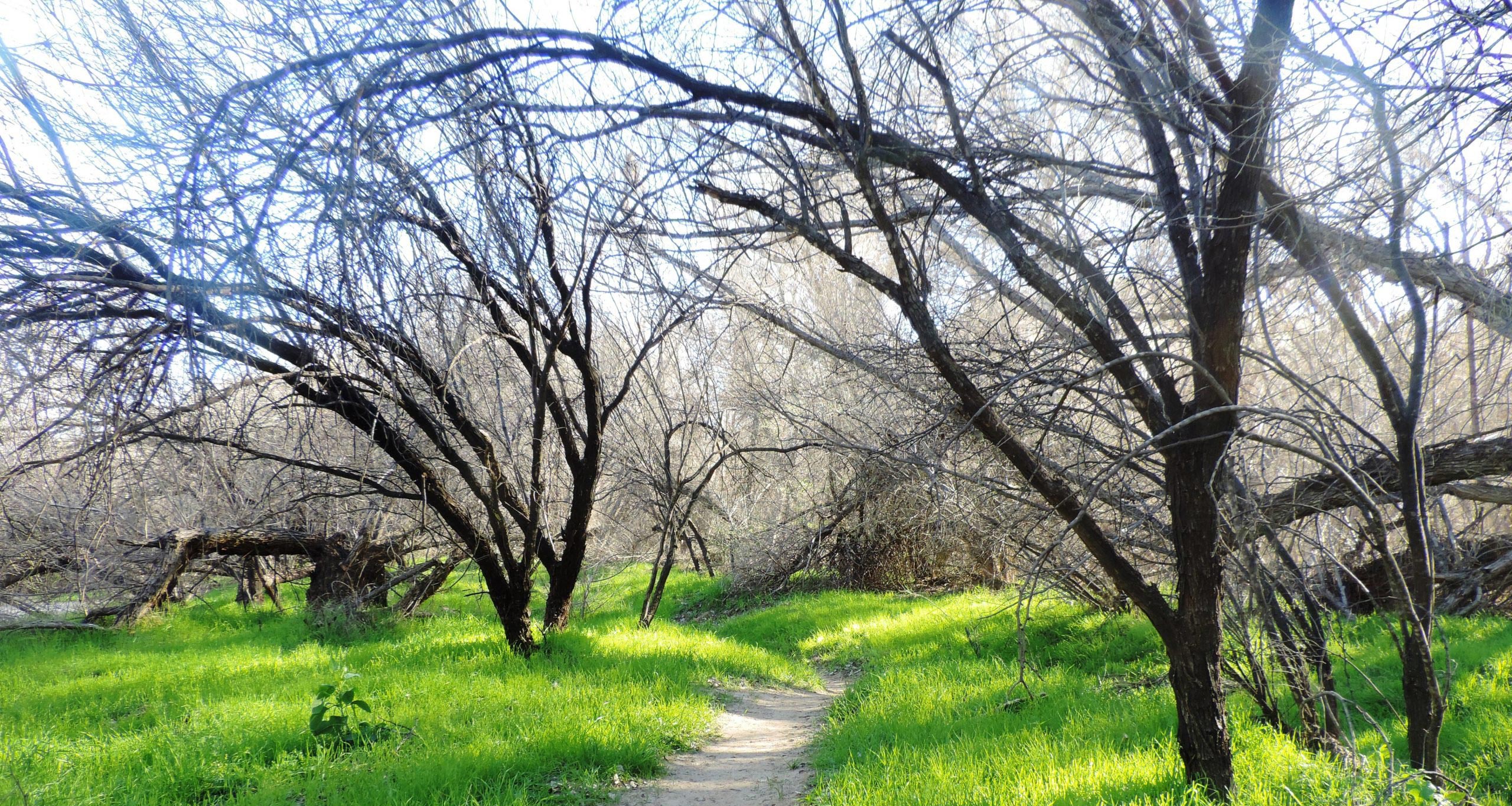
The history of the Tonopah solar bonanza is a story, like all histories of change over time, of possibility and loss. To construct a low-carbon economy is not to return to a pristine environment, in which everything will be the same, and unpolluted. There will be a "new visual context" -- of electricity and data, with its own late-modern beauty -- and new, poignant choices. These are the sorts of choices, about buffers and wildlife corridors and the "optical illusion of water," with which the ordinary life of conservation has for so long been engaged in Arizona.
But the Tonopah story is also about loss in ways of thinking. The value of the environment has been financialized, in the disparate investments that constituted the solar-data boom, and even, from time to time, in public policy. In a contemporary ideology Partha Dasgupta and Karl-Göran Mäler, "The Resource Basis of Production and Consumption: An Economic Analysis," p. 7, in The Environment and Emerging Development Issues, edited by Partha Dasgupta and Karl-Göran Mäler (Oxford, 1997), 2 vols., vol. 1: 1-37; The Economics of Diversity: The Dasgupta Review (London, HMTreasury, 2021), p. 4. On "nature's value," see "Dasgupta Review: Nature's value must be at the heart of economics," and on green banking and the atmosphere, see "Markets fail to account for nature." of "nature's value," "the environment is itself a gigantic capital asset," and the economics of biodiversity is "a study in portfolio management."
To see nature as a portfolio is to divide the world into distinct assets. It is to not see -- to fail to understand -- the connections between water and power that are so apparent in the incipient AI economy. There was land, in Tonopah, which was relatively inexpensive; there was solar radiation, which was infinite; there was water, in the Hassayampa aquifer, which was finite; there was water in the Gulf of California, which was infinite, and expensive to use. The history of the investment boom that did not exist -- the investment in new supplies of fresh water -- is at the heart of the Tonopah story, because it is a story of how not to understand the value of the land.
Theodore Cooke, the retired accountant from the Central Arizona Project, is again a profound observer. When he arrived in Arizona in 1999, he recalled, CAP Oral History Project, "Ted Cooke Transcript," undated, 10-11/40. The interview is available here and here. his initial assumption, after a career in the utility industry in California, was that "the water part" was not of importance:
This was just a substitute for electricity out of utility. This is the thing that we sell. We set rates around it, we charge customers, we have plans in place to maintain the equipment, and all those type of things. It's exactly the same as what I already just have been doing for 10 years. I'm just going to do it at a different place. And that's water. But it does not take long as it does not for most CAP employees when they come here from an outside industry or even outside of Arizona, to quickly understand, wow, water in the desert and how special what we do is.
The Central Arizona Project was different:
There was this mission, this unique, unequaled mission that we had. So, I can practice finance here, big equipment that I can go touch, and feel, and see, and hear, and listen, and observe. All of the ability to put things in place for the first time that will last, such as financial procedures, and reporting standards, and all those kind of things. All of those things that check boxes for me. And then this last one was... this complex thing to delve into that really has no bottom. And then the uniqueness of our almost spiritual mission that we have here. It's too much to resist.
I first went to Arizona myself in 1964, at an impressionable age. The population of the state was then around 1.5 million people, compared to more than 7.6 million people today. I have never lived there. But the two most powerful impressions are still ones that I can feel. They were very different. The first was of the beauty that was all around. The second was of the dryness of the air. It feels different to be in the desert; one is a different person.
The methane ultra-emission site in Tonopah is the only one in the state, and its micro-history has been a story, in the end, of the intermittent, lucrative, uncertain invention of a low-carbon economy. It is not a story, so far, of beauty and of being in the desert.