
Introduction
Of the 323 sites in the 1800 Histories data that are identified with "human" activities -- ie activities other than the exploitation of oil, gas and coal -- almost all are associated with waste disposal sites. The largest number of sites is in South Asia -- 156 in Pakistan, 76 in Bangladesh, and 56 in India -- and most are in or close to very large cities, including Lahore, New Delhi and Dhaka. There are 19 in Argentina, most of them in or near Buenos Aires.
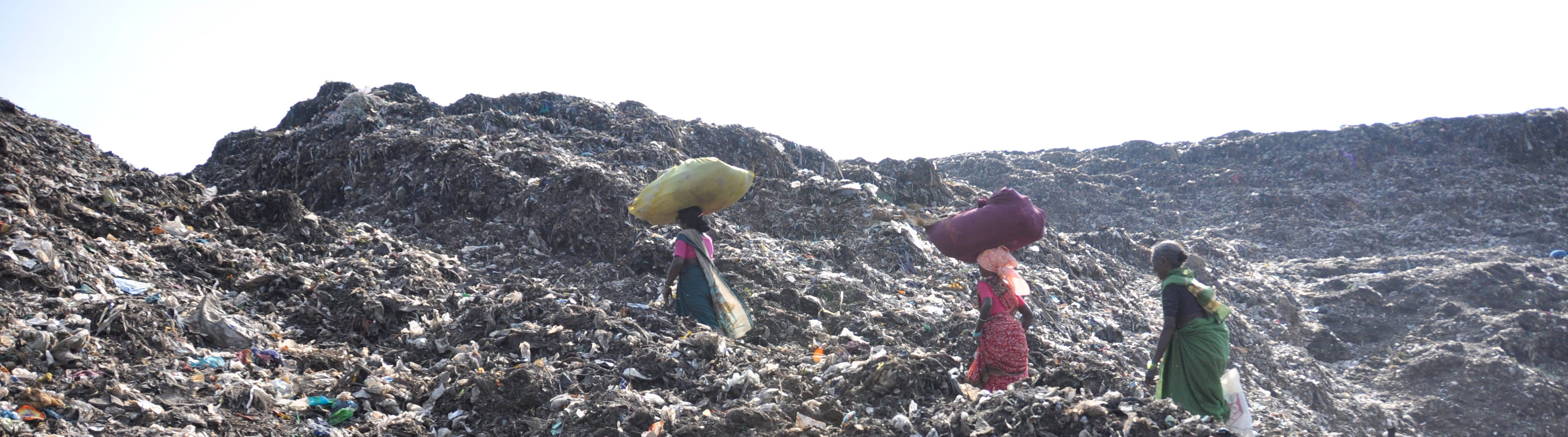
There are many other very large landfill sites that were invisible to TROPOMI. But the size of the methane emissions from the sites is very large indeed. The largest single site in the entire dataset -- the one that produced 574 tons of methane per hour on March 23, 2019 -- is at {90.42, 23.84} and corresponds to the Amin Bazar Landfill in North Dhaka, Bangladesh.
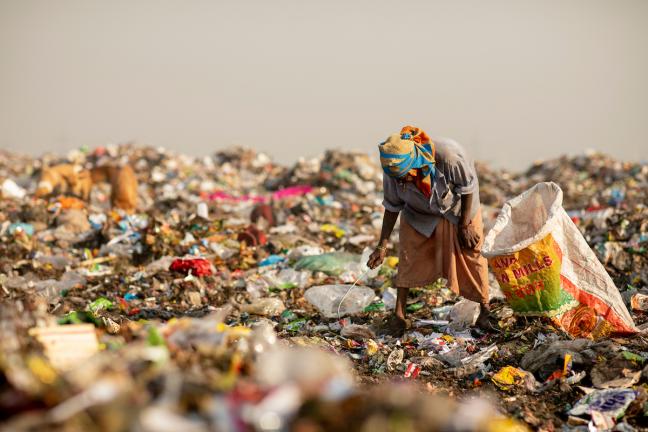 The landfill sites are sources of local pollution -- of land, water, and air -- as well as of the global or greenhouse gas emissions that are visible from space. They are also workplaces, for hundreds of thousands of individuals who are exposed to extraordinarily hazardous working conditions.
The 1800 Histories project is very pleased to be able to present the first three in a series of micro-histories by a group of remarkable women associated with WIEGO, the Women in Informal Employment: Globalizing and Organizing network, and with The Global Alliance of Waste Pickers.
The first essay, which provides an introduction to the work of WIEGO, is by Professor Martha Chen, one of the founders of WIEGO in 1997, together with Ela Bhatt and Renana Jhabvala of SEWA. The second essay, about the Ghazipur landfill in New Delhi, is by Shalini Sinha of WIEGO. The third essay, by Poornima Chikarmane and Lakshmi Narayan, is about an innovative programme at the Uruli landfill site near Pune, India.
| The Case of Landfills in Delhi » |