
Life on the Uruli Landfills
Poornima Chikarmane and Lakshmi Narayan
As a child, Supriya Bhadakwad recalls accompanying her mother to the Kothrud landfill, situated on the west of Pune city, in the state of Maharashtra in India. Her playground became her worksite as she grew into adulthood and began to salvage recyclable paper, plastic, metal, glass, bones, and other materials that she sorted and sold to the neighbourhood scrap dealer. In the 1980s, Kothrud featured in the Guinness Book of World Records as the fastest growing suburb in Asia, due to immigration as well as influx from the old inner-city limits. The gentrification of the areas surrounding the 30-acre landfill, which had been operational since 1969, was well underway. The new residents successfully negotiated a court ruling to rid the area of what they considered to be a health hazard. In 2000, the Mumbai High Court ordered closure of the Kothrud landfill.
Uruli is the word for a round-mouthed vessel commonly used in South India. The area has historical significance as the site of the Battle of Uruli in 1762, during which the Maratha Confederacy regained control of the Deccan plateau when it defeated the march of the Nizam of Hyderabad to Poona. Over a hundred years later, in 1897, a famine devastated the region around the eastern side of Pune. The then British colonial rulers established a relief camp at Uruli and assigned affected villagers to stone cutting work at a local quarry. In 1981, the Maharashtra state government allotted the hollowed-out stone quarries in Uruli, as well as land in the neighbouring village of Phursungi -- a total of 67 hectares -- for dumping Pune's garbage. The protests by Kothrud residents had prompted some dumping of garbage at Uruli from 1991. After the Kothrud dump was closed, all of Pune's waste made its way to Uruli. The quantities kept pace with the city's growth and consumption, increasing from 1000 metric tonnes per day (MPTD) in 2005 to 2200 MTPD at present. The unsuspecting villagers of Uruli progressively saw their fertile and irrigated agricultural lands surrounded by thousands of tons of garbage, their groundwater sources polluted, and their air quality compromised.
Although the working conditions at the Uruli landfill were among the worst in the city, Supriya found it worth her while to make the daily commute of 20 km to access recyclables at Uruli after the Kothrud dump was closed. Baidabai, a waste picker who lived in Uruli village, recounts sadly how her children would run away from her when she got home from work at the landfill because of the stench of the garbage that clung to her clothes. During the monsoons, the drenched knee-deep waste at the landfill gobbled up scores of slippers and shoes belonging to the waste pickers and activists. Casualties of arms, limbs, and even lives were not unknown, as waste pickers rushed and jostled to grab the choicest recyclables even as the bulk refuse carriers and compactors disgorged their collected waste. These cases were rarely reported.
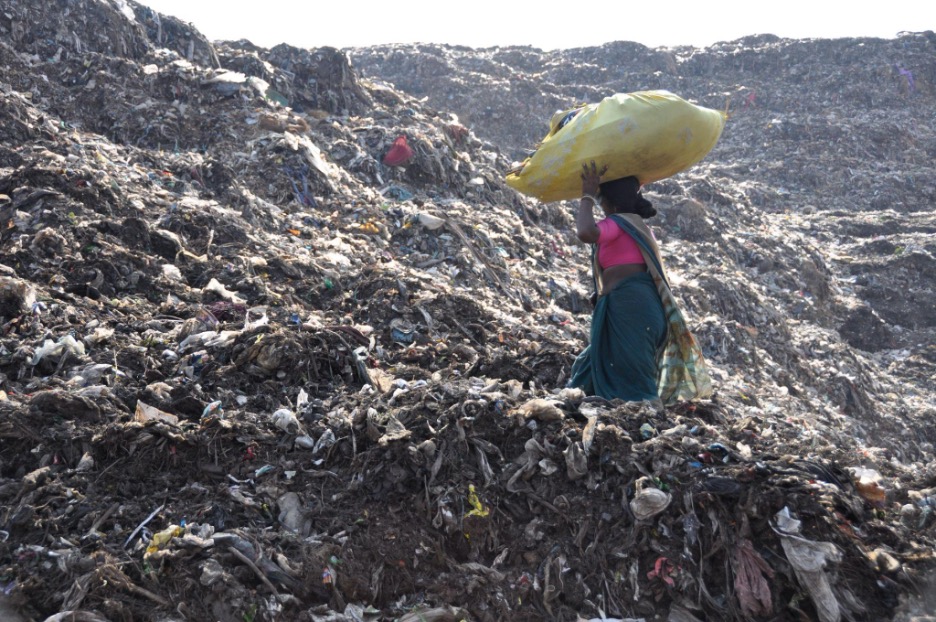
Summers in Pune are very hot and dry, with daytime temperatures ranging between 30 and 40 degrees Celsius. According to a 2009 feasibility report on landfill gas recovery produced by the Pune Municipal Corporation, the Uruli landfill had 2.9M metric tons of accumulated waste reaching an average depth of 11.6 metres. Spontaneous ignitions of fire in the compacted waste at Uruli are an annual summertime occurrence. A newspaper report based on a Right to Information Act query found that there had been 2000 fires at Uruli between 2000 and 2006. The fires are followed by a haze of smoke that envelops the area. Fed by the accumulated gas, the fires smoulder and do not get extinguished for days, sometimes even weeks. Suspended particulate matter infiltrates into the lungs, and a thick layer settles on everything within sight.
Moreover, the leachate from the waste dumped at Uruli has polluted the water table. A study of the groundwater in the villages around the landfill was carried out in 2009, 2013, and in 2019. It revealed that some of the water pollutants measured in 2019 (COD, BOD, Bicarbonates, Total Hardness) COD measures how much dissolved oxygen (DO) is consumed by the chemical oxidation of organic matter under controlled conditions. BOD measures how much DO is consumed by microorganisms to decompose organic matter under aerobic conditions. Excess bicarbonates in drinking water cause stomach ailments. Hard water is water that has high mineral content. showed a threefold increase from 2009 in the wells at a distance of 1 km from the periphery of the landfill. The study concluded that the leachate from the unscientific disposal of municipal solid waste was responsible for polluting ground water. The water was found unsuitable for drinking, bathing or any domestic use or irrigation.
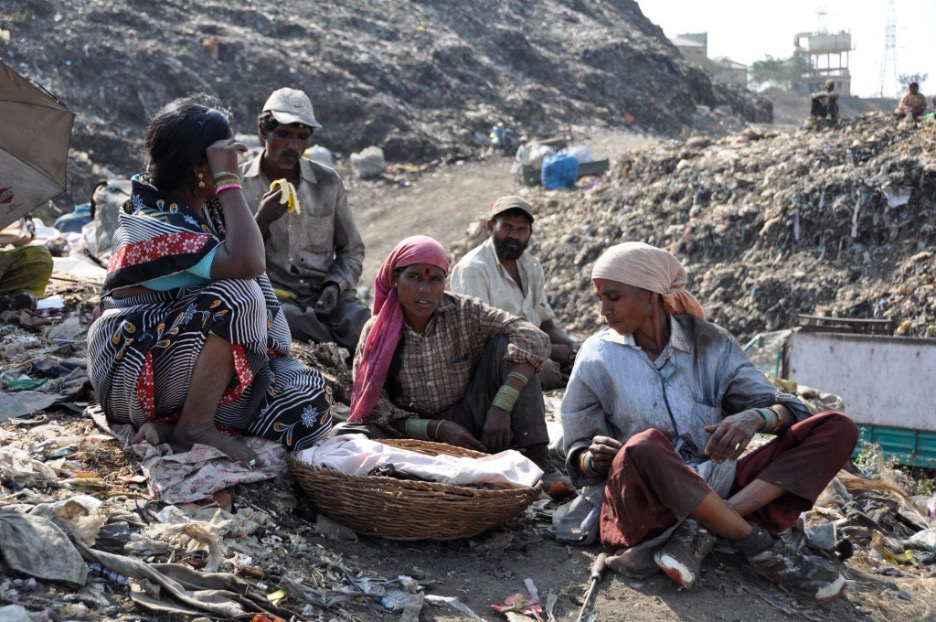
Residents of the villages of Uruli and Phursungi banded together under the Kachra Depot Hatao Sangharsh Samiti (KDHSS, or "Committee to Abolish the Garbage Depot") and have protested against the dumping of waste since 1995. Apart from making it an election issue during the local and state elections, they have organized blockades, filed court cases, and presented the issue to the National Green Tribunal and even the National Human Rights Commission. If life for those working at the landfill was difficult, it was hard on the villagers as well. They were unable to drink their morning tea in peace for the flies that swarmed the place. The young men in the region could not find brides who were willing to relocate and live in the villages near the landfill. In their submission before the National Green Tribunal on July 5, 2022, the Central Pollution Control Board (CPCB) and Maharashtra Pollution Control Board (MPCB) demanded "that the Pune Municipal Corporation (PMC) pay US$5,06,000 as compensation towards causing environmental pollution at Uruli Devachi and Phursungi garbage depots." Kagad Kach Patra Kashtakari Panchayat (KKPKP, the trade union of waste pickers) members made common cause with the KDHSS on several occasions and publicly supported the villagers whose lives had been ravaged by the landfill. According to a 2023 legacy waste management report of the government's Swachh Bharat Mission (Clean India Mission), the legacy waste in Pune had reached 3.3 M metric tonnes. Legacy wastes are the wastes that have been collected and kept for years at some barren land or a place dedicated for landfill (area to dump solid waste).
Baida was among the waste pickers who suffered a setback when, in 2009, the PMC issued a 30-year concession agreement to a private company. According to the agreement, obtained through the Right to Information Act, the company was provided 20 acres of land at the landfill at a nominal rate of 0.012 US$ per sq. meter and paid a tipping fee by the PMC to process 500 MTPD of co-mingled municipal solid waste. The company was obligated to process the waste into compost and Refuse Derived Fuel (RDF) to generate electricity. The company ring-fenced its premises and refused to let Baida and her colleagues access the recyclable materials. An activist of the KKPKP took up the issue of the displaced waste pickers with the company CEO. The CEO told the organizer that he had offered to hire the waste pickers at a daily wage of US$1.80, and they had the impertinence to give him a counter-offer of a daily wage of Rs.450 if he came to pick waste with them at the landfill! After being showcased as a solution to waste management for three years, the company claimed that there was no market for RDF. Its license to produce compost was revoked after a vigilant civil society group established that the compost produced by the company had levels of mercury in excess of 32 times the permissible limit. Since the plant was located in the landfill itself, there were also allegations of throughput, meaning that the city's waste entered the waste processing facility and was dumped into the landfill without being treated. So waste just entered and exited without being processed. The company was referred to the Corporate Debt Restructuring Cell in 2013, as it owed millions to Indian public sector banks.
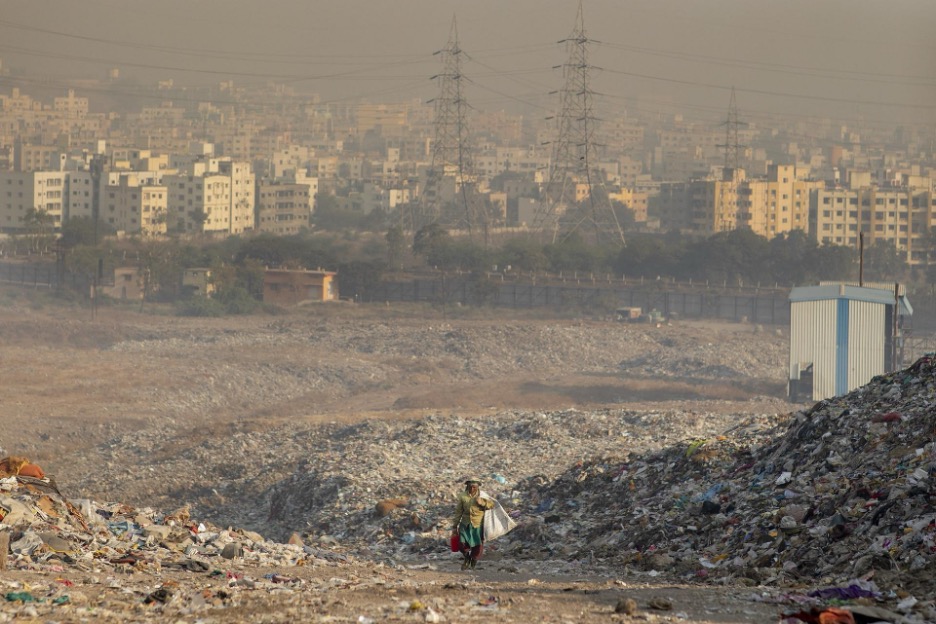
The municipal government had dispossessed an occupationally precarious community to enable accumulation by a private company. Waste pickers like Kaushalya Domate, a single mother, who had spent her best working years labouring at the landfill compromising her own health and well-being, were distraught. The immediate crisis was somewhat averted when the KKPKP trade union of waste pickers took up the issue of access to recyclables with the company and the PMC. Members also found their own ways to work the system. Some paid the supervisory staff in the company to enter the premises. Others sneaked in during the night hours. Still others mined the legacy waste in other parts of the vast landfill that still had open access. Some took up domestic work or housekeeping and facility management contracts. The waste pickers union had anyway taken the position that the landfill had never been acceptable as a permanent workplace and encouraged the displaced waste pickers at the landfill to join the SWaCH Coop.
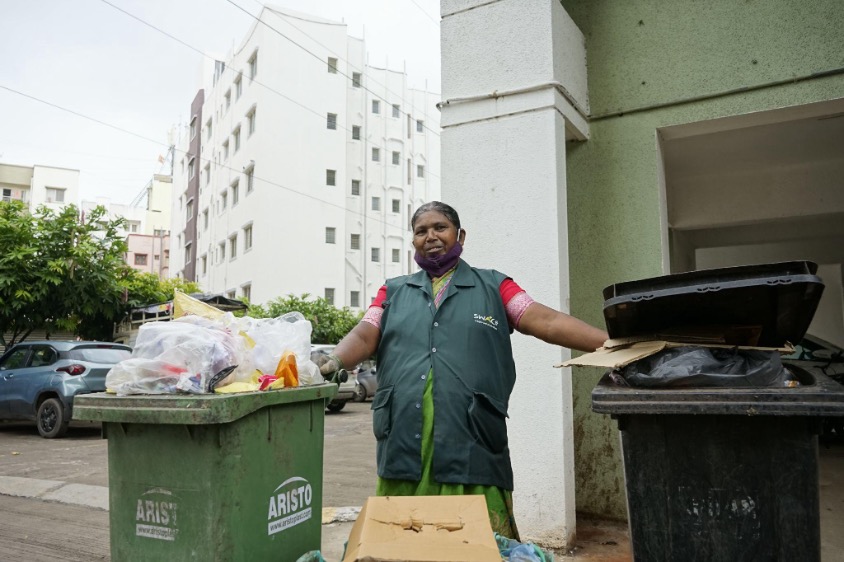
The SWaCH Seva Sahakari Sanstha is a wholly owned cooperative of waste pickers and other urban poor that was established jointly by the KKPKP and the PMC to provide front end waste collection services in Pune. Operational since 2007, the cooperative has enabled 3,800 waste pickers, 70 percent of them women, to transition from itinerant waste picking into service provision. SWaCH provides daily doorstep waste collection services to almost 1 million households, shops, and offices in Pune through its members. It diverts 80,000 metric tonnes of recyclables annually into recycling.
SWaCH is a pro-poor public private partnership and the largest direct user-fee recovery-based, primary waste collection model in the country. The SWaCH collector earns from the user fees and from the sale of recyclable materials that she gets. The PMC provides the management costs, the collection equipment, PPE kits and uniforms, infrastructure costs, and specified social security benefits such as life and disability insurance, medical benefits, and educational assistance for the children. The PMC specifies how different categories of waste are to be handed over and regulates the user fee rates. It is significant that SWaCH services cover slum and low income groups as well middle and high income gated communities. Apart from door to door collection, SWaCH has diversified into in situ biogas and compost production and collection, as well as the collection and diversion of multi-layered plastic (MLP) and EPS (expanded polystyrene) into recycling, with companies interested in voluntary Extended Producer Responsibility. Extended producer responsibility (EPR) is a waste and pollution management concept that encourages companies to design more sustainable and recyclable products and manufacturing processes.
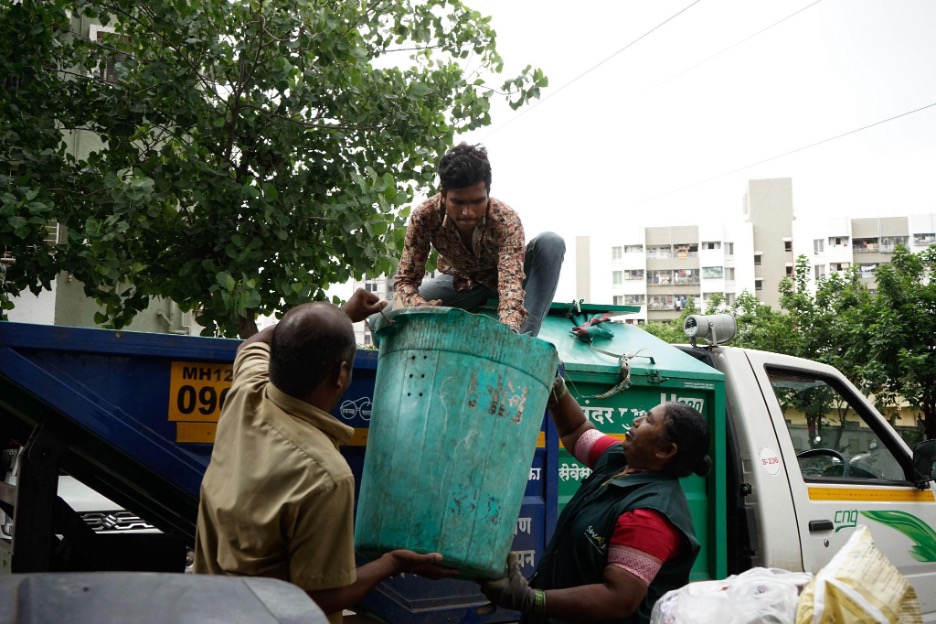
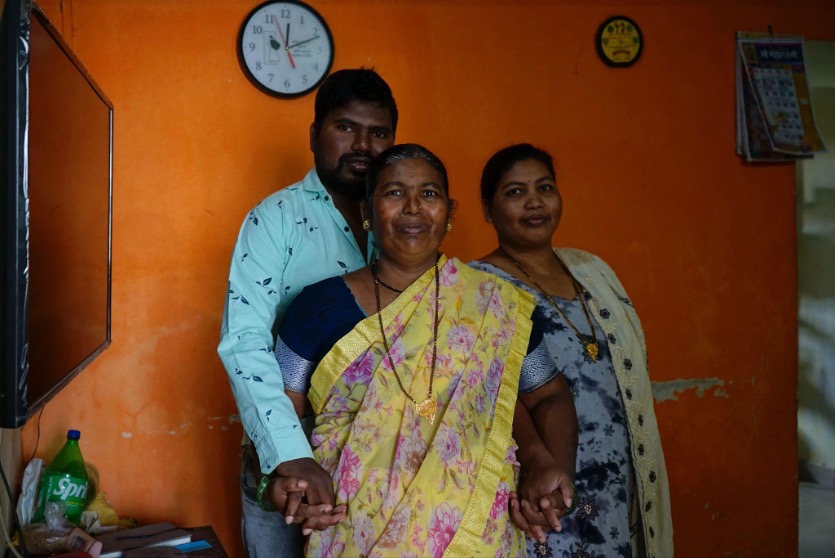
Both Supriya Bhadakwad and Baidabai Gaikwad have exited the landfill and are now members of SWaCH. Supriya works within 5 km of her home, and the 20 km ride to Uruli is a distant memory. In May 2024, Baidabai spoke at an Earth Day programme organized by the Goethe Zentrum in Hyderabad. She shared her story with the audience, proudly telling them that she would post the photos of the programme on the WhatsApp group of her service area. She joined SWaCH after she was banished from the landfill by the private company. She now collects waste from 250 apartments and says that her monthly earnings from user fees and the sale of recyclables to the scrap dealer amount to US$263.50 for a 5-hour work day. She uses a push cart for her work, and her work day ends after she deposits the sanitary waste, organic waste, and materials that cannot be recycled in the municipal truck. She is entitled to a weekly holiday and an annual festival bonus that equals her monthly earnings, from the service users. The inclusion of informal waste pickers in the collection and management of domestic solid waste clearly has social, economic, and environmental benefits.
The pressure from the KDHSS, the National Green Tribunal and the courts, and the fines levied by the Maharashtra Pollution Control Board have kept the PMC alert. The PMC classifies Uruli as a sanitary landfill. Periodic attempts have been made to cap parts of the landfill and to green parts of it. Recent news reports indicate that there has been some success in the attempts to green and rehabilitate small parts of the Uruli landfill. The Japanese Miyawaki method has reportedly been used to plant 20,000 trees on 20 acres of the landfill with the objective of creating an urban forest.
The Uruli landfill continues to be beset by problems of materials that cannot be recycled. The gentrification of the area along the state highway outside the landfill has started with huge factory outlets for clothes and other goods. As with most things, there is not a single story. The saga of urban detritus, landfills, and the mounting resistance of villagers who will no longer allow cities to use their backyards as dumps, continues.
Offline Sources
Parkar S. Bombay High Court Judgement in the matter of Shantaram Keshav Javadekar vs Pune Municipal Corporation and others. Mumbai: Mumbai High Court; 11 January 2000.
Pune Municipal Corporation. Preliminary assessment for landfill to gas opportunities, methane to markets partnership. Pune Municipal Corporation: Ministry of Urban Development Government of India and United States Environmental Protection Agency, 2010
Concession agreement between The Pune Municipal Corporation and Hanjer Biotech Energies Pvt Ltd. 14 July 2009. Obtained through the Right to Information Act, 2005.
| « Fire at the Ghazipur Landfill | Introduction » |