
Into the Radioactive Zone
"Shall we just go there", I asked my travelling companion, "to see what the Polesian Radiation-Ecological Reserve is?" He agreed, and we drove south from Naroŭliia on road 37 towards the Belarusian-Ukrainian border. After a short drive we came to the small settlement of Verbavichy. Some of the buildings looked like they had once belonged to a collective farm. But people were clearly living here; in the distance, one could see small wooden houses. A man crossed the road and made his way into the woods. Not far from where he disappeared, on the edge of the forest, just off road 37, I saw two signs, both in Russian. One read: "Protect the Forest, the Beauty of the Earth." The other one read: "Radiation Hazard. No Entry."
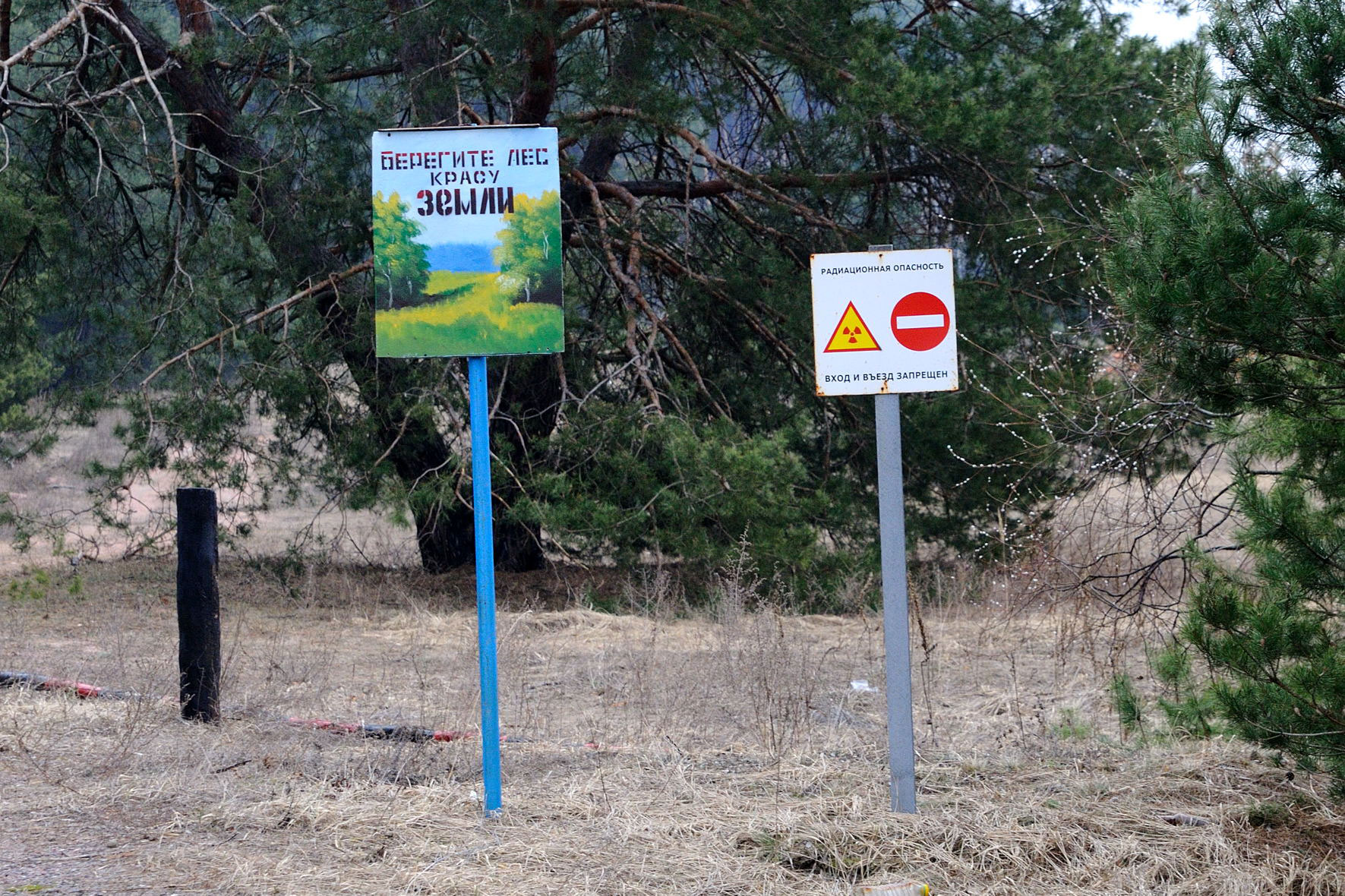
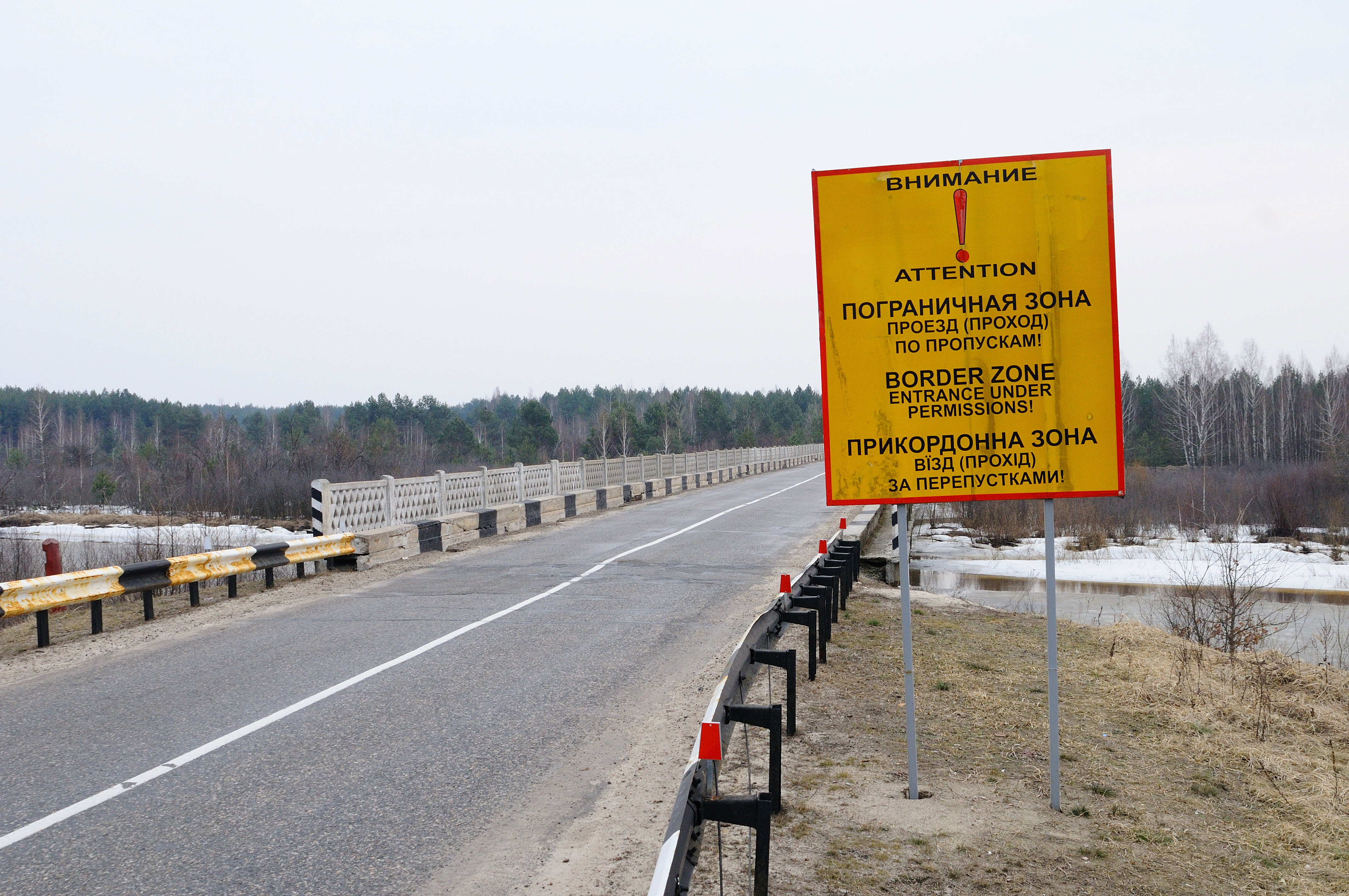
The two signs marked the western border of the Polesian Radiation-Ecological Reserve; Verbavichy was located just outside of it. But there were neither fences nor other barriers, just the danger sign with the symbol for ionizing radiation and the symbol prohibiting entry. We continued to drive south, along the edge of the forest, until we came to a bridge crossing a river. A large sign warned us that this was the start of the Belarusian-Ukrainian border zone. Entry was only allowed with a special pass. Not wanting to get into trouble, we turned the car around and headed back.
After what only could have been a minute, I noticed a small dirt road to the right. Looking at our map, it seemed that this might be the road leading to the village Bely Berag ("White Shore"). We stopped and got out. The road curved upwards and then slightly to the right. We followed it.
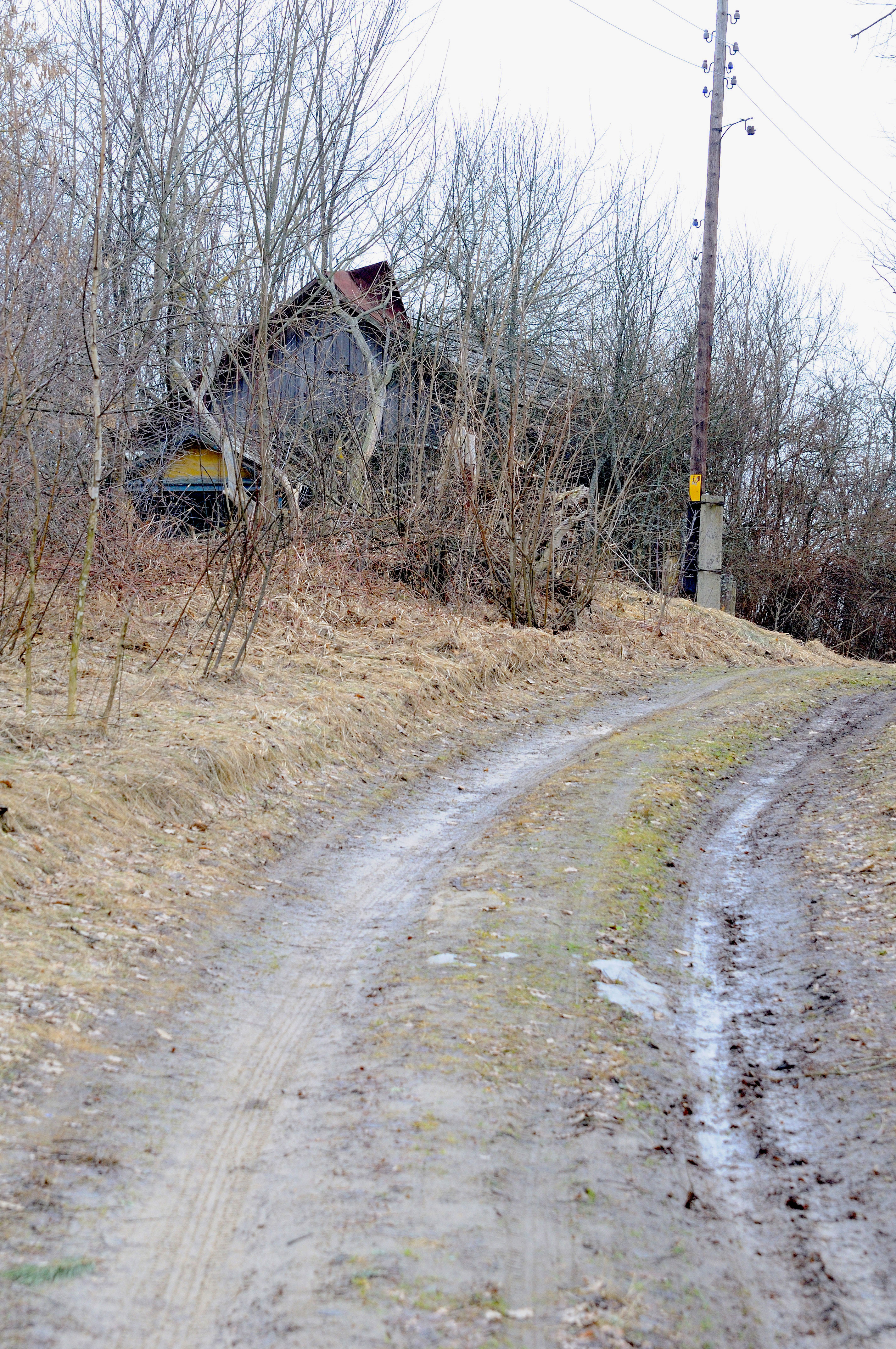
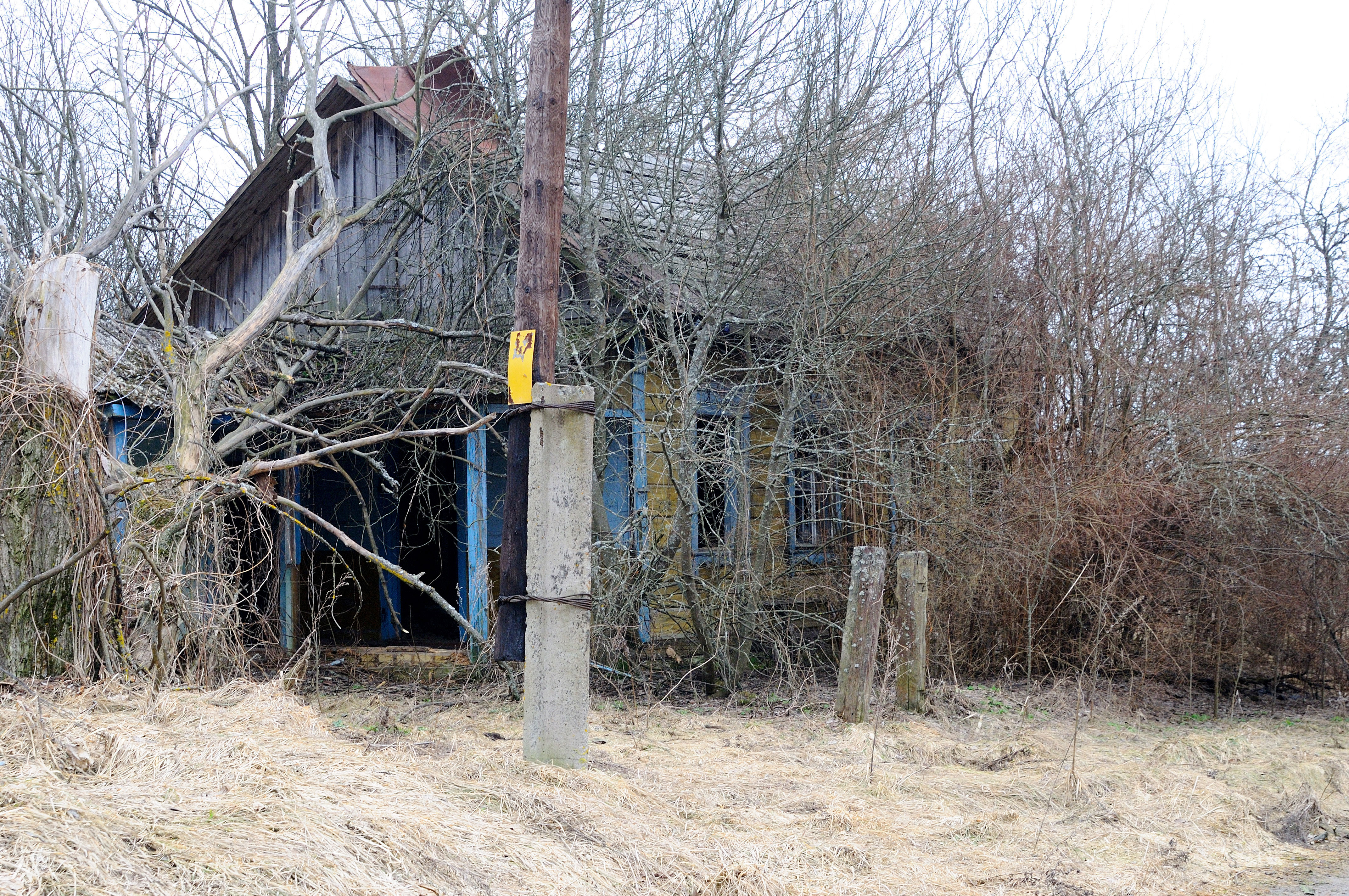
Walking up the road, we could make out the remains of a small wooden house on the left, hidden behind trees. A tree had fallen across its entrance; shrubs covered much of the side that was facing the road. And there was another empty house. And yet another one, its main corpus painted in yellow and blue. The color had faded, but not as much as on the other houses. The house stood out against the silvery grey trees and shrubs. At second glance, the exterior seemed remarkably intact. Some of the windows were missing, but otherwise the external structure was intact. The corner posts of the house bore delicate wooden carvings. In front of the house, next to the power line, was a well. Our eyes followed the dirt road. Trees had fallen across it. In the distance, barely visible behind the trees, we could make out another house.
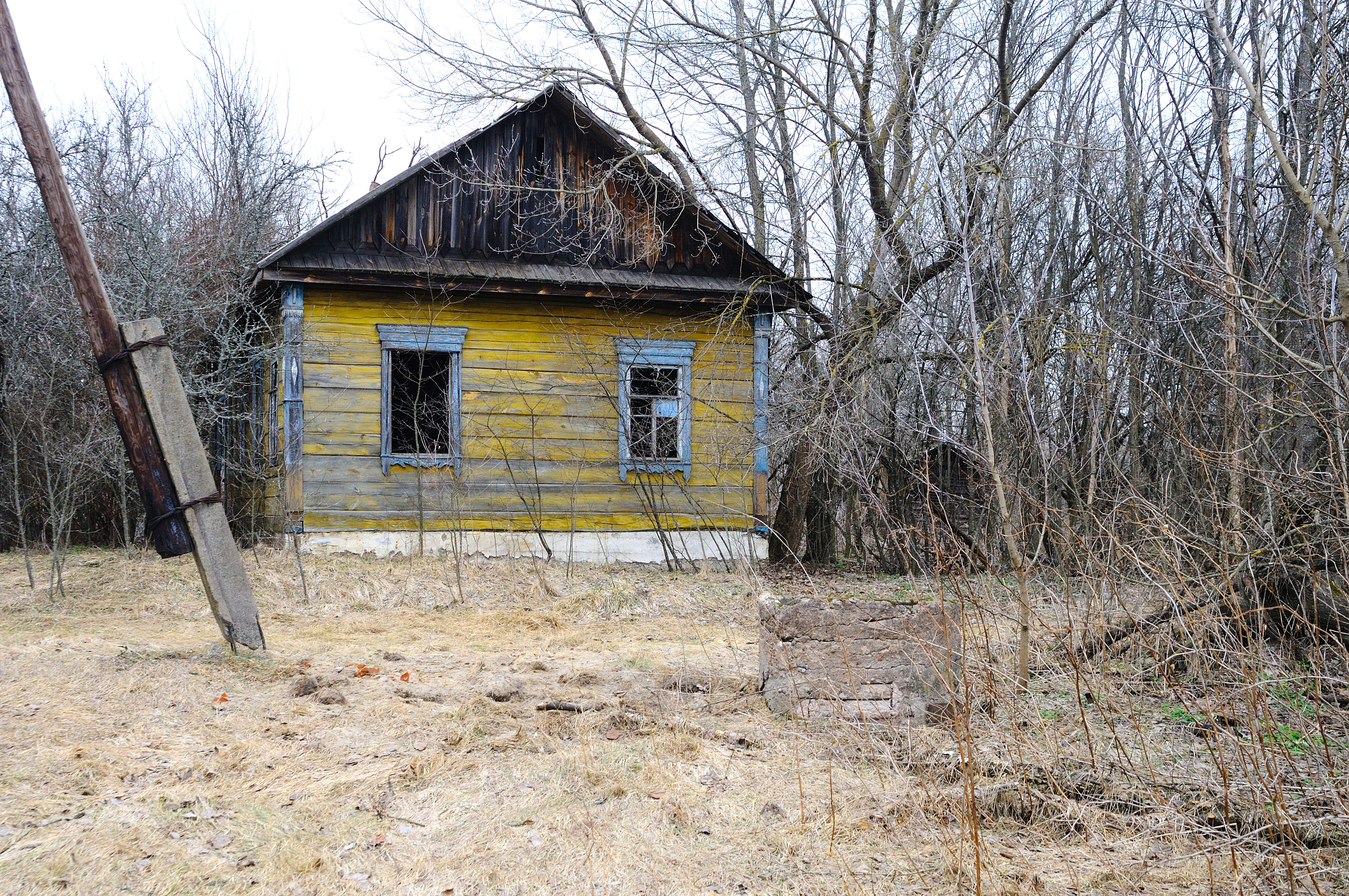
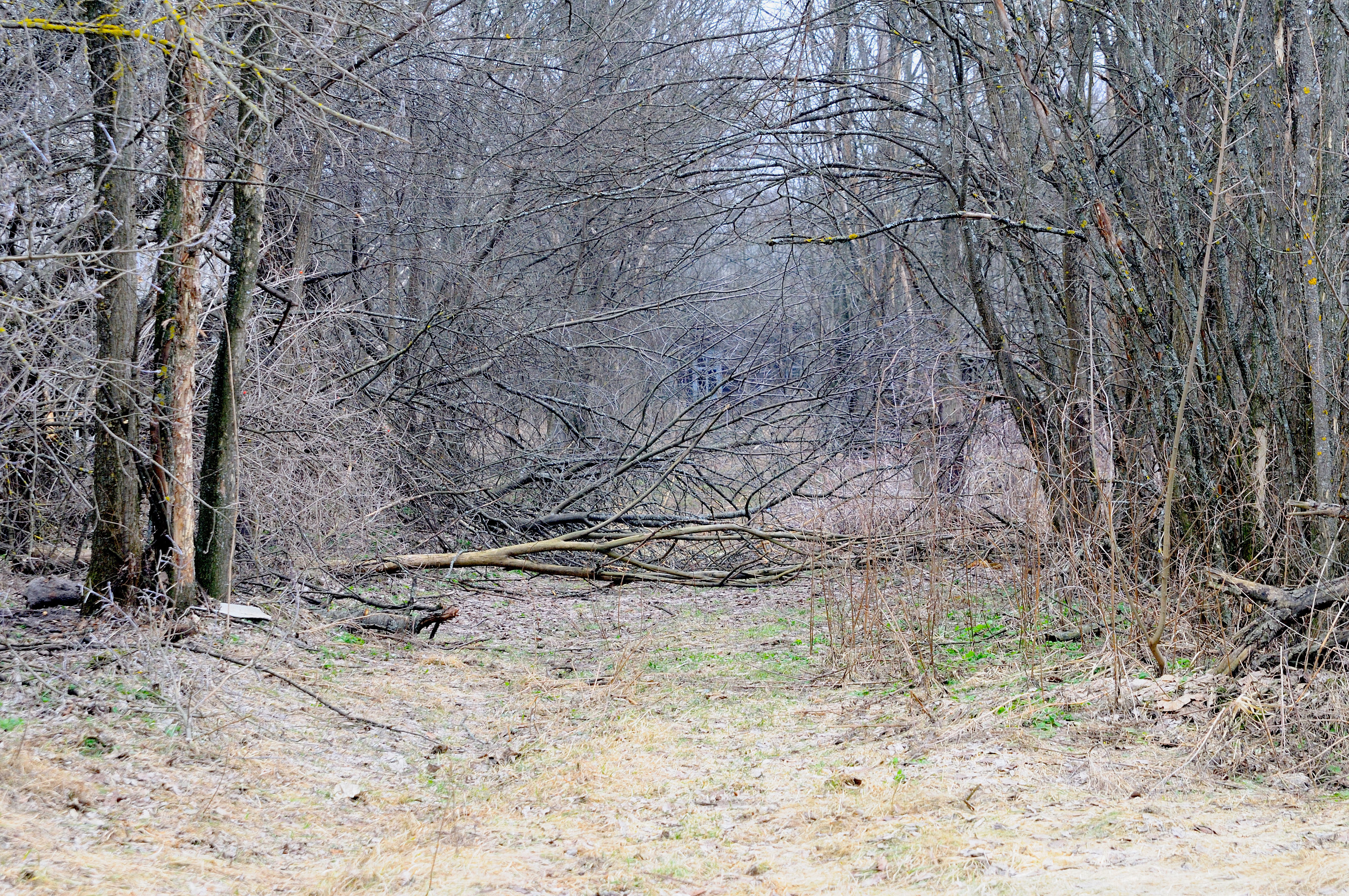
The scene was beginning to feel eerie. There was no one around, although the tracks of a car suggested that someone had driven up the road recently. We turned around and walked back. On the way, we spotted another sign, warning of radioactivity. Feeling uneasy, we got into the car and drove back north to Naroŭliia.

Of course, we were naive, just walking around in an area marked as radioactive. We were also doing something that we should not have done – entering the reserve is forbidden. As I found out much later, Bely Berag See the Wikipedia entry on Bely Berag: https://ru.wikipedia.org/wiki/Белый_Берег_(Гомельская_область). Last accessed July 24, 2024. The Russian version provides more information than the Belarusian version. was one of the Belarusian villages whose inhabitants were evacuated after the Chernobyl accident in 1986. Before the evacuation, the village was part of the collective farm Uskhod ("East"). Most of the inhabitants worked in forestry and agriculture. They were resettled within Polesia to two different villages: to Skrygalaŭ, about 80 kilometers north-west of Bely Berag and just south of the Pripyat River, and to Skarodnae, about 60 kilometers south-west of Bely Berag, almost at the Belarusian-Ukrainian border.
I was unable to find information just when exactly the evacuation of Bely Berag occurred in 1986. The website of the Polesian State Radiation-Ecological Reserve gives only a brief overview of the history of the reserve, with no background information on the evacuations. The reserve today covers parts of Bragin, Khoiniki, and Naroŭliia districts in the Homel' region of southeastern Belarus. According to the website, the first evacuations from these three districts took place on May 4–5, 1986. This involved 51 small settlements and villages close to the Belarusian-Ukrainian border, located within the 30-kilometer evacuation zone around the Chernobyl nuclear power plant. The zone, which covered both Ukrainian and Belarusian territory, was established by the Soviet authorities on May 2, 1986. People living within the zone were to be resettled elsewhere.
Between June 3 and June 10, 1986, an additional 28 small settlements and villages were evacuated from Bragin, Khoiniki, and Naroŭliia districts in southeastern Belarus, and between August 27 and September 30, another 29. Overall, 24,700 people were evacuated from parts of Bragin, Khoiniki, and Naroŭliia districts in the Homel' region from May to September 1986. By 1987, 15 of these settlements had been "re-evacuated", as the Belarusian authorities put it on the reserve's website, meaning that their inhabitants were returned to their homes. Subsequently, the initial 30-kilometer evacuation zone around the nuclear power plant was expanded and divided into a Belarusian and a Ukrainian part. In Belarus, the government created the Polesian State Radiation-Ecological Reserve in 1988, which enclosed some of the most heavily contaminated areas of southeastern Belarus. In 1992, the reserve was expanded to include other contaminated parts of Bragin, Khoiniki, and Naroŭliia districts. It now covers 216,410 hectares of land. To the south, the reserve borders the Chernobyl Nuclear Power Plant Zone of Alienation, which was expanded and changed from the initial Ukrainian-Belarusian exclusion zone to one that includes Ukrainian territory only.

| « Introduction | Human Neglect » |