
Russia's War Against Ukraine
While the war has put a temporary stop to the waterway plans in Ukraine and Belarus, war has in other ways increased the risk of nuclear contamination. When Russian forces crossed into Ukrainian territory on February 24, 2022, some of their northern front did so from Belarus. As this map suggests, Russian ground troops and helicopters were temporarily stationed in the small towns of Bragin, Khoiniki, and Naroŭliia, which are bordering the Polesian State Radiation-Ecological Reserve. The ground forces must have taken the same route south from Naroŭliia toward the Belarusian-Ukrainian border that my travel companion and I took when we visited Polesia, and they probably passed by the abandoned village of Bely Berag. On the night that Russian forces invaded Ukraine, the Ukrainian authorities responsible for environmental monitoring in the Chernobyl exclusion zone recorded a drastic increase in radiation levels. As military vehicles drove along the ground roads and soldiers started digging trenches, their activities stirred up the radioactive dust in the upper layer of the soil.
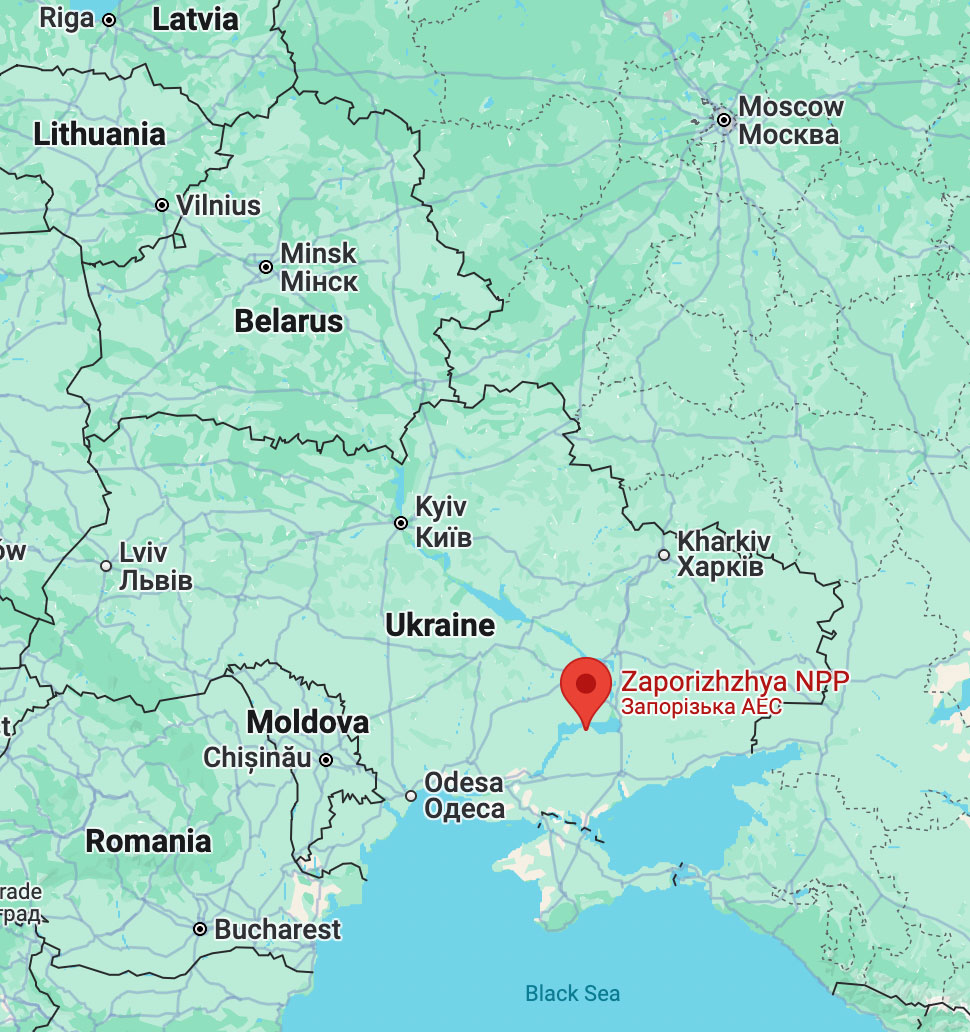
The Chernobyl Nuclear Power Plant was under Russian control for just over a month, until March 21, 2022, when Ukraine reclaimed the territory. However, still under the control of the Russian forces is the Zaporizhzhia Nuclear Power Plant in southeastern Ukraine. It is the largest nuclear power plant in Europe, located on the eastern banks of the Dnipro River. It is also currently on the frontline, in a war zone. The situation remains extremely worrying. This is the first time in human history that a nuclear power plant is occupied by a foreign army, with unpredictable consequences. Although all six reactors have been shut down, they still need energy to power critical safety systems. The plant also needs water to cool the reactors and their spent fuel rods to prevent a meltdown. One of the most dramatic moments occurred in June 2023, when an explosion destroyed the nearby Kakhovka dam. Its destruction threatens the plant's main source of water, which is used to cool the reactor. And in April 2024, at least three drones hit the plant, increasing the risk of a major nuclear accident.
Back when I was traveling through Polesia, I was so focused on finding remnants and reminders of the Second World War that it took a radioactive sign by a road and an abandoned, overgrown village to make me more aware of the region's multi-layered postwar past. But although I knew about the nuclear accident at Chernobyl, I was unaware of its full environmental impact – and the repercussions that the explosion of reactor No. 4 at Chernobyl continues to have today. The images of Bely Berag can therefore serve as a symbol of yet another human-made disaster. The abandoned village also reminds us of the hopes and plans that people will have attached to this small place on earth. Perhaps they took those hopes with them when they were displaced. As of 2011, Bely Berag no longer exists, at least not officially. By decision No. 73, taken by the Naroŭliia District Council of Deputies on December 29, 2011, the village of Bely Berag was formally abolished.
| « Legacies of Chernobyl | Introduction » |