
An Aerial View
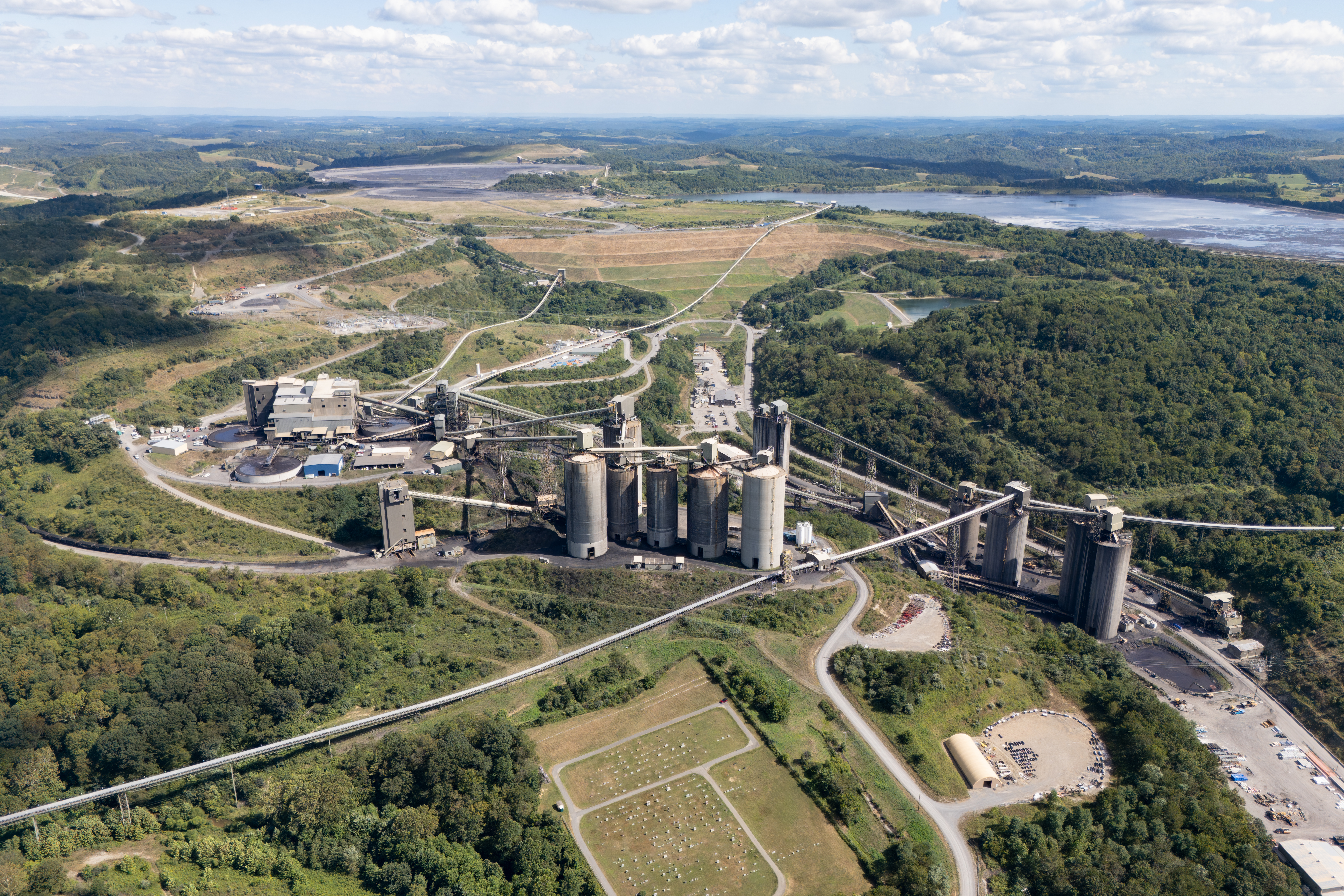
The environmental footprint of coal mining is immediately visible in this photograph of the processing plant of the Pennsylvania Mining Complex (PAMC). Nearly a dozen enormous coal silos loom over a small cemetery and the surrounding forest. Conveyor belts stretch out across hills and valleys for miles in every direction. On the left, three large circular tanks are used to wash raw coal before it is loaded onto train cars and shipped to market. And in the back of the image, a huge Coal Refuse Disposal Area shimmers like a lake, filled with a toxic slurry of coal waste.
As vast as the infrastructure in this image appears, it represents only a fraction of the size of the PAMC, which is made up of three connected underground coal mines that span an area the size of Manhattan and constitute the largest underground mine complex in North America. The processing plant in the image is only at the surface: the greatest environmental impacts of this mining operation remain out of sight.
Also invisible to the camera are the mining complex's methane emissions, wafting out of hidden ventilation shafts and off the tops of the coal silos. Of all of the PAMC's environmental impacts, it is these invisible methane emissions that have the most significant global ramifications. As a greenhouse gas, methane is more than 28 times as potent as carbon dioxide at trapping heat in the atmosphere. Human activities—such as gas and petroleum systems, landfills, and coal mines—account for the majority of emissions, and cutting methane pollution would be one of the single fastest ways to slow the rate of global warming.
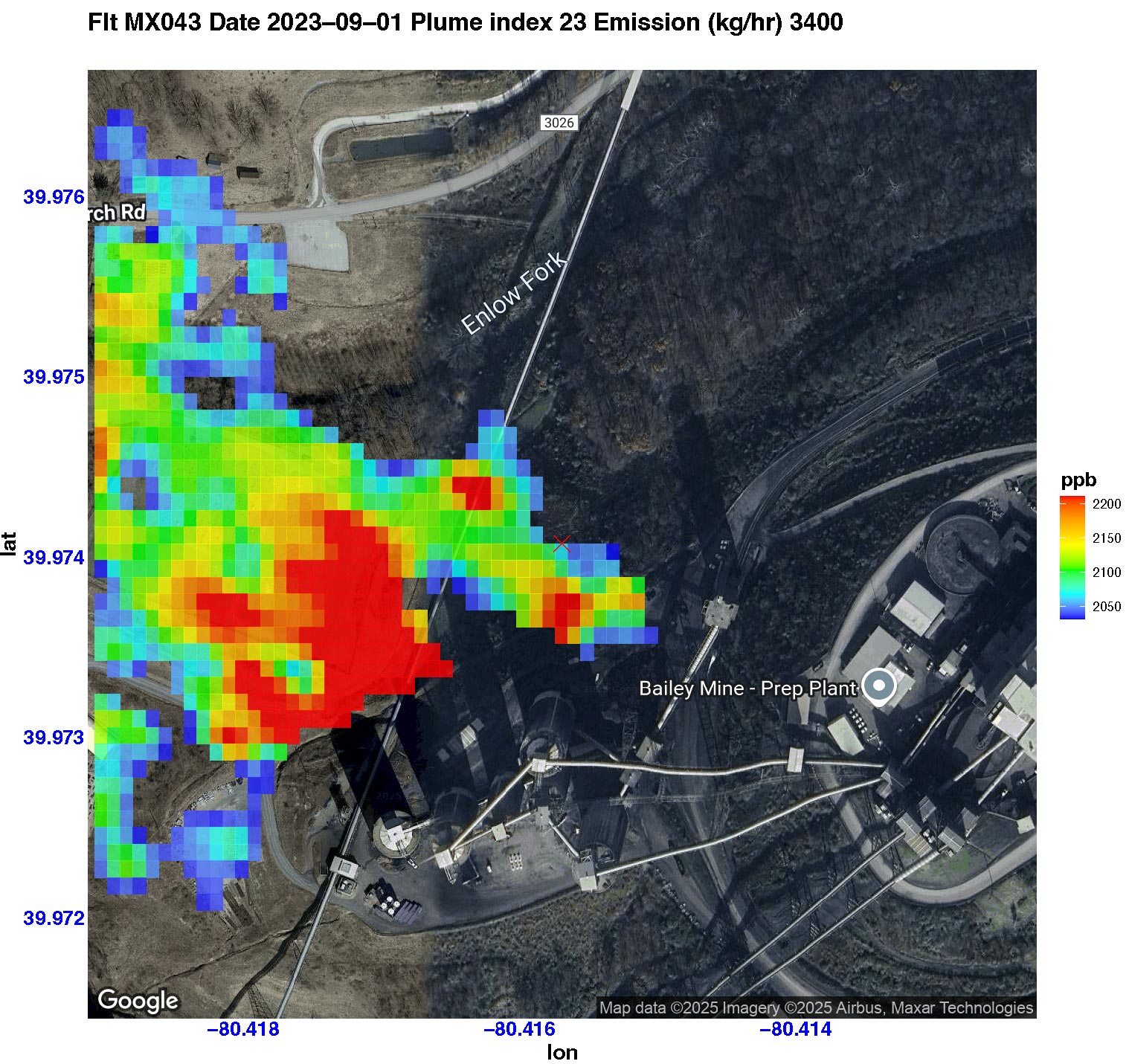
A plume image showing a methane emission measurement taken above the Pennsylvania Mining Complex by the MethaneAir project on September 1, 2023. Image generated by Professor Steven Wofsy.
Before seeing the PAMC with my own eyes, I had a difficult time picturing methane emissions. I knew that methane was an essential part of my everyday life. As the largest component of natural gas and as a byproduct emitted from oil wells and coal mines, it plays a crucial role in the energy systems that power our world. Anytime we turn on the lights or the stove, adjust our thermostats, or drive in a car, we are interacting with systems that use or emit methane. But these systems are often hidden from view. Born and raised in New York City, I had never seen the gas wells and coal mines that powered my life—that had built the city I grew up in. How could I grasp the scale and impact of a system that I had never had to face? How could I understand the methane emissions that were so critical to climate change in more than abstract terms?
These were questions that I began thinking about as a student in HIST 15E: Writing Histories of Climate Change, a class launched in 2022 and co-taught by Emma Rothschild and Victor Seow. One of the course's assignments was to write a micro-history of a methane "ultra-emitter." The assignment was inspired by the 1800 Histories project, which Professor Rothschild started earlier that year. Its name was a reference to the nearly two thousand methane "ultra-emitter" sites identified across the globe in recent satellite measurements, and its goal was to examine the micro-histories of these sites so as to understand them better individually and, in doing so, gain a deeper understanding of the forces driving climate change. Our class assignment was an opportunity for us to practice making these connections between the micro- and the macro-level. We wrote about sites across the country and globe, but since none of the sites were in the Boston area, we couldn't visit them for the assignment. A year after taking the class, however, I had the opportunity to travel to a center of these ultra-emitters to document their histories first-hand.
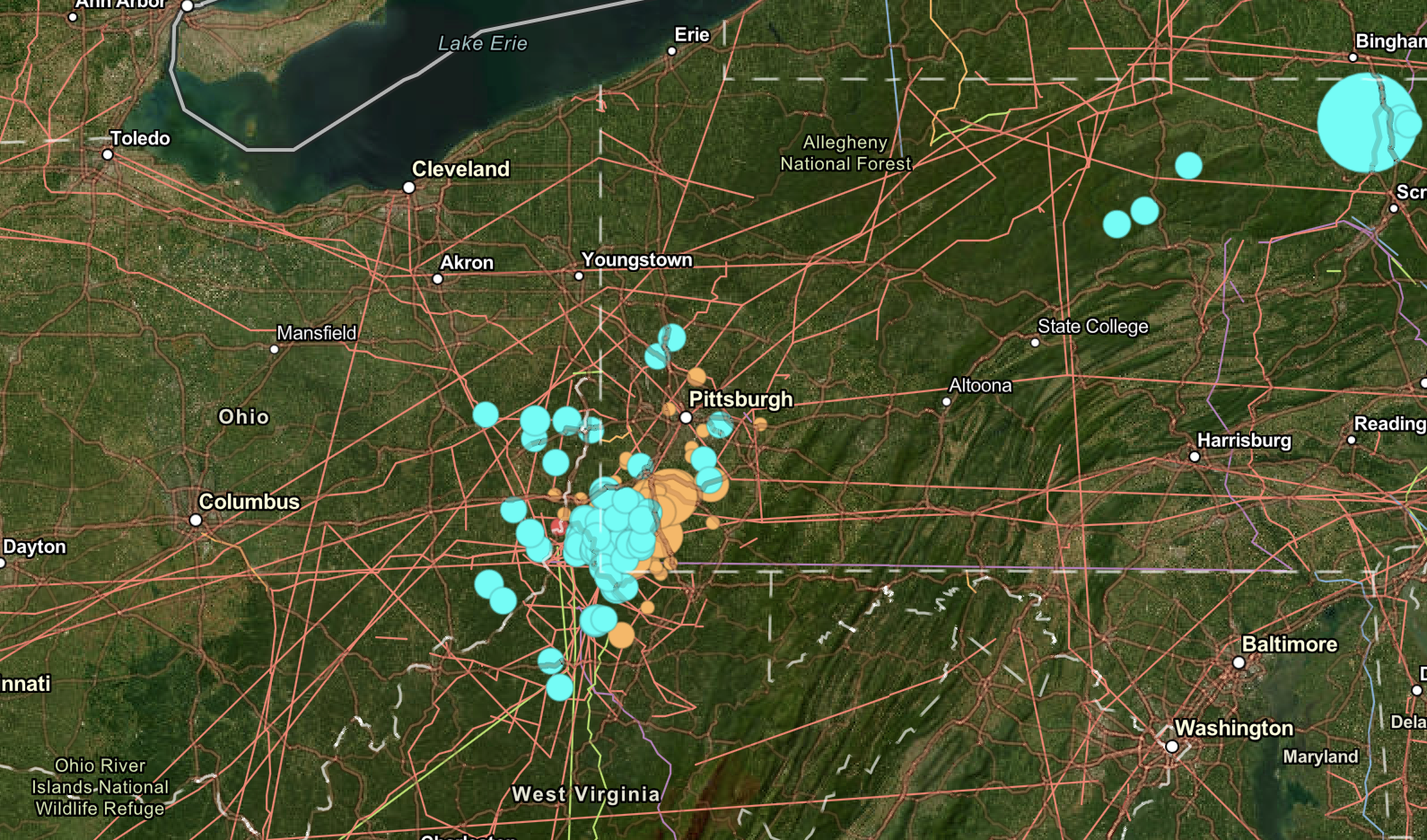
Towards the end of my junior year of college, I met with Prof. Rothschild, and she showed me a printed satellite map of western Pennsylvania. Huge turquoise and orange circles filled the map, denoting sites of methane emission measurements that were part of the 1800 Histories project. There was an enormous concentration of them at the southwestern corner of Pennsylvania, and Prof. Rothschild asked me if I would be interested in traveling to the region to produce a photo essay on them. Satellite imagery could only show so much. Could photographs from the ground help bring the data to life and "visualize" the invisible methane emissions? That summer, I geared up for a week-long trip to document this corner of rural, northern Appalachia: the historic energy heart of America.
| Mapping Methane in Pennsylvania » |