
Conversations in Coal Country
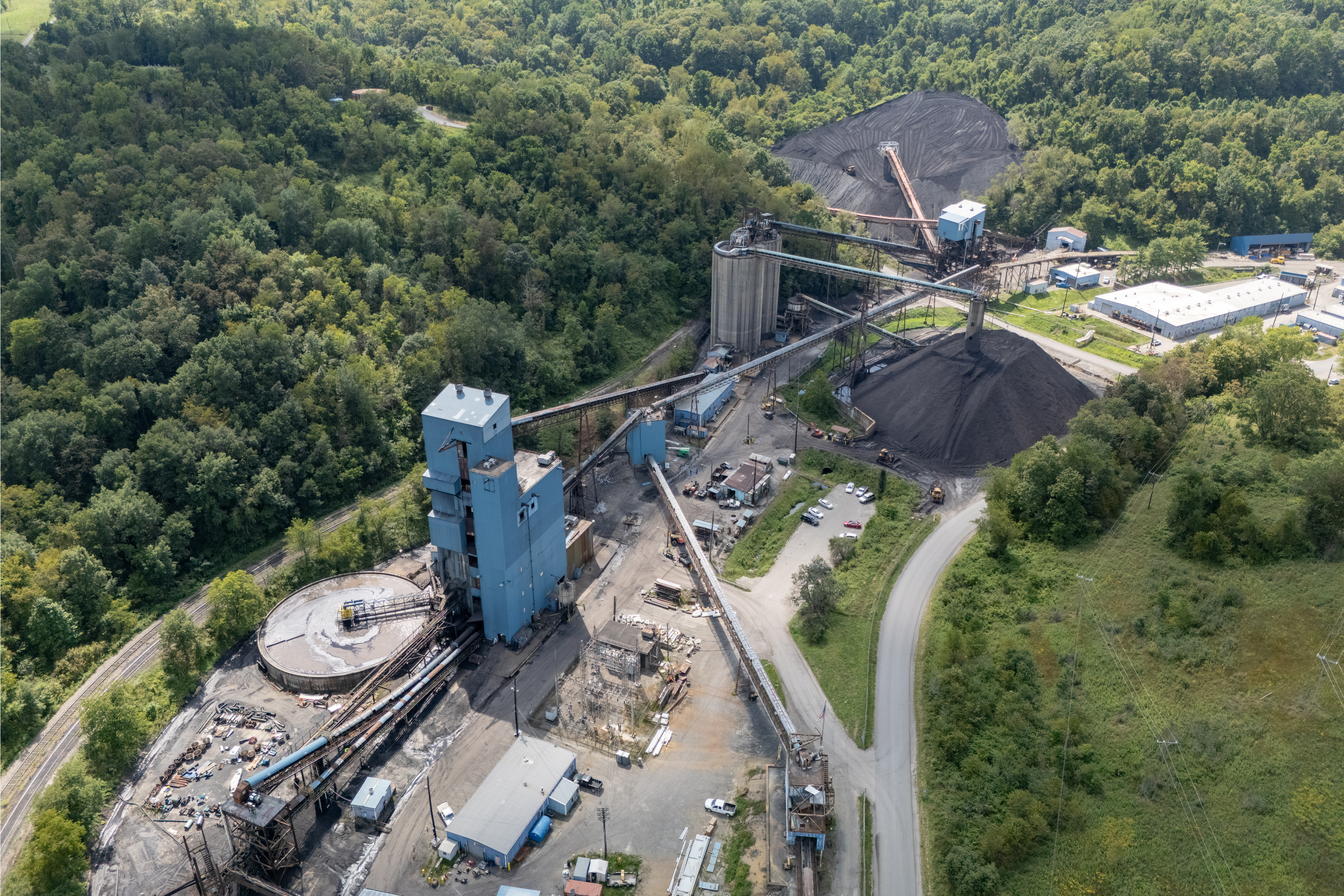
The Cumberland Mine preparation plant in Kirby, Pennsylvania.
Five weeks after my first trip to southwestern Pennsylvania, I returned to Waynesburg to start archival research for my senior thesis. I was hoping to produce the History department's first "multimedia thesis," and I planned to combine archival research with oral history interviews into a short documentary film. This trip would be the first of several to conduct research, collect footage, and interview miners and residents.
On the plane from Boston to Pittsburgh, the man sitting next to me introduced himself and struck up a conversation. His name was Jim Compton, and he was returning from a work trip in Europe to his hometown of Morgantown, West Virginia—only thirty minutes south of Waynesburg. When I told him that I was traveling to the region to research the history of the coal industry, he broke into a smile and shared that his grandfather was C.E. "Jim" Compton, a former stalwart of the coal industry. Compton's company had pioneered new mining techniques in the 1940s and 50s, and he is credited with inventing the first coal auger machine—a large-diameter drill that bores horizontally into the coal seam. Jim never got to know his grandfather, but he grew up surrounded by old coal mining artifacts and now works in the energy industry himself. He brought up the recent news that the United Kingdom's last coal-burning power plant had ceased operation. Where will they get their energy from now, he wondered. Renewables couldn't yet fill the gap left behind, so what other fossil fuels would the country use to continue meeting electricity demand? And where would the lost jobs go? The end of coal might have made a good headline, but it left more questions than answers.
I told Jim that before traveling to southwestern Pennsylvania, I hadn't realized how much the country still relied on coal for energy in such an immediate way. Coal had seemed so distant to me, but I now understood how the demand for electricity and steel in cities like Boston and New York had long driven the extraction of coal in Appalachia, and still does. When I was born, coal accounted for approximately fifty percent of electricity generation in the United States, and it remains responsible for around ten percent. I had been a consumer of coal for all of my life, though I hadn't reckoned with it until now.
Jim told me that he appreciated my visiting coal country and making an effort to learn from the people and place. It's important to see things for yourself, he said. I told him that I would be visiting the archives at West Virginia University in Morgantown, and he recommended I get a pepperoni roll—an old coal miner meal—while in West Virginia. Before getting off the plane, he offered me a small book of prayers that he had been reading from throughout the flight and told me that he was looking forward to seeing how I would go back and share with the folks in Boston what I had learned.
My conversation with Jim was the first of many that I would have with residents of the region as part of my thesis research. Across that trip and three subsequent ones, I spoke with coal miners and community members, environmental scientists and coal historians, local journalists, environmental advocates, and others. Although my conversations were always focused on the Cumberland Mine and its history, the topic of methane frequently came up—and never with any prompting. Raised in New York City, I had always thought of methane in the abstract, as a greenhouse gas and a contributor to climate change. But for the people of Greene County that I spoke to, methane played a significant role in their daily lives.
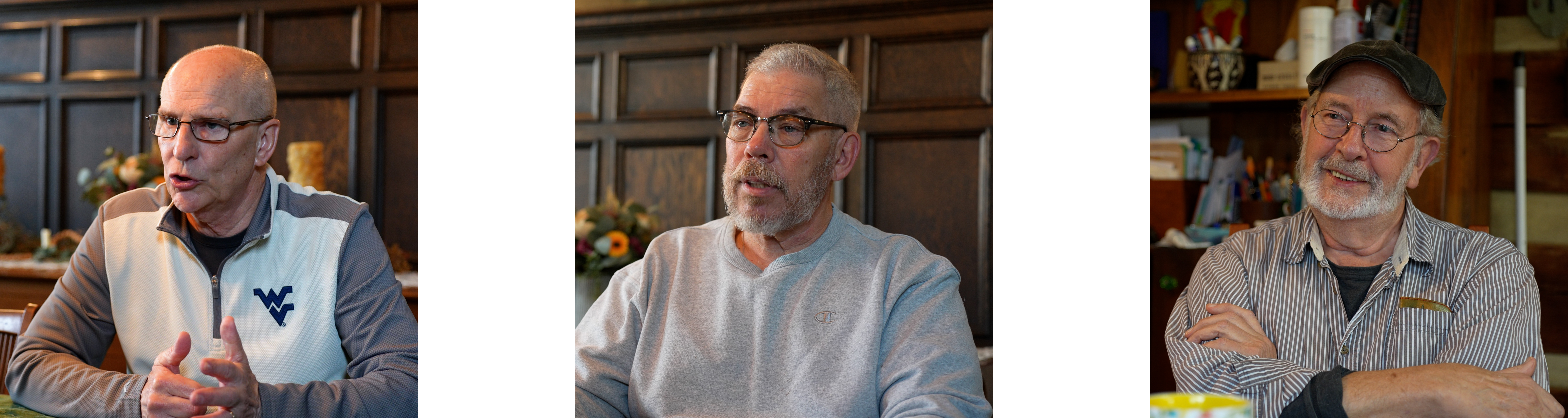
For David Huntley, a coal miner, it was the dangerous gas that he had to vent while working underground—a gas that almost cost him and his colleagues their lives when a fire broke out at the Cumberland Mine in 1987. For Doug Conklin, a former coal mine general manager who currently works in coal gas recovery, it was a mining liability that could be mitigated and turned into profit when properly extracted and used as natural gas. For Rodney Grimes, a coal train operator with deep roots in Greene County, it was the cause of the natural gas boom that took the region by storm in the early 2000s, filling the countryside with well pads and the roads with fracking trucks. And for Glenn Toothman, a longtime Waynesburg lawyer, methane was a natural resource being extracted from the community without any severance tax to compensate for it.
Hearing about the different ways methane factored into my interviewees' everyday lives deepened my understanding of the greenhouse gas I had been chasing after that summer. From my dorm room in Cambridge, I had never had to think about the methane being vented to protect coal miners underground. I could switch on my light and turn up my heat without reckoning with the environmental cost—or the human one.
The privileges held by those of us who do not work in nature are described by Richard White in his 1982 essay, "Are You An Environmentalist or Do You Work for a Living?" By not having to "face what [we] alter," White writes, we can benefit from the products of extraction while condemning the work of extracting, claiming "an innocence that in the end is merely irresponsibility." Richard White, "'Are You an Environmentalist or Do You Work for a Living?': Work and Nature," in UncommonGround: Rethinking the Human Place in Nature, 1st ed, ed. William Cronon (W. W. Norton and Company, Incorporated, 1996), 184,185. Until I traveled to southwestern Pennsylvania, I had never seen where the energy that powered my life came from. But residents of Greene County had never had the privilege of my obliviousness. Living and working in the land, their "very lives recognize[d] the tangled complexity of a planet in which we kill, destroy and alter as a condition of living and working." White, "'Are You an Environmentalist or Do You Work for a Living?': Work and Nature," 185.
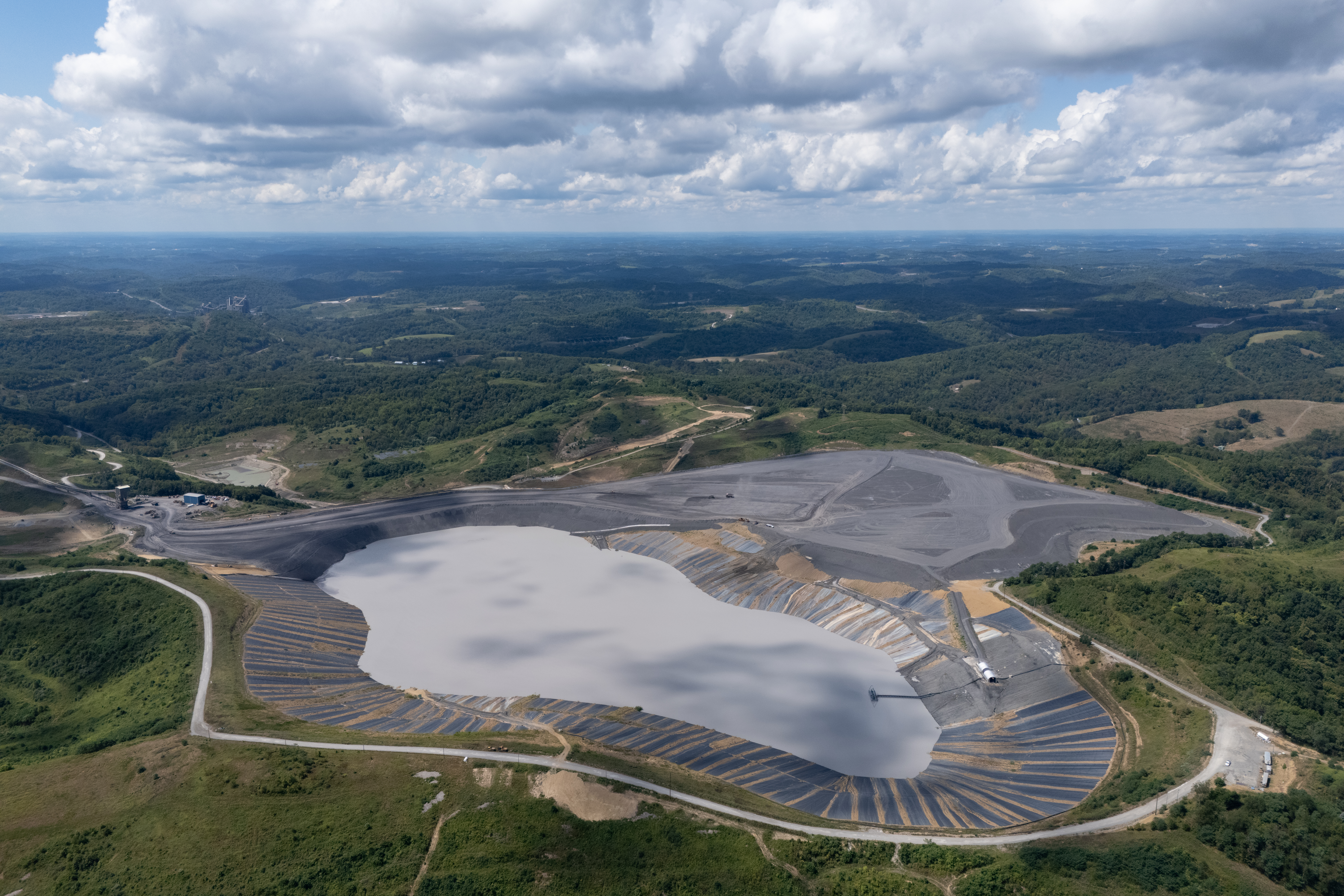
The coal and natural gas industries are the lifeblood of Greene County's economy, but they also have a tremendous local environmental and social toll. The "longwall" mining technology used to extract coal from the earth causes subsidence on the surface: slow-motion earthquakes that buckle houses, crack highways, and drain groundwater. Sometimes methane from the mine seeps up into people's homes, causing explosions if it ignites. Don Hopey, "Family Gets $1 Million for Mine Blast," Pittsburgh Post-Gazette, March 2, 2001, University of Pittsburgh (Wyona S. Coleman Papers, Box 10, Folder 23). The coal-burning power plants nearby release dangerous pollution into the air, and fracking pads next door to people's homes can contaminate water supplies and cause increased rates of rare cancers. Although coal mining has become a safer industry for those working underground, it is still a dangerous profession. Miners risk their lives each day and are often left with devastating black lung disease or silicosis after they retire. The use of fossil fuels like coal and natural gas has global impacts, but the brunt of the environmental and health damages is borne locally.
Methane lies at the heart of this complex relationship between energy systems, the economy, and the environment. And there are few places where it is more front-of-mind than in Greene County, where methane's promises and dangers are felt in everyday life. Interviewing miners and residents while researching for my thesis made this clearer to me, and I was determined to return to the methane project after the thesis with this new understanding. My goal would be to approach the project in a way that didn't dismiss the role these sites of methane emissions played in the national and global energy system, and to recognize the sacrifices that those who worked at and lived near them made.
| « Driving Around Greene County | Returning to Waynesburg » |