
Landscapes of Methane
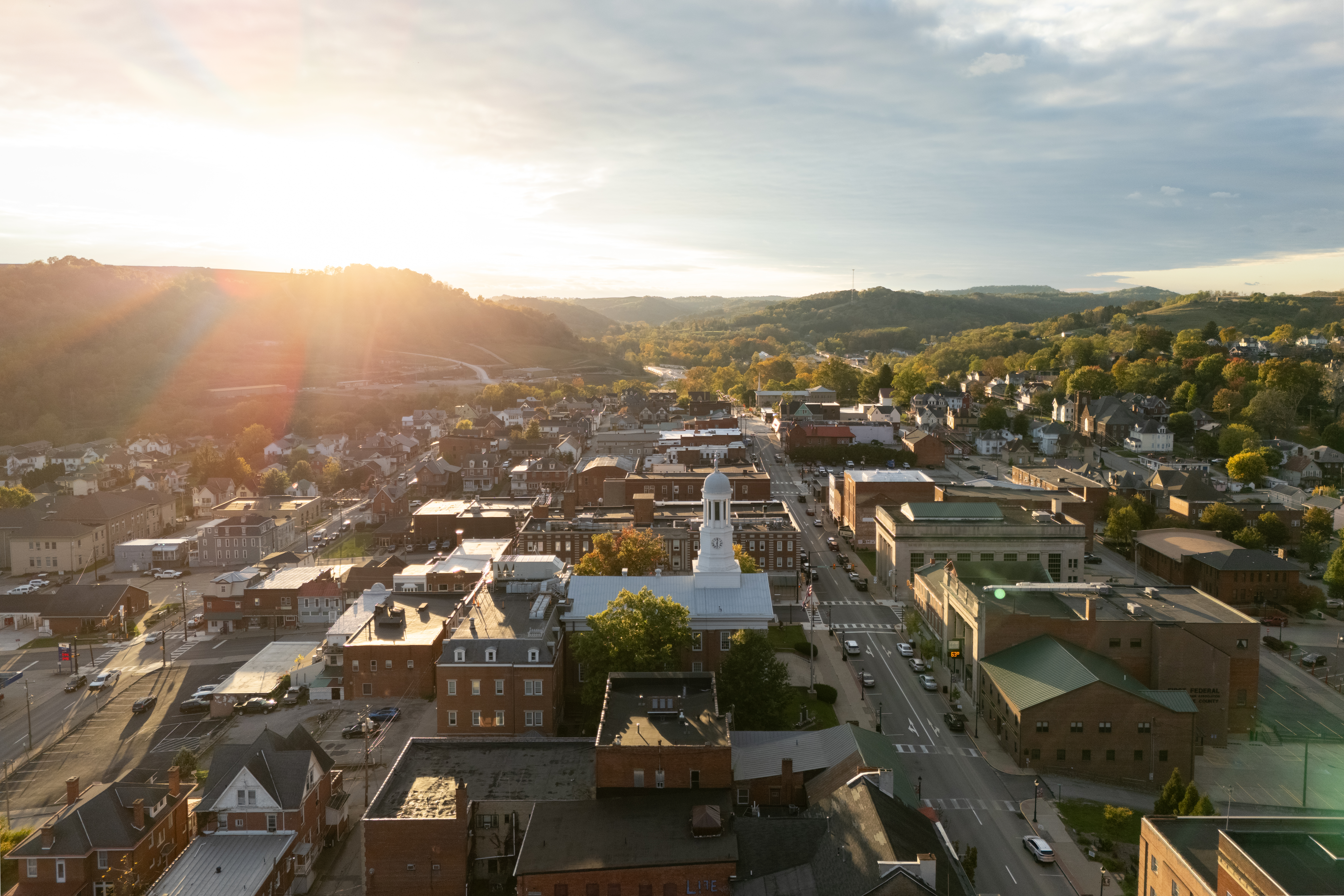

The sun sets over Waynesburg, PA.
During Labor Day weekend, I drove a U-Haul with all of my belongings from New York City to Waynesburg. I didn't yet have a car, and wouldn't have one until I bought one from a family friend in another three weeks. But this wasn't too much of a hassle: the opening of the Landscapes of Methane exhibit in Boston was only two weeks away, and I would be spending most of the time working to pull the exhibit together.
While I had been taking drone photographs, Professor Steven Wofsy had been generating plume images of the MethaneAir emission measurements. Wofsy's images brought the emission measurements to life, showing the origins of the methane and how it was dispersed by wind and atmospheric conditions. These images played a crucial role in demonstrating the scale of the otherwise invisible emissions. Combined with the drone photography and writing, they created a comprehensive portrait of each site.
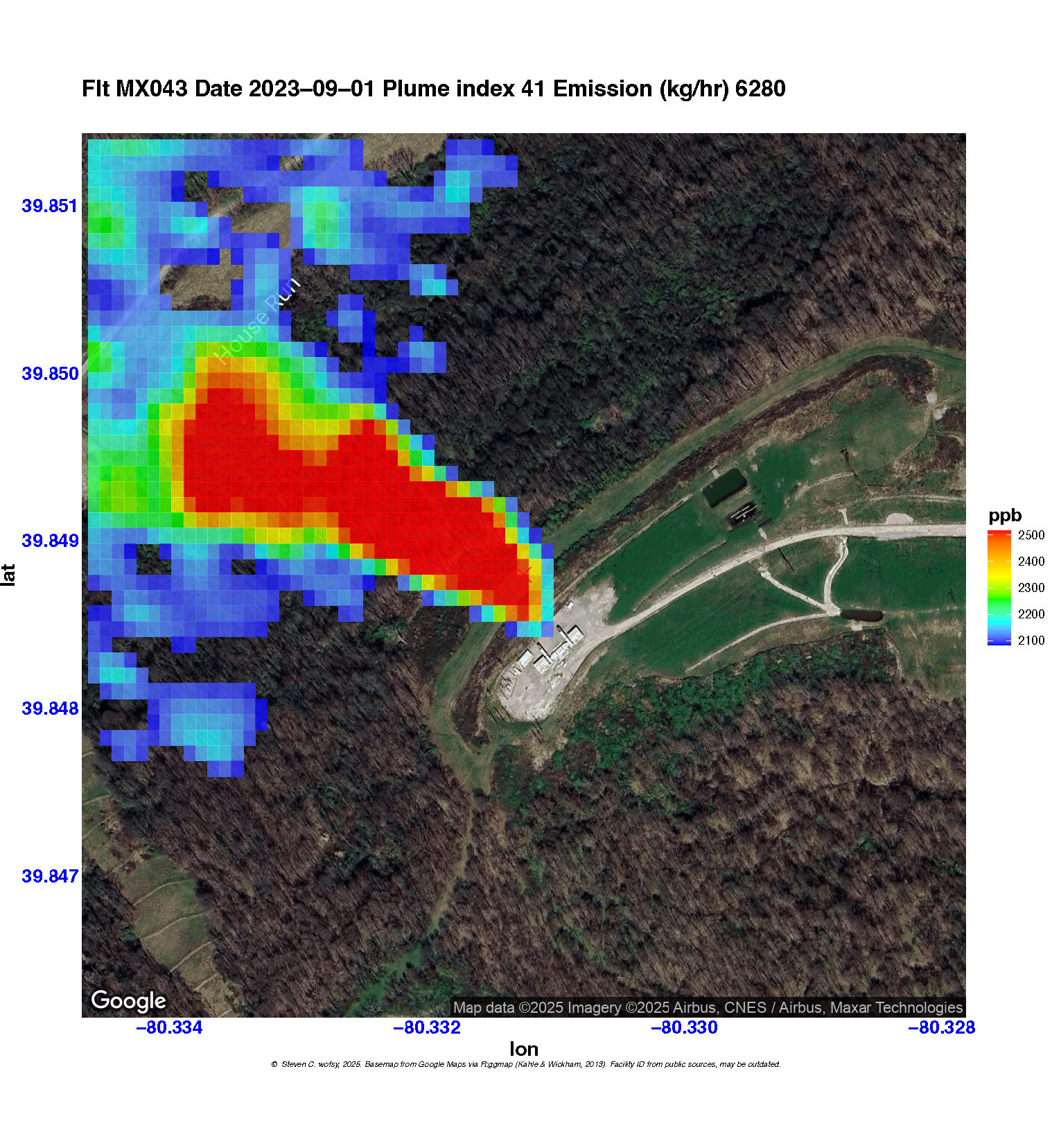
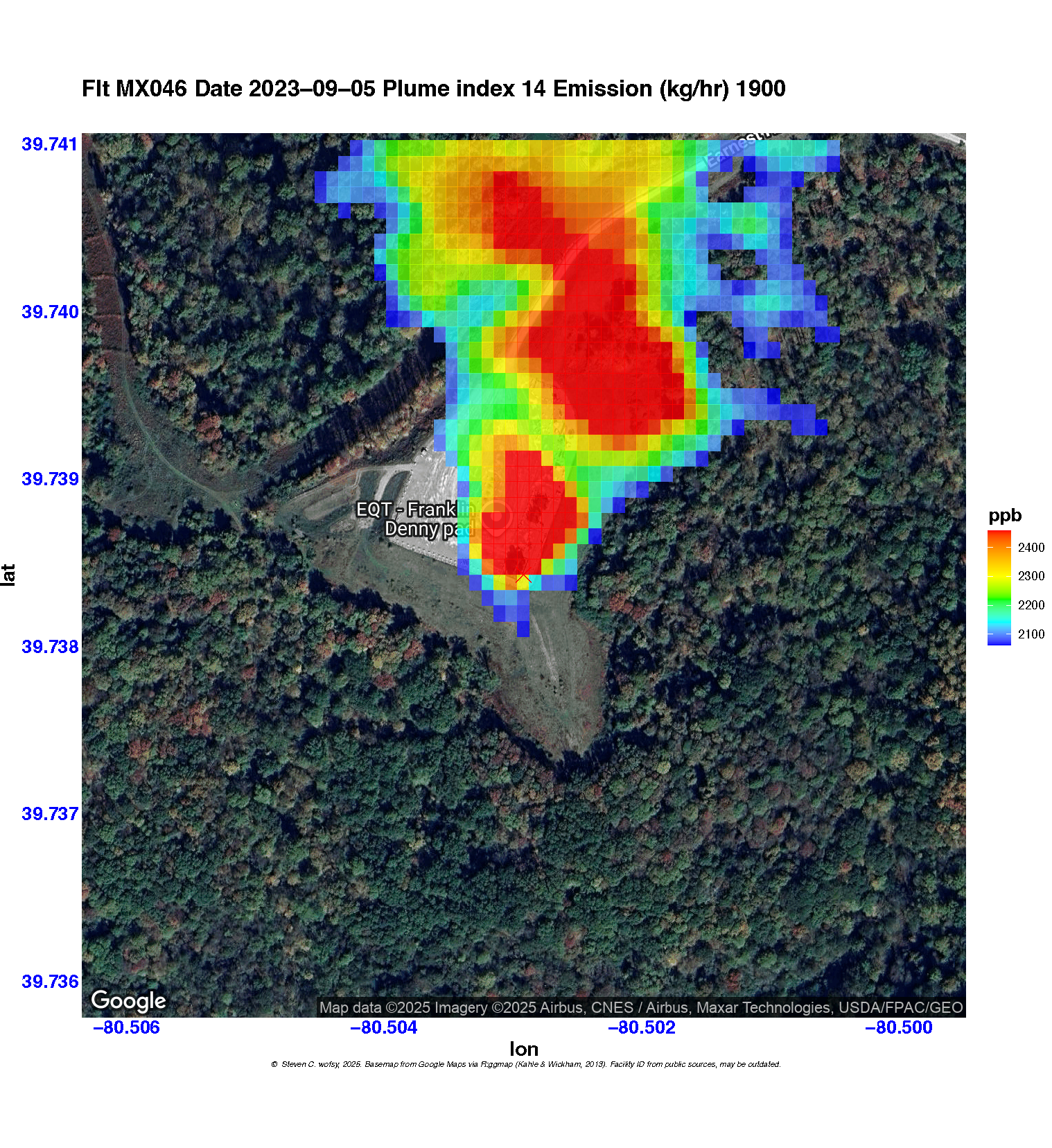
For the in-person exhibit, I only had space to print 10 of my photographs: one for each site. These would be accompanied by Wofsy's satellite imagery, as well as by short captions. More of my photographs and videos would be featured in the online exhibit.
While I worked to select and edit photographs and draft exhibit text, I reached out to different printers in the Boston area. I settled on one that would print my photographs on "EagleCell" boards made of honeycomb material—a more environmentally friendly option than traditional foam boards. The boards would be easy for me to install myself and potentially relocate to other places for exhibition.
The weekend before the exhibition's launch, I flew to Boston for the installation. I picked up the boards—a combined total of 31 photographs, satellite images, and captions—from the print shop, which was located in Everett (an industrial city with its own unique relationship to methane, which I had written about for an assignment back in 2022). Armed with a tape measure, a roll of painters' tape, more than one hundred command strips, and a laser level I had loaned from Home Depot, I spent an afternoon installing the panels at the Harvard University Center for the Environment.
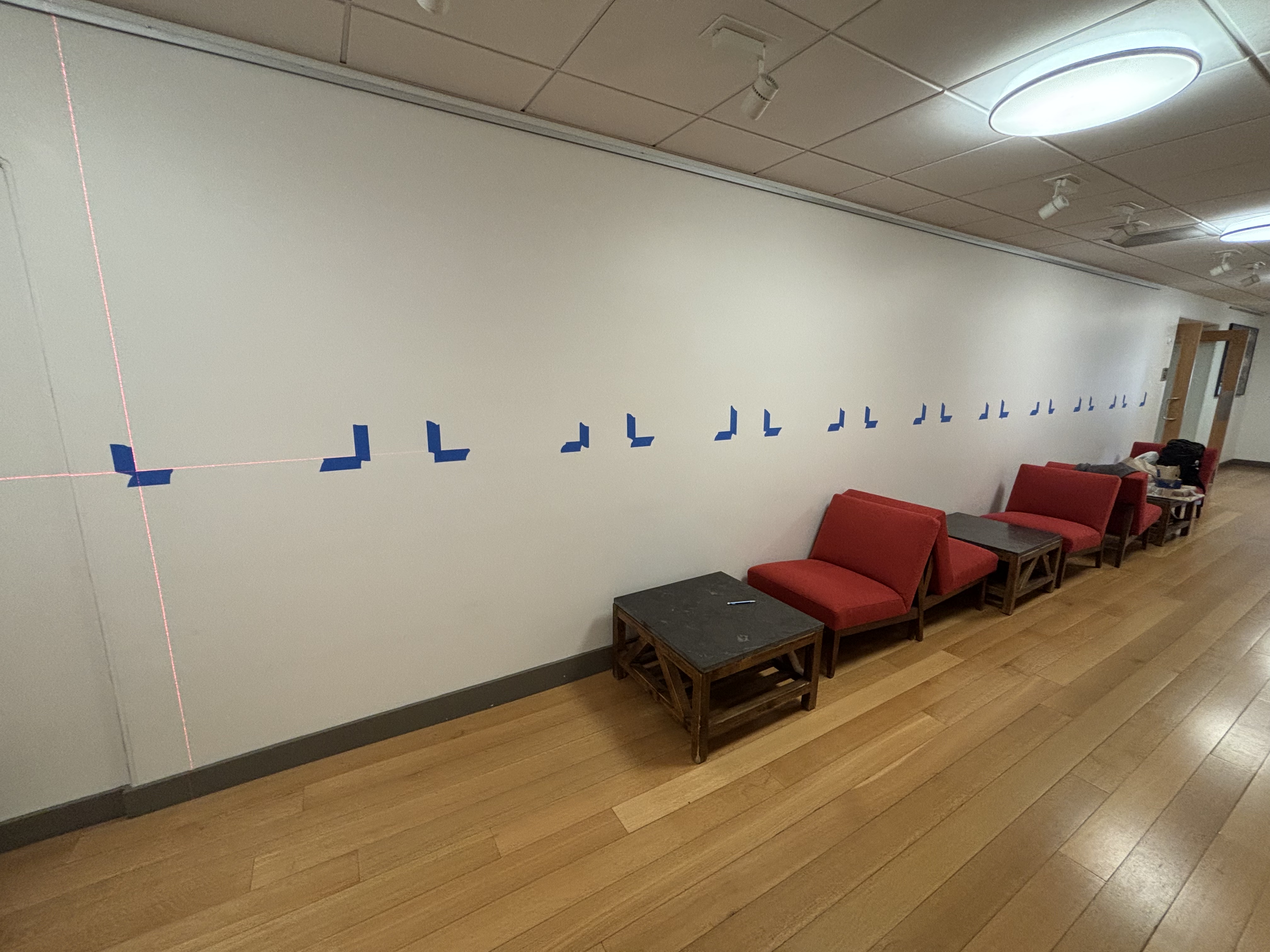
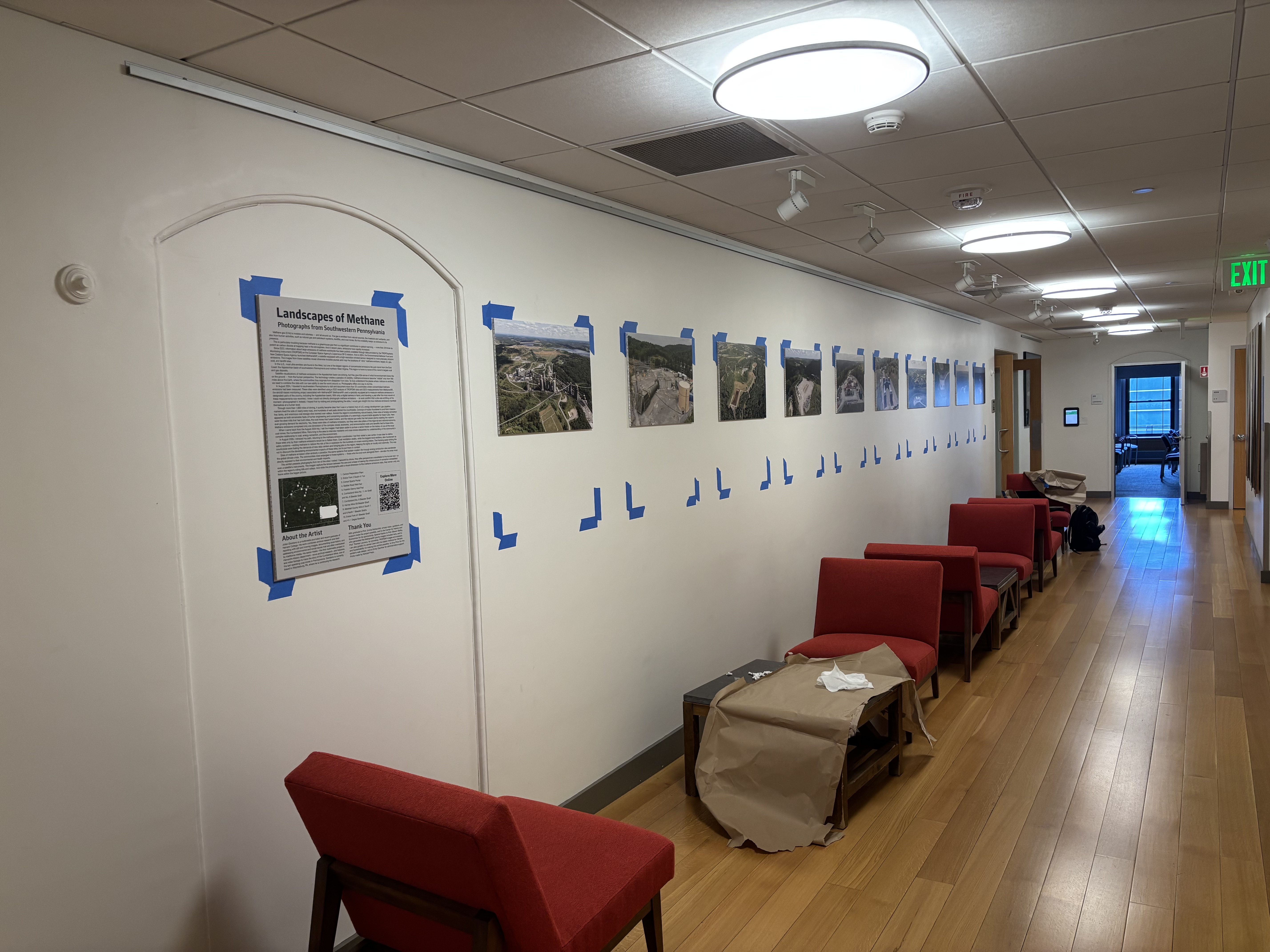
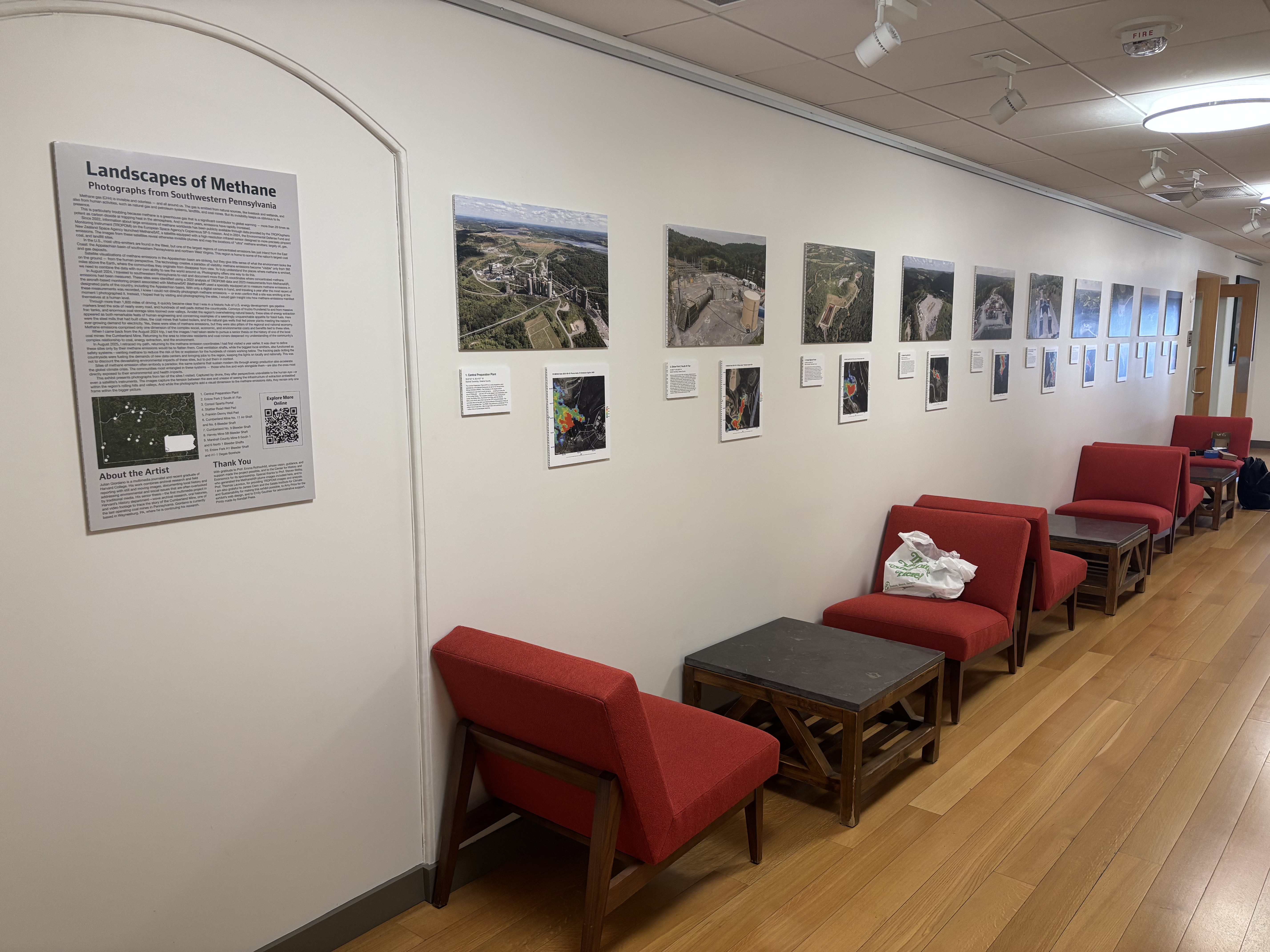
Looking at the panels on the wall, I realized that I had never seen the photographs at this scale before. Because I had only seen the emission sites through the drone's camera and never with my own eyes, the 24-by-16-inch prints became the largest and most detailed view of the sites I had seen so far. I was excited to be able to share this with visitors to the exhibit, and for them to have a chance to marvel at the hidden infrastructures of methane emissions and the striking landscape of southwestern Pennsylvania in the same way that I had.
After the opening reception, I returned to Waynesburg, this time driving there in my own car. A few days after my return, I drove 40 minutes north to the small community of Claysville, PA, for a community meeting hosted by the Center for Coalfield Justice. More than 80 people had gathered for one of the "Know Your Rights" sessions hosted by the local advocacy group. Longwall mining operations were approaching the area, and residents had questions about protecting their properties. They also had questions about fracking in the region and recent proposals to build data centers nearby. Attending this meeting would start my year of research into the ongoing impacts of longwall mining on southwestern Pennsylvania.
| « Returning to Waynesburg | An Aerial View » |