
Driving Around Greene County
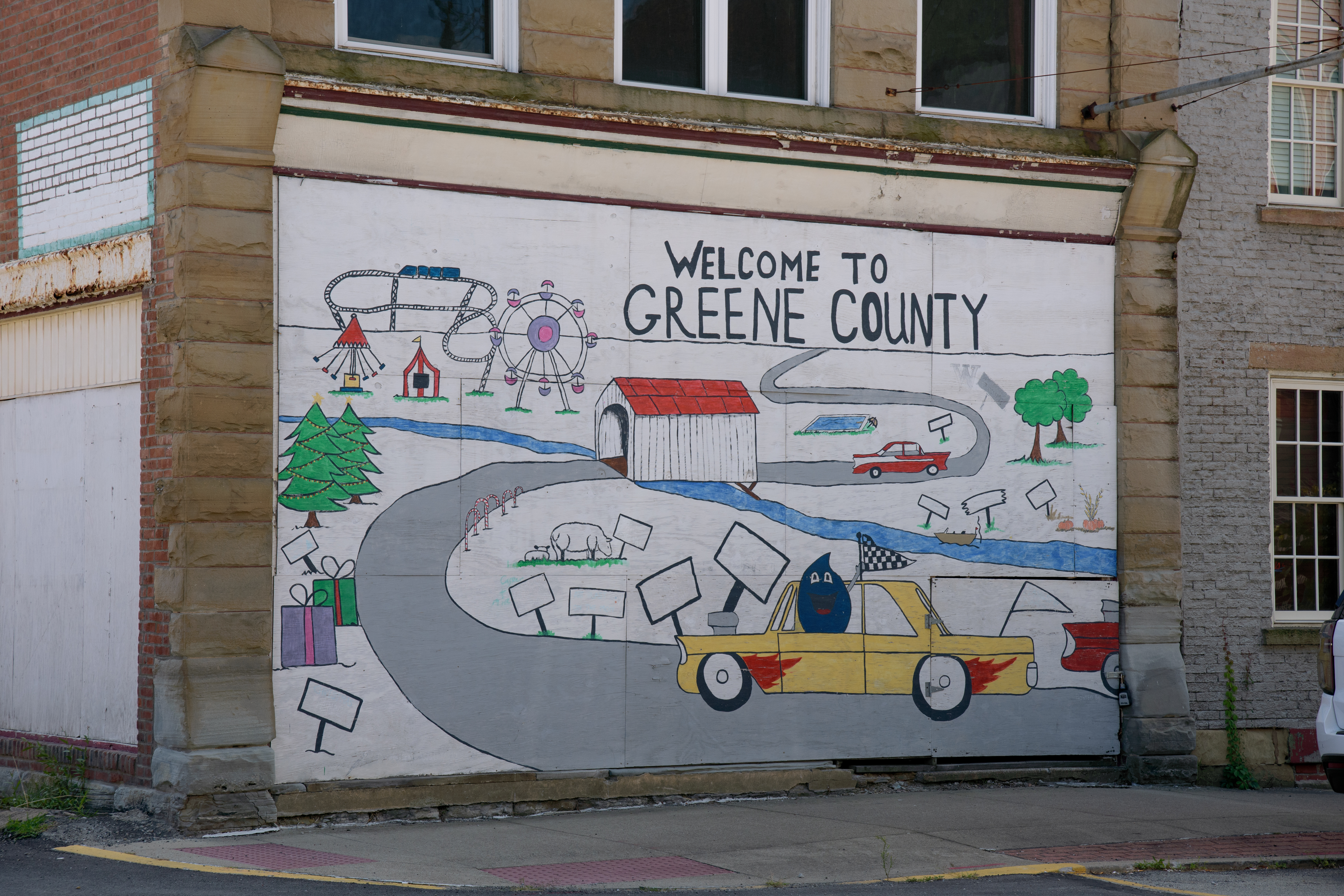
A mural in Waynesburg, PA reads "Welcome to Greene County."
On August 19th, I set out from my family's apartment in Manhattan on a nearly 10-hour journey to southwestern Pennsylvania. Not owning a car myself, I picked up a rental car in New Jersey before driving across Pennsylvania to get to Waynesburg, the county seat of Greene County. I arrived in the evening and checked into a motel where I would stay while exploring the region.
The next morning, I hit the road early, following my phone's GPS to the coordinates I had programmed into my itinerary for the day. The first coordinates I visited were just outside of Holbrook—only a fifteen-minute drive from Waynesburg. The highway I drove on, PA Route 21, ran parallel to train tracks that were used to transport coal and frac sand (a material used in fracking for natural gas). Turning off the highway, I drove through a tunnel going beneath the tracks before climbing a steep gravel road. The road was narrow, with barely enough room for two cars to pass each other. At the top, I saw the entrance to a natural gas well pad, marked with a sign denoting the name, owner, and address of the well pad. Large "No trespassing" signs marked either side of the entrance, which gave way to a gravel road leading even further up the hill and out of sight. From my car, there was no way of seeing the well pad—there wasn't even a place for me to safely park to get out and take a photo. So I rolled down my window and photographed the sign from the driver's seat before heading back down the gravel road in search of another vantage point. Between the hills, the narrow gravel roads, and the thick tree cover, it was impossible to get a view of the site. I decided to keep driving to the next site, but I had the same experience there. On the side of another winding road, I held my foot on the brake while snapping photos of a sign and the steep road behind it that led up to the well pad. I quickly realized that photographing well pads and mine ventilation shafts would be nearly impossible from the road, so I set my sights on taking other photos.
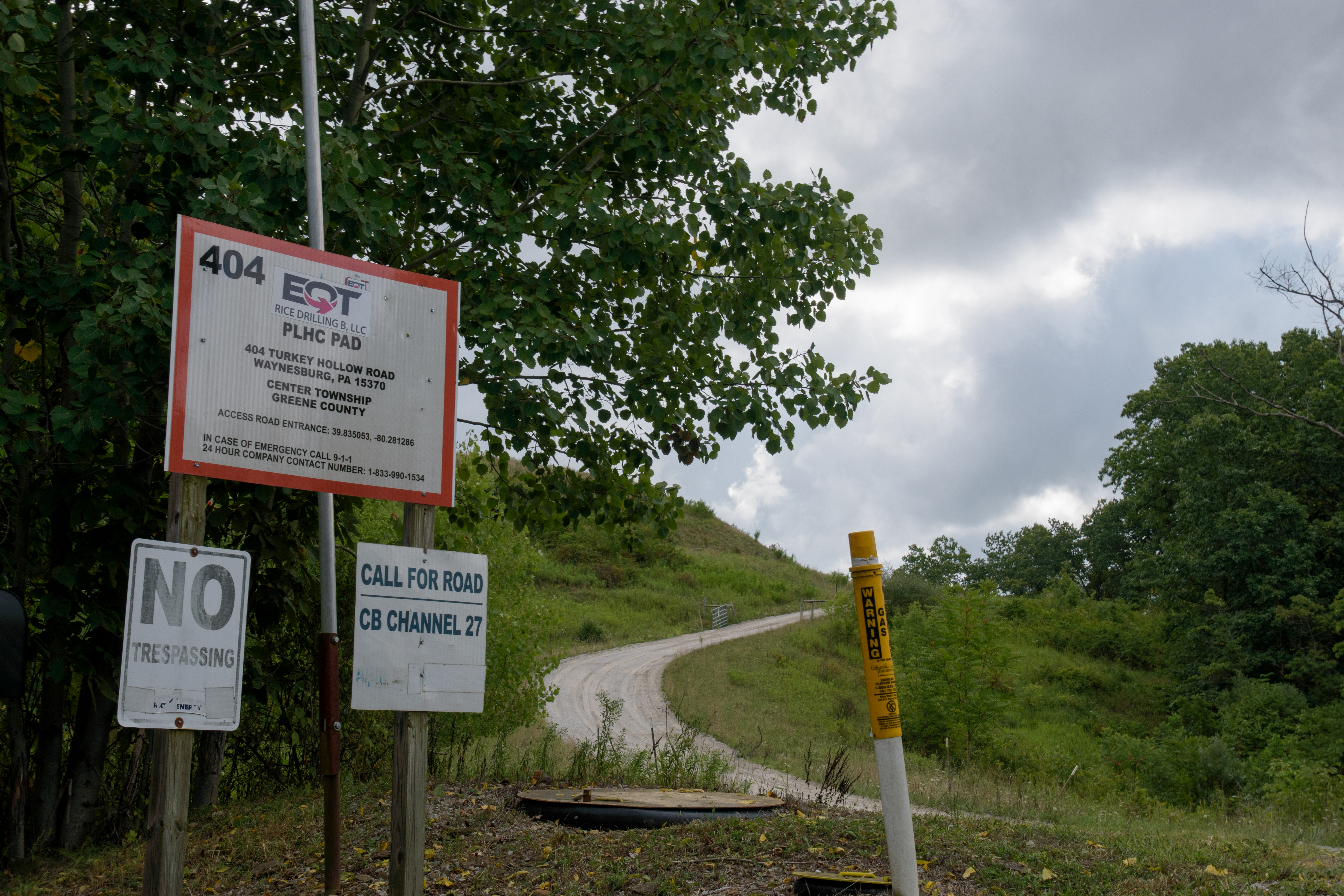
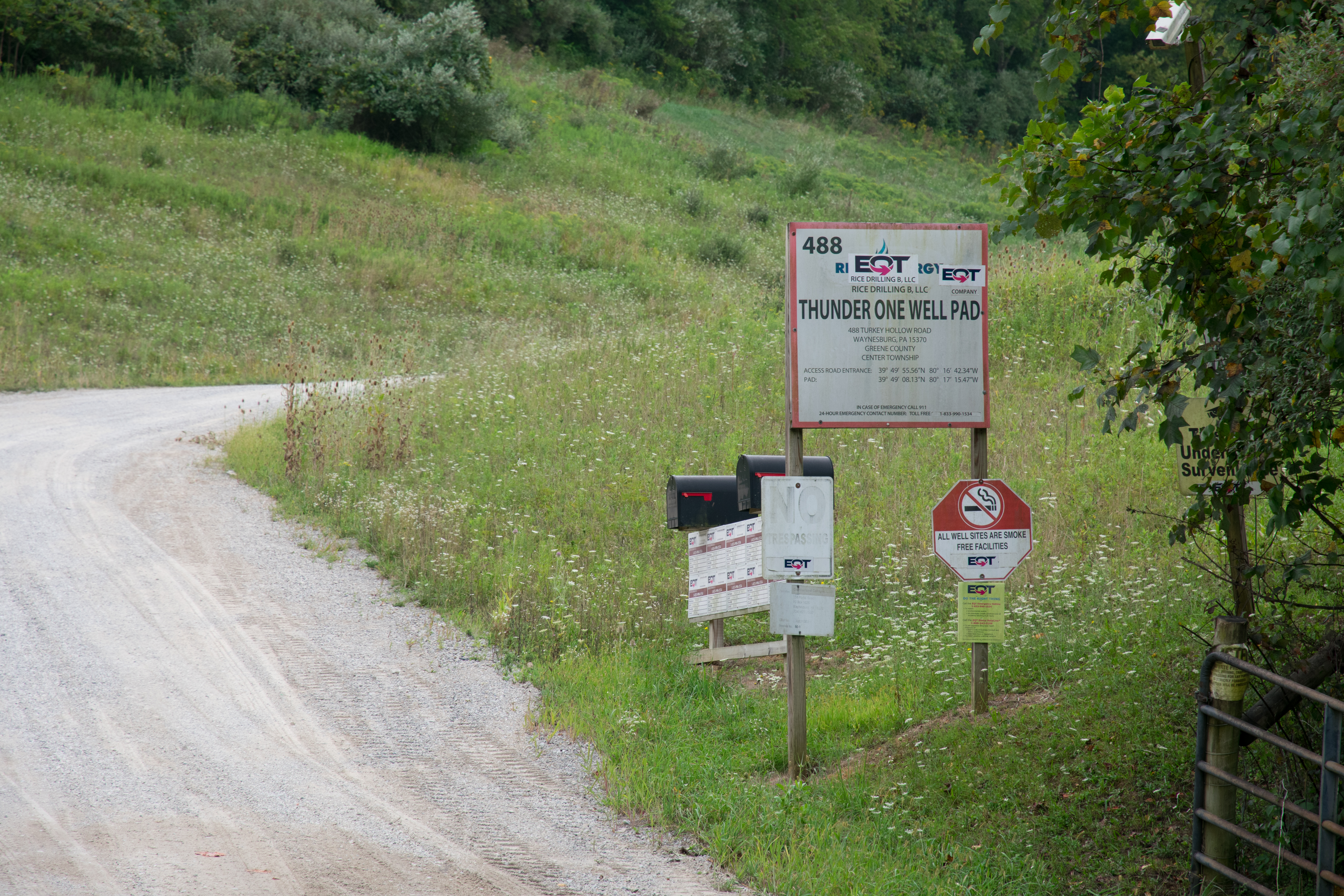
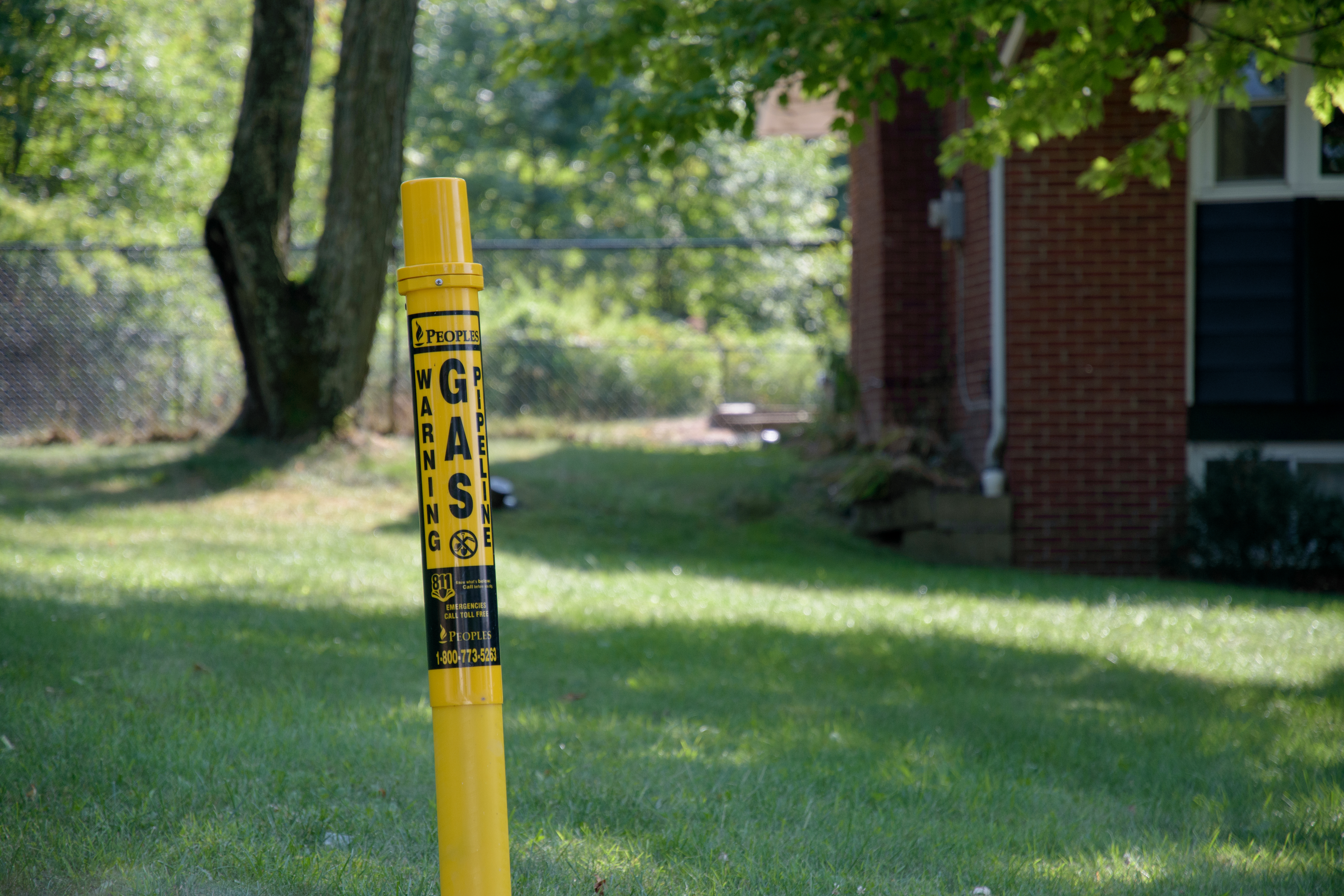
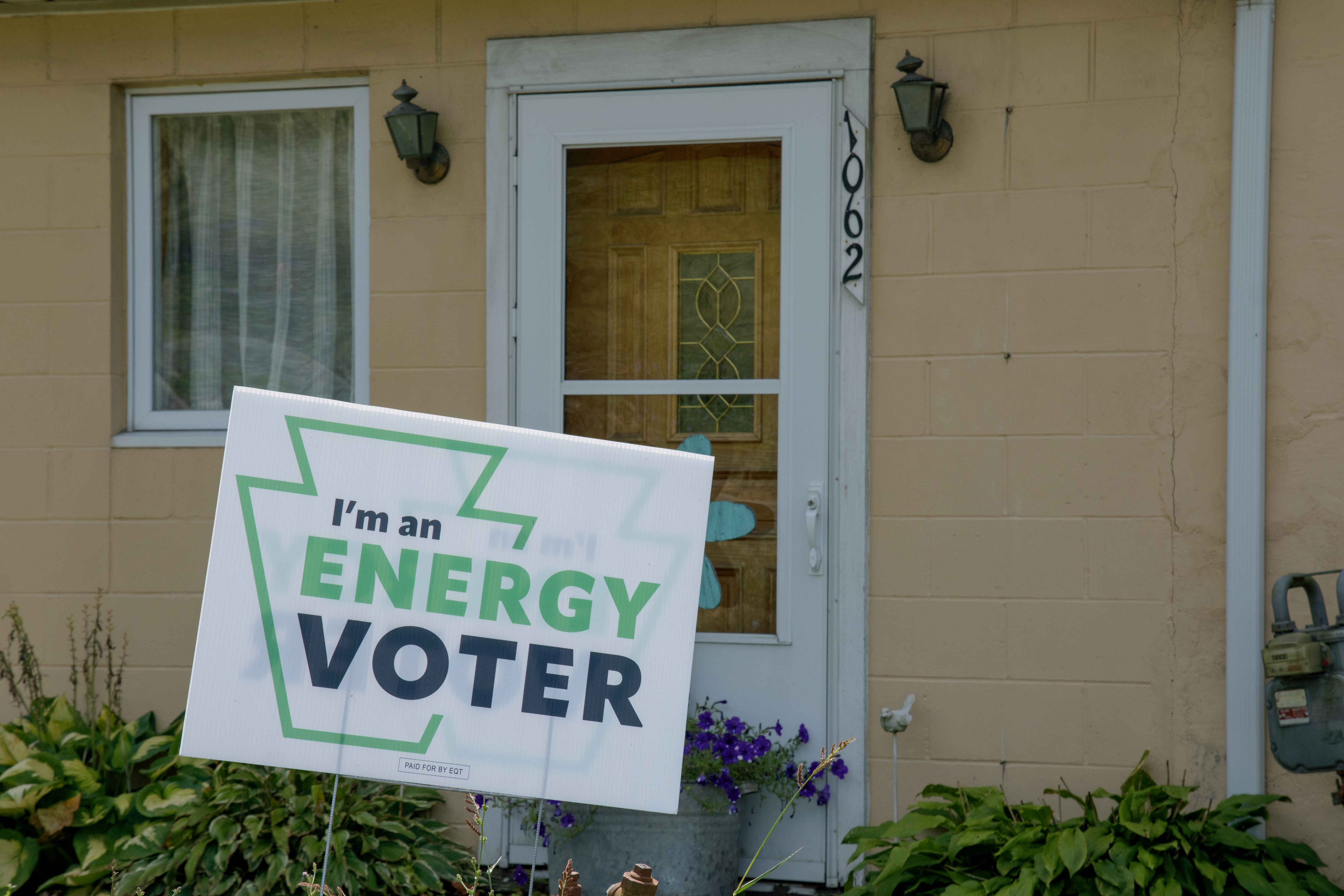
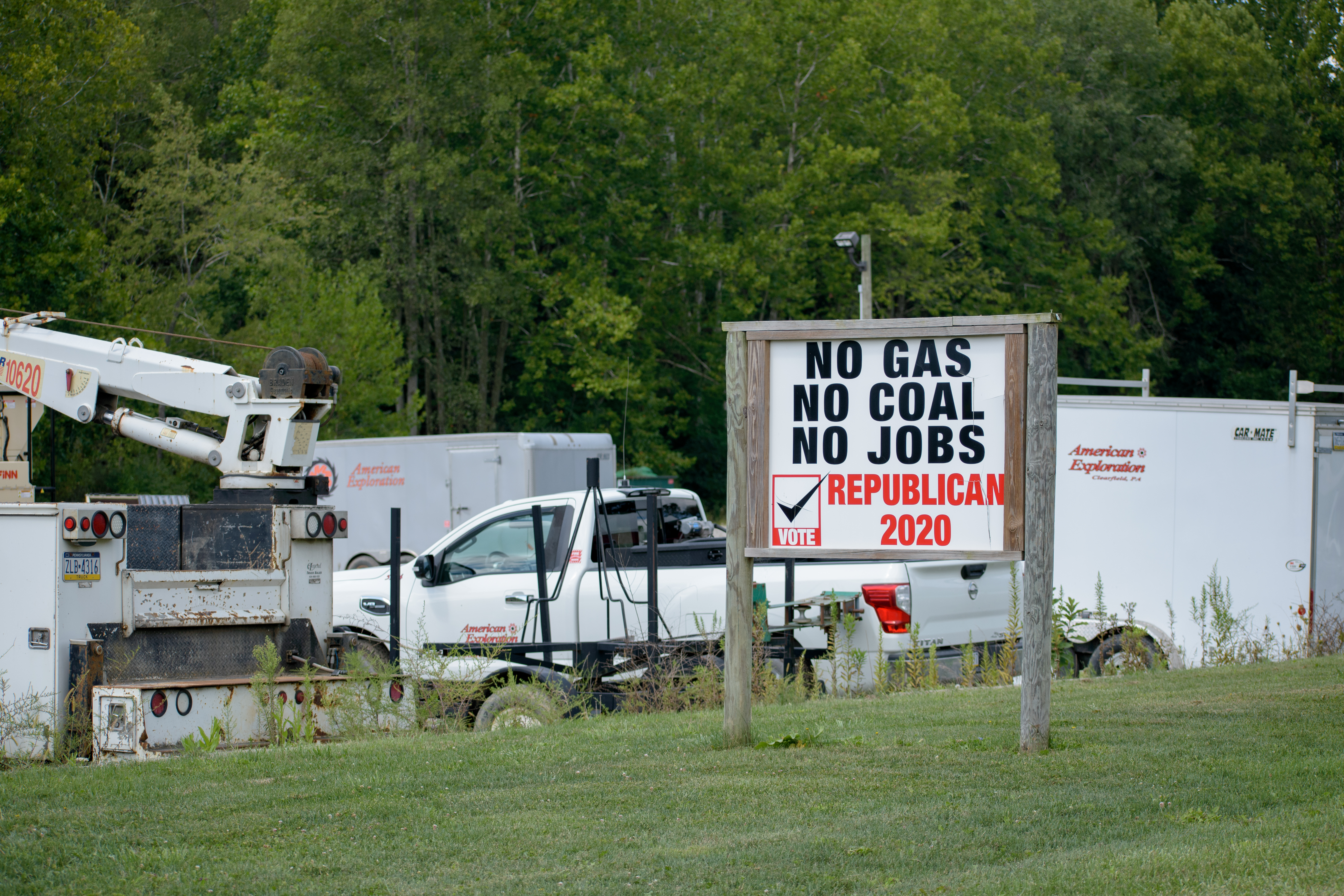
I would still drive to each of the coordinates on my itinerary, stopping to take a photo of the sign for the well pad or mine shaft and whatever I could see behind it. But then I would continue down the road, looking for other images I could make. I photographed cows grazing in nearby fields where bright yellow bollards marking the location of gas pipelines stuck out of the grass. I photographed truck restriction signs reading "WEIGHT LIMIT 10 TONS" or "CALL FOR ROAD - CB CHANNEL 27"—indicators that whatever rural road they were on likely led to a well pad. I photographed abandoned gas wells covered in weeds and signs on the side of roads reading "NO GAS, NO COAL, NO JOBS" and "I'm an ENERGY VOTER." While I couldn't photograph the emission sites themselves, I could photograph the markers of energy extraction and production that were all around me. I realized that even the roads that I was driving on—some of which had only recently been paved to provide access to some remote fracking site—were a testament to the energy industry in this area, and to the methane emissions that were its byproduct.
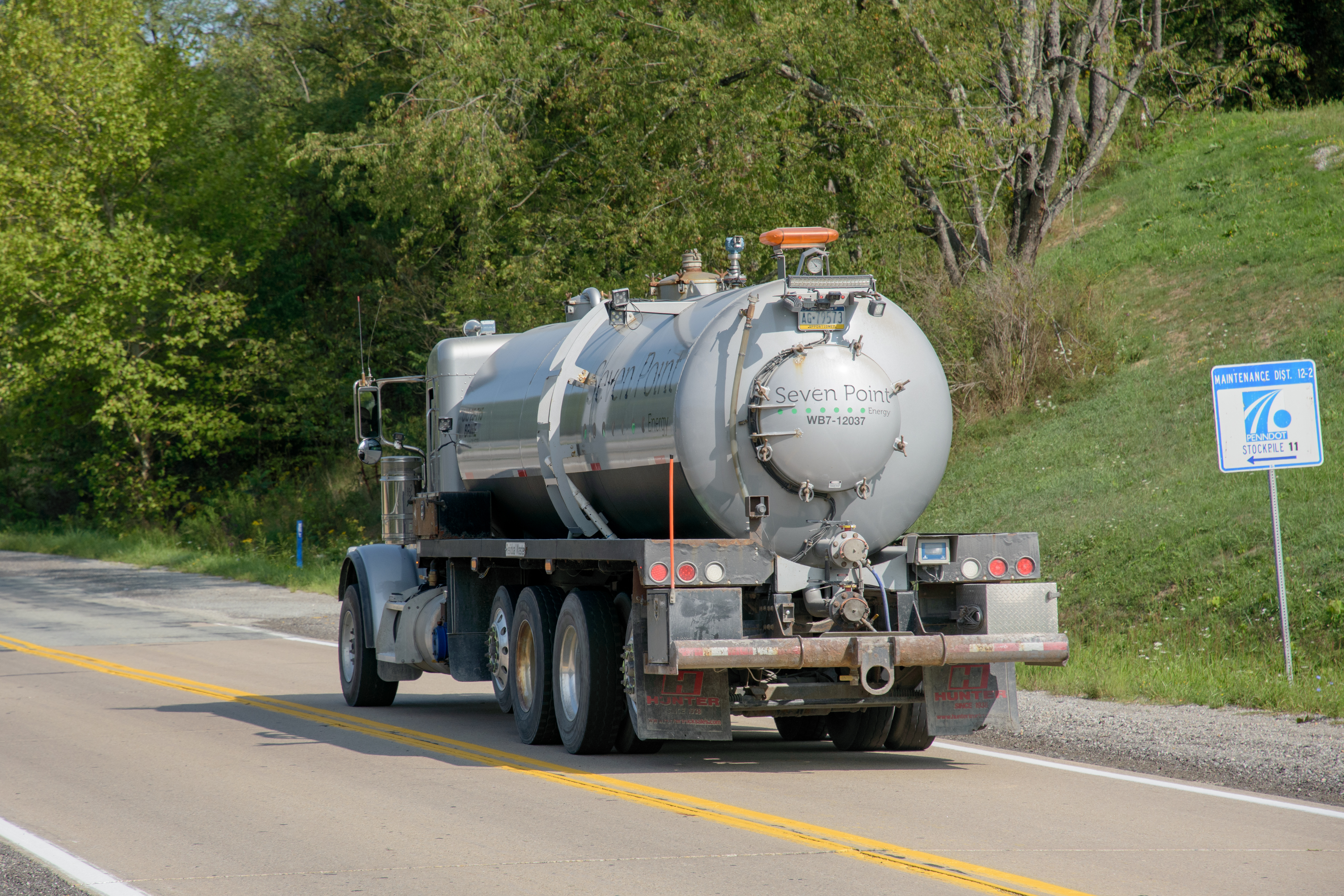
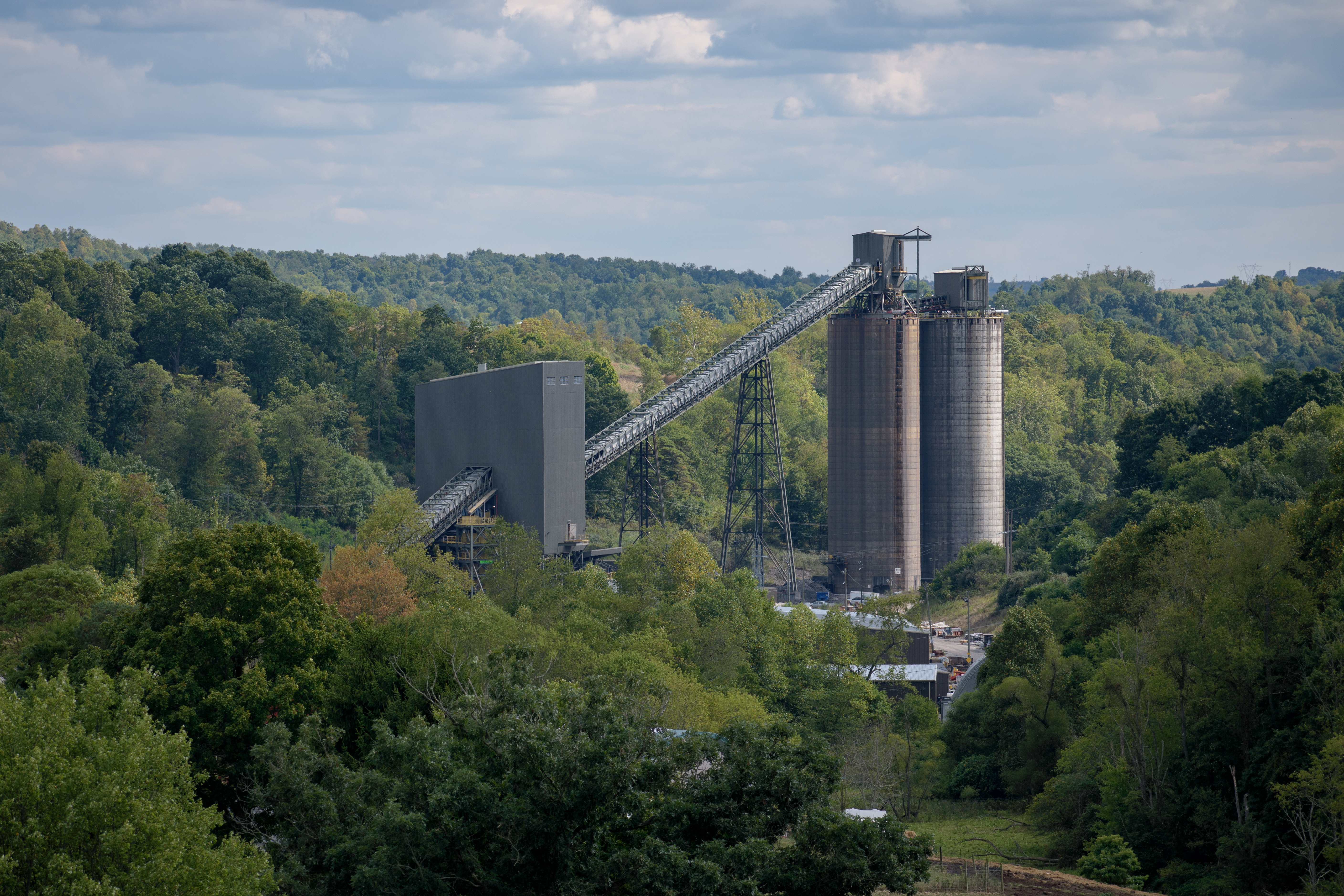
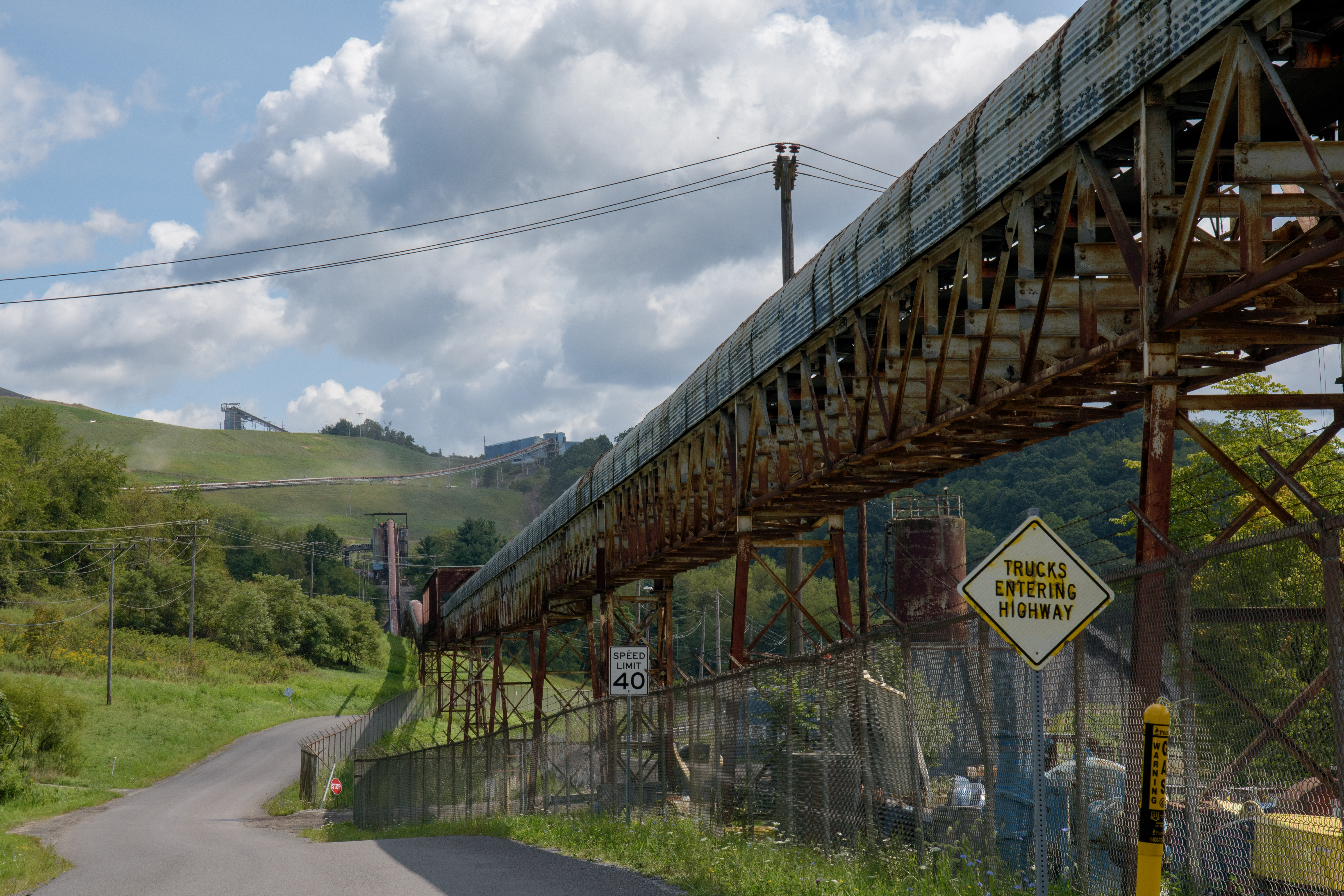
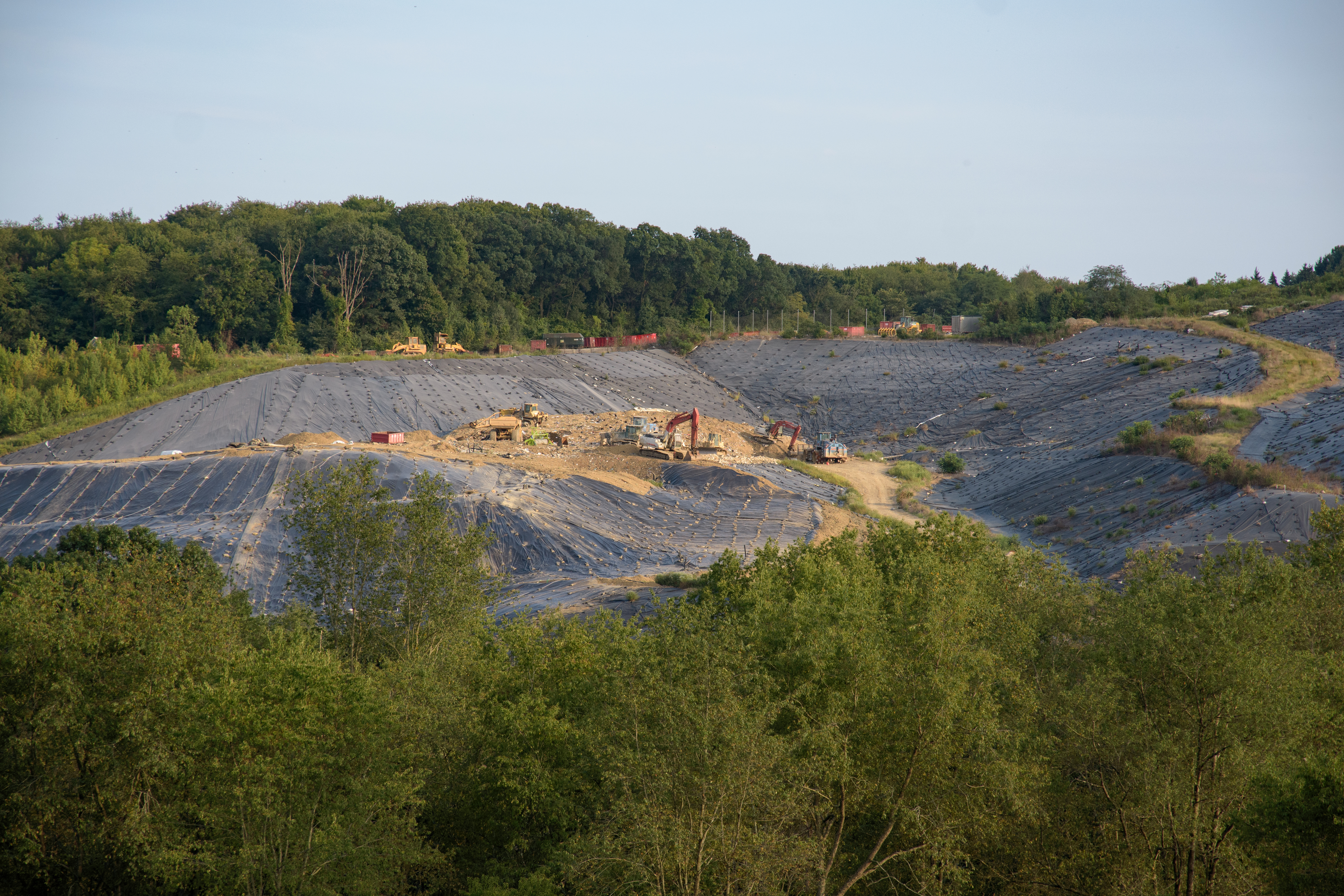
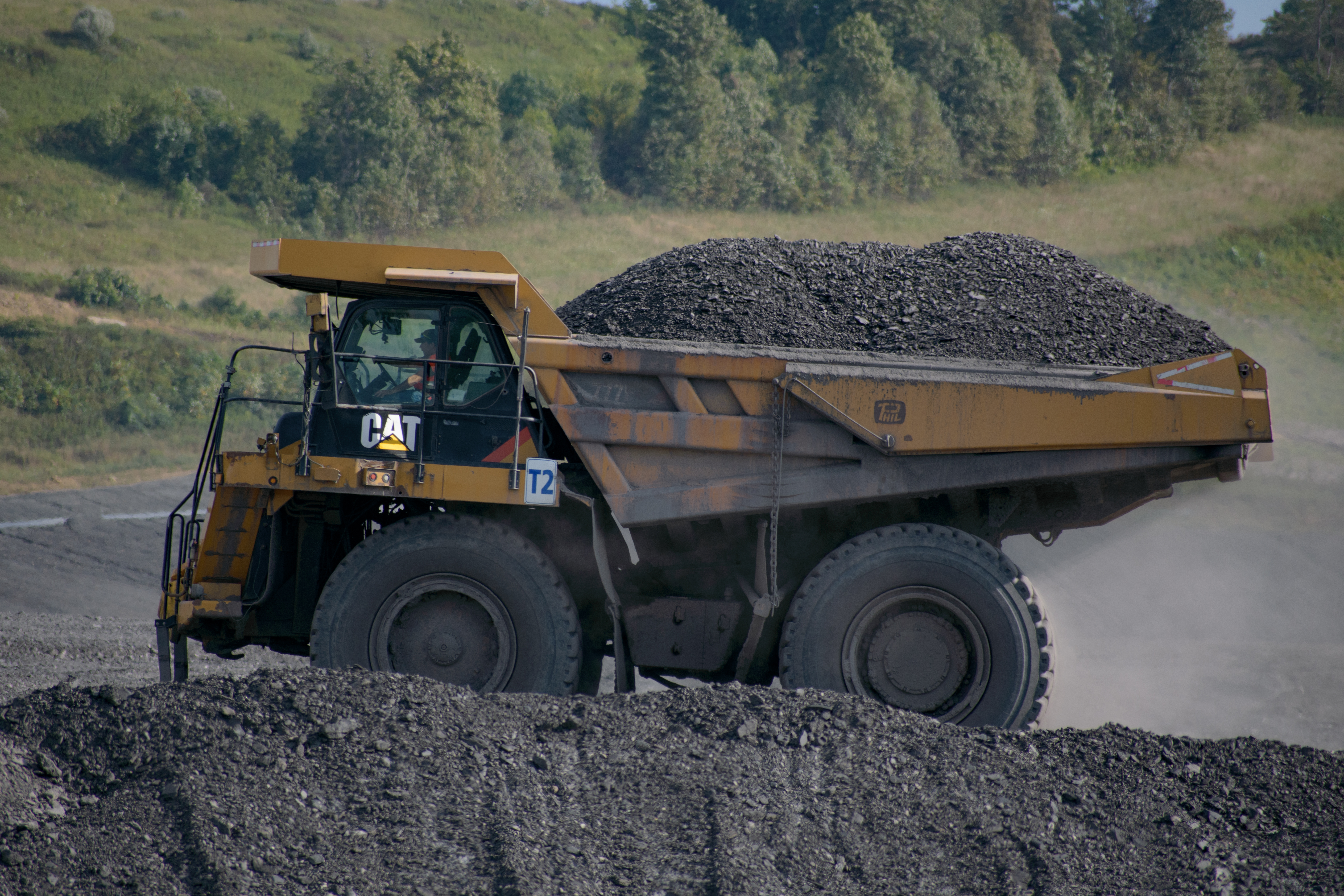
I continued driving hundreds of miles each day, visiting methane emission coordinates and their surrounding areas. I found myself drawn to the largest sites of coal and gas infrastructure: the enormous coal processing plants and vast natural gas compressor stations that filled entire valleys. I was astounded to see nearly 100-foot-tall coal silos and to hear the whirring of the conveyor belts that brought coal to them from deep underground. I was even more stunned to see other conveyor belts carrying coal waste to hill-sized piles of ashy gray slag. Driving down I-79, I gawked at four enormous green fracking fluid storage tanks looming over Exit 7. Every day, I saw dozens of tanker trucks commuting between well pads and the storage tanks, each one carrying thousands of gallons of fracking fluid. Other trucks with "OVERSIZE LOAD" banners affixed to them transported colossal mining machines and gas drilling equipment. At night, I heard the coal trains rumble through town every hour. These markers of the coal and gas industry were not on my list of coordinates, but they were intricately connected to the sites that were. They were stunning to photograph, but I wasn't fully satisfied with using them as representations of methane emissions, which came from a completely different set of infrastructure with an equally sizable—if only less visible—footprint on the landscape.
By the end of my trip, I had driven more than 1,600 miles and taken thousands of photographs. Still, I felt that I had only seen the surface. Back on campus, I spent hours researching the histories of different coal mines and natural gas companies. I was particularly fascinated by the Cumberland Mine. Only fifteen minutes south of Waynesburg, the mine had operated for more than fifty years and still employed more than 600 people. To my surprise, the mine had been on the verge of permanent closure in 2020 when a new company was formed to purchase it and revamp production. Since then, the company had invested hundreds of millions of dollars to extend the mine's life by three decades. This didn't make sense to me—what was the economic incentive to invest in coal at a time when coal's use was at an all-time low and continuing to drop? I wondered: what did the mine's continued operation mean for the local economy and for the environment? What was the impact on employees and the surrounding community?
I wanted to continue my research into the energy industry of southwestern Pennsylvania, and I decided to write a senior thesis in the History department doing just this. I chose to focus my thesis on the Cumberland Mine, and to investigate its history as a means of getting at larger questions of energy, the economy, and the environment in southwestern Pennsylvania. The methane project would be put on hold while I spent the next few months studying the Cumberland Mine, and I hoped that I would emerge from the thesis project with a deeper understanding of the region and a new sense of direction for the methane photo essay.
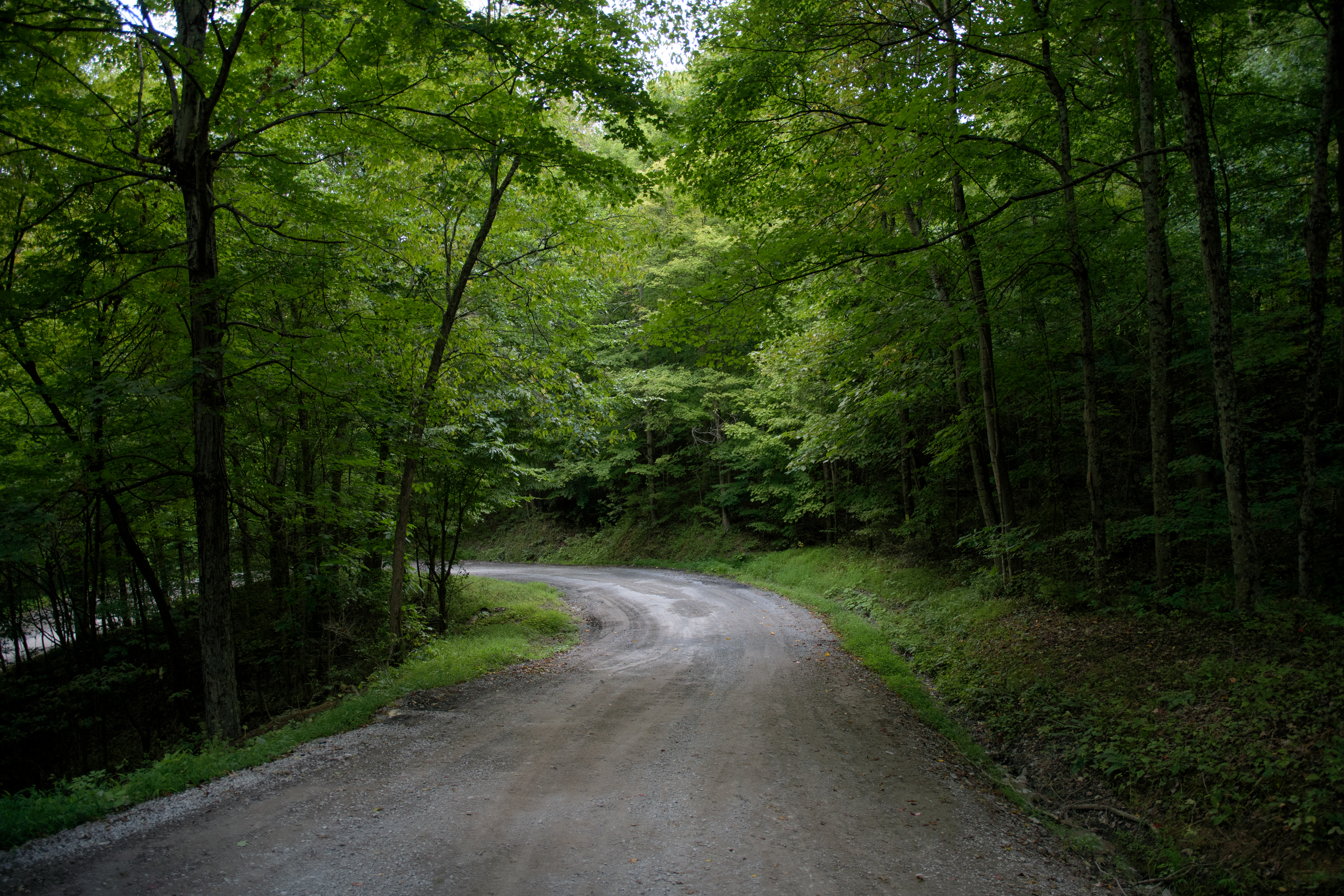
A winding gravel road in rural Greene County, PA.
| « Mapping Methane in Pennsylvania | Conversations in Coal Country » |