
Mapping Methane in Pennsylvania
In the weeks before the trip, I spent countless hours poring over satellite maps of southwestern Pennsylvania. I had used ArcGIS and Google Maps to plot out all of the emissions measurements and filter them by the size of the measurement and its radius of accuracy. I used measurements from two sources: satellite data from TROPOspheric Monitoring Instrument (TROPOMI) on the European Space Agency's Copernicus SP-5 mission, and aircraft measurements taken from a specially equipped jet for the MethaneAIR project. Data on large emissions of methane worldwide have been publicly available through TROPOMI since 2022, and I used an analysis of this data conducted by Thomas Lauvaux et al. in 2022, Lauvaux et al., "Global Assessment of Oil and Gas Methane Ultra-Emitters." which identified 1,800 of the largest emission measurements across the globe, and was the basis of the 1800 Histories project.1These coordinates indicated circles of a 15 km radius (around 9.3 miles) within which the methane emissions occurred, and 36 of them were located in southwestern Pennsylvania. The aircraft measurements taken for MethaneAIR, by contrast, were accurate to within a couple of meters, but were only available for places where a flyover had been conducted. The MethaneAIR project was associated with MethaneSAT: a satellite equipped with a high-resolution infrared sensor designed to more precisely pinpoint emissions. The satellite was launched in 2024 by the Environmental Defense Fund and the New Zealand Space Agency. Before the launch of the satellite, the MethaneAIR project conducted measurements in designated parts of the country, including the Appalachian basin. While I would not be able to access MethaneSAT data in time for my trip, I would be able to use data from several 2023 MethaneAIR flyovers of the Appalachian basin, which had identified coordinates of 44 locations in southwestern Pennsylvania.
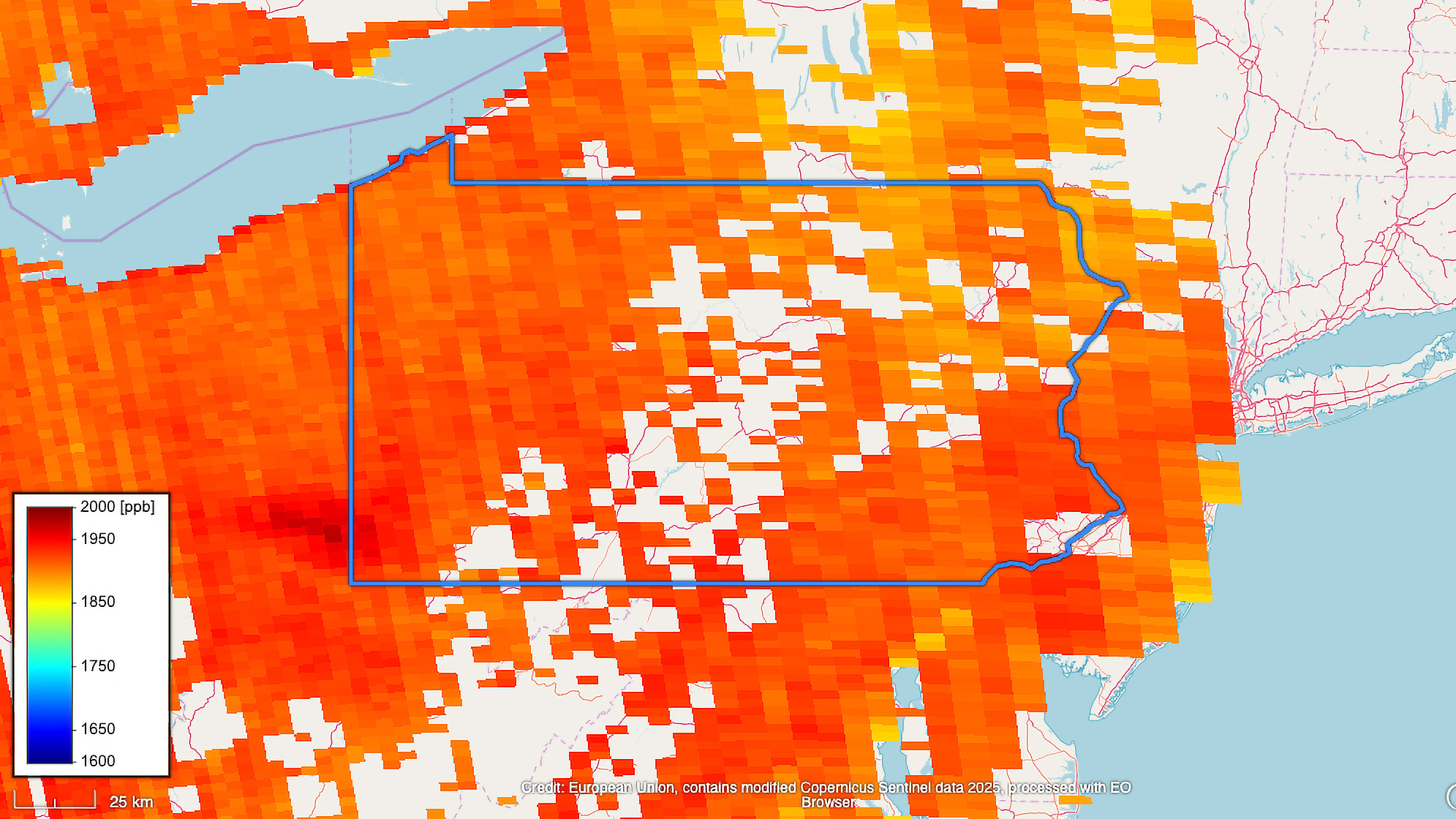
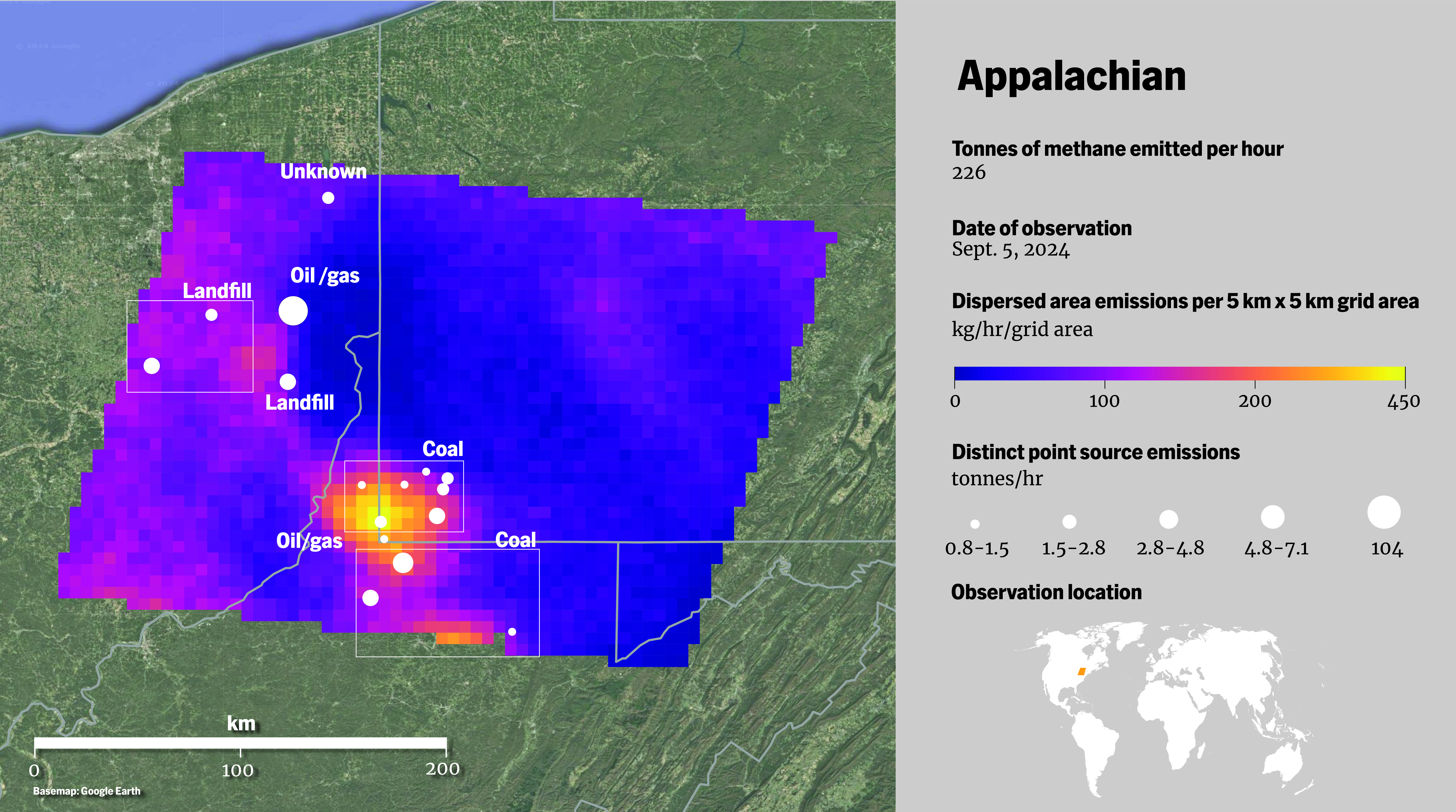
Most of the 80 coordinates on my map were located far from urban centers such as Pittsburgh or Washington, PA, and were instead located in more rural areas. The vast majority of the coordinates could be traced to the southwestern most county in the state, Greene County. Covering nearly 600 square miles, it has a population of only around 34,000. From the Google Maps satellite imagery I viewed, the region appeared hilly and forested, with pockets of farmland throughout. But a closer look at the images revealed hundreds of small grey rectangles scattered across the countryside. They were next to homes, in the middle of fields, and at the tops of some of the most remote hills in the area. I would soon learn that these were a combination of natural gas well pads and coal mine ventilation sites: infrastructures supporting the two biggest industries in the county. The Pittsburgh coal seam and Marcellus Shale formation, located 800 and 8,000 feet below Greene County, respectively, made the region rich in natural resources crucial for energy production. The grey rectangles that I saw from satellite imagery were the tip of the iceberg: small indications on the surface of the vast industries below ground.
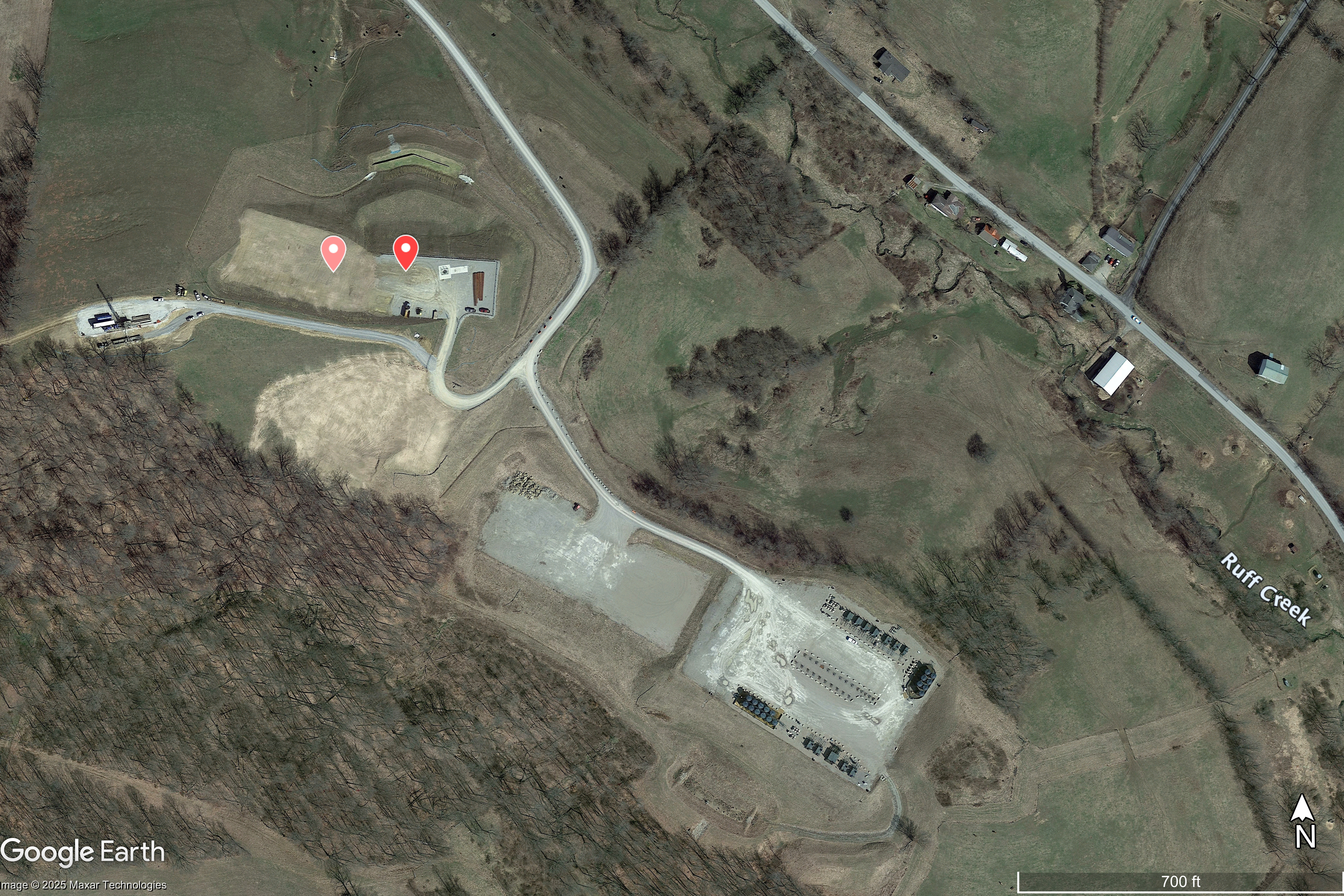
A few large landfills and coal mines preparation plants—with accompanying gob (coal waste) piles—were also visible in the satellite imagery. Their size made them far easier to see and identify, and they accounted for a handful of the emission measurements. But most of the measurements could be traced to the small grey rectangles. At the time, I was unsure of what they were. I couldn't tell the difference between natural gas pads and mine ventilation shafts, and there were no labels on Google Maps to help me. I would eventually learn of databases with well pad coordinates, but coal mine ventilation coordinates were not publicly listed. The only way to confirm the purpose of these sites (not to mention their names and owners) would be to see them in person. I resolved to visit each of them on my visit, identifying and photographing them to create a comprehensive portrait of methane emissions.
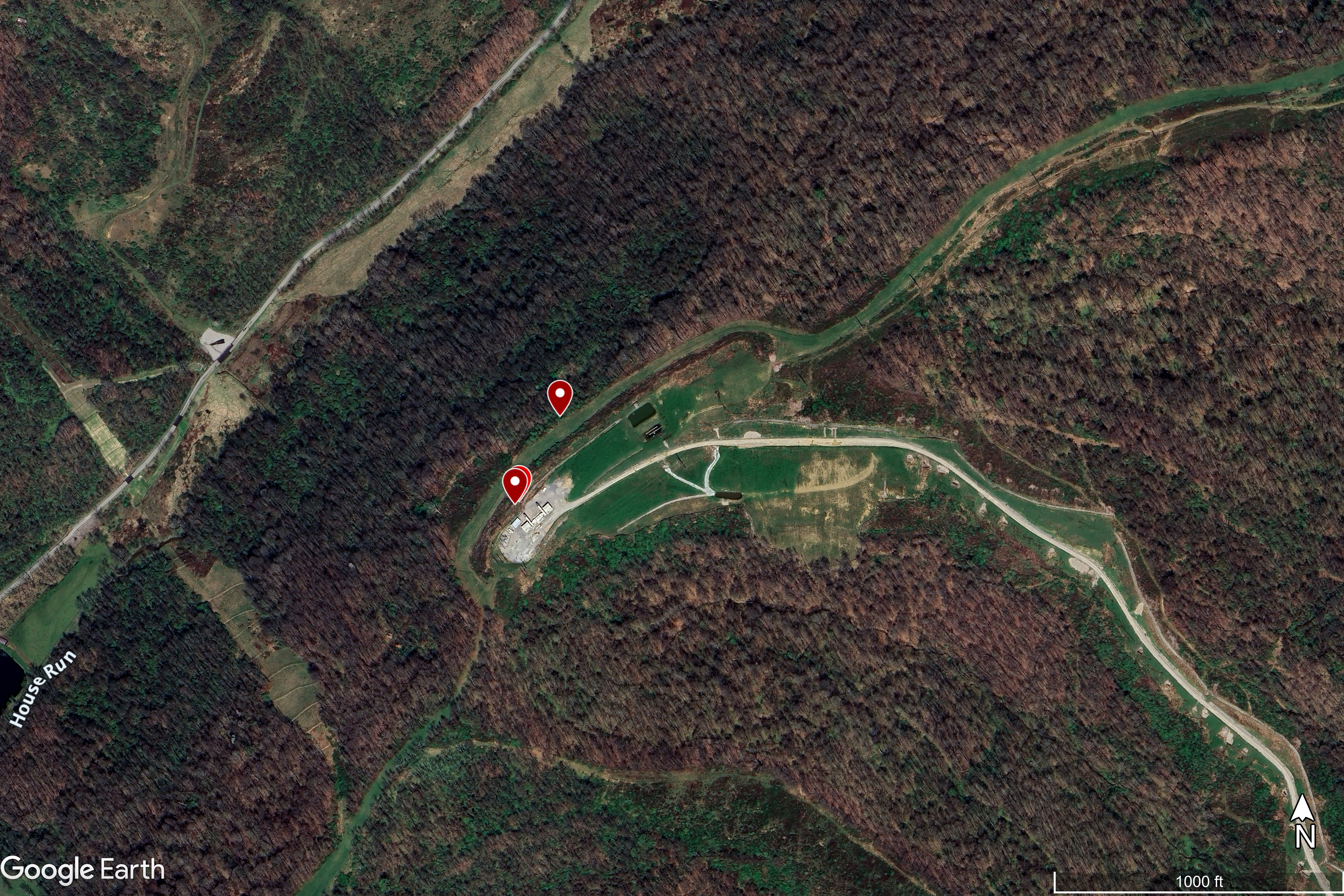
In the weeks leading up to my trip, I plotted out daily routes by grouping emission measurement coordinates and identifying the roads that would get me nearest to them. I scoured Google Maps for locations where I could pull my car over to get out and take photos, but this was a futile task: most sites were located off rural, one-lane gravel roads in hilly areas. I could hardly see the roads from the tree cover, and I worried that the vegetation would also keep me from seeing the sites from the road. Going in blind, I decided to do my best to photograph the sites of these measurements and be ready to adapt to taking photos of the surrounding landscape if that was all I could do. My mission was to find a way to visualize the region's methane emissions: to show from below what was pictured in the satellite measurements. Since the emissions themselves were invisible to my camera, there was no clear way to approach this assignment. All I could do was go in with an open mind and do my best to document what I saw.
| « An Aerial View | Driving Around Greene County » |