
Two (or Three) New Mines
It is this old industry that is on the threshold of expansion in Sweetwater County in the winter of 2024-2025. The applications filed for the two new mining projects give a sense of the scale of the trona industry, at least in prospect, and of the process of assessment now underway. Both projects are to be located ISC Project West, 33/1296; "Mine Plan - Dry Creek Trona Project," February 2022, available at https://eplanning.blm.gov/public_projects/2016395/200519818/20060220/250066402/DRAFT%20February%202022%20Mine%20Plan.pdf , 199/698. within the grey-green landscape of the sagebrush steppe. The Project West site extends over a "project area" of 9,277 hectares (22,925 acres) ISC Project West, 615/1296; 45,56,61,195,677/1296. and is expected to contain a solution mine -- involving the recovery of trona "by the injection and circulation of fluid underground" -- and a processing plant, 24 kilometers away, to produce almost 3 million tons of sodium carbonate and sodium bicarbonate (baking soda) per year. There will be "buildings, structures, rail structures, monitoring systems [and] roads," "purge ponds," "five natural gas-fired boilers [and] one lime kiln," a pipeline carrying the injection fluid -- a solution of caustic soda and soda ash -- from the plant to the mine, and another pipeline carrying brine from the mine to the plant.
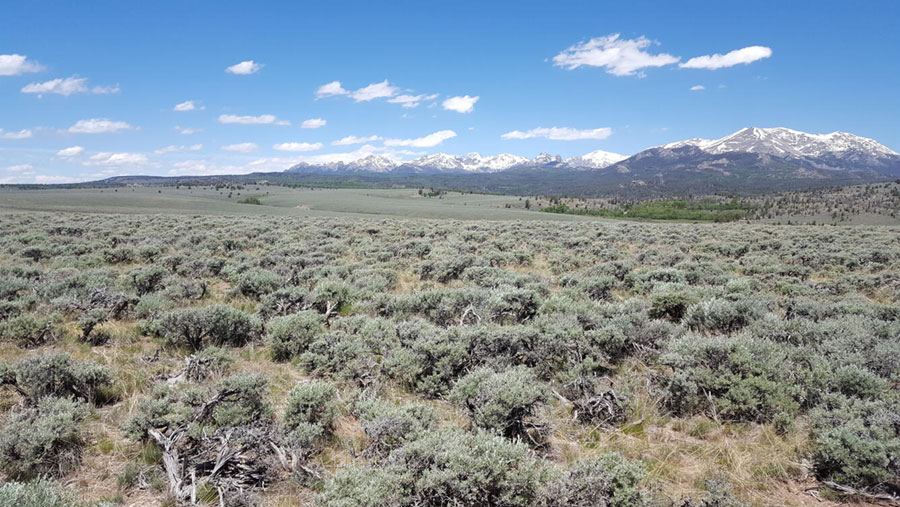
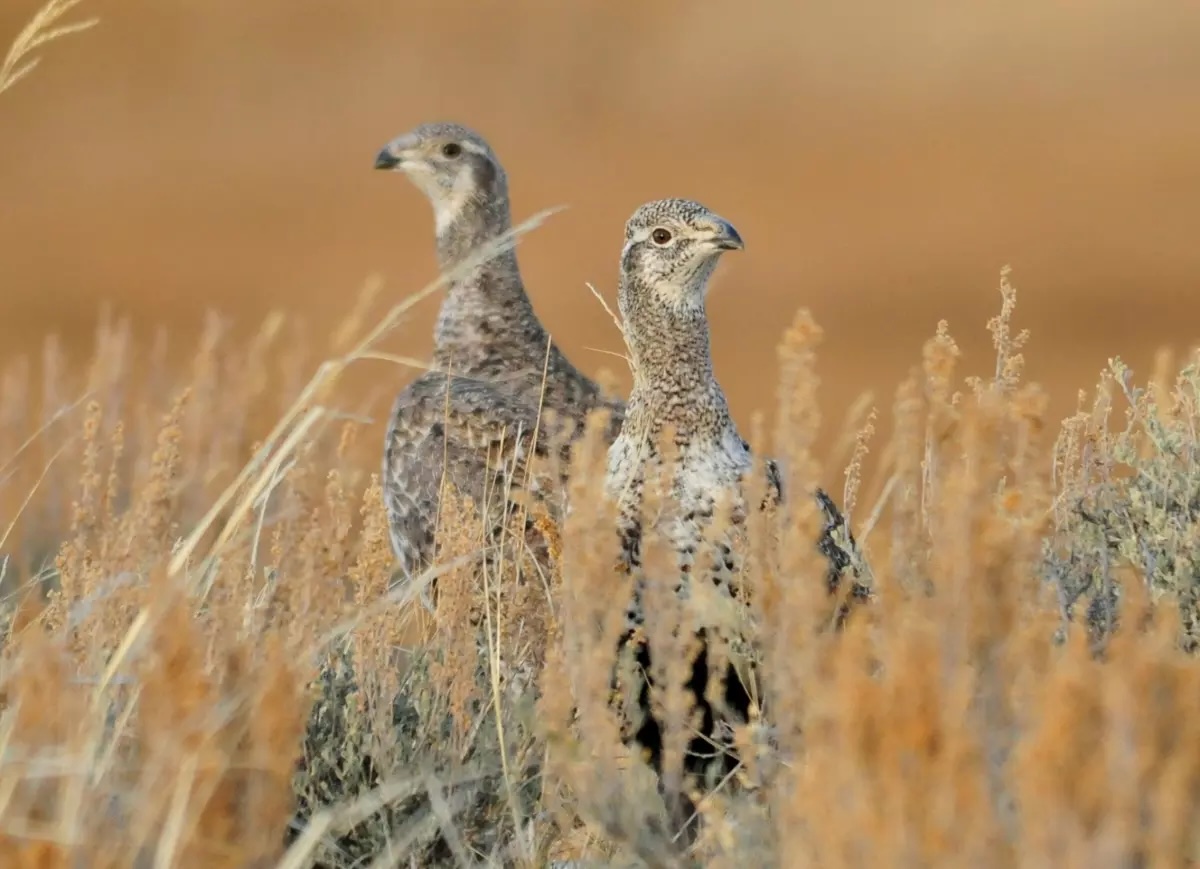
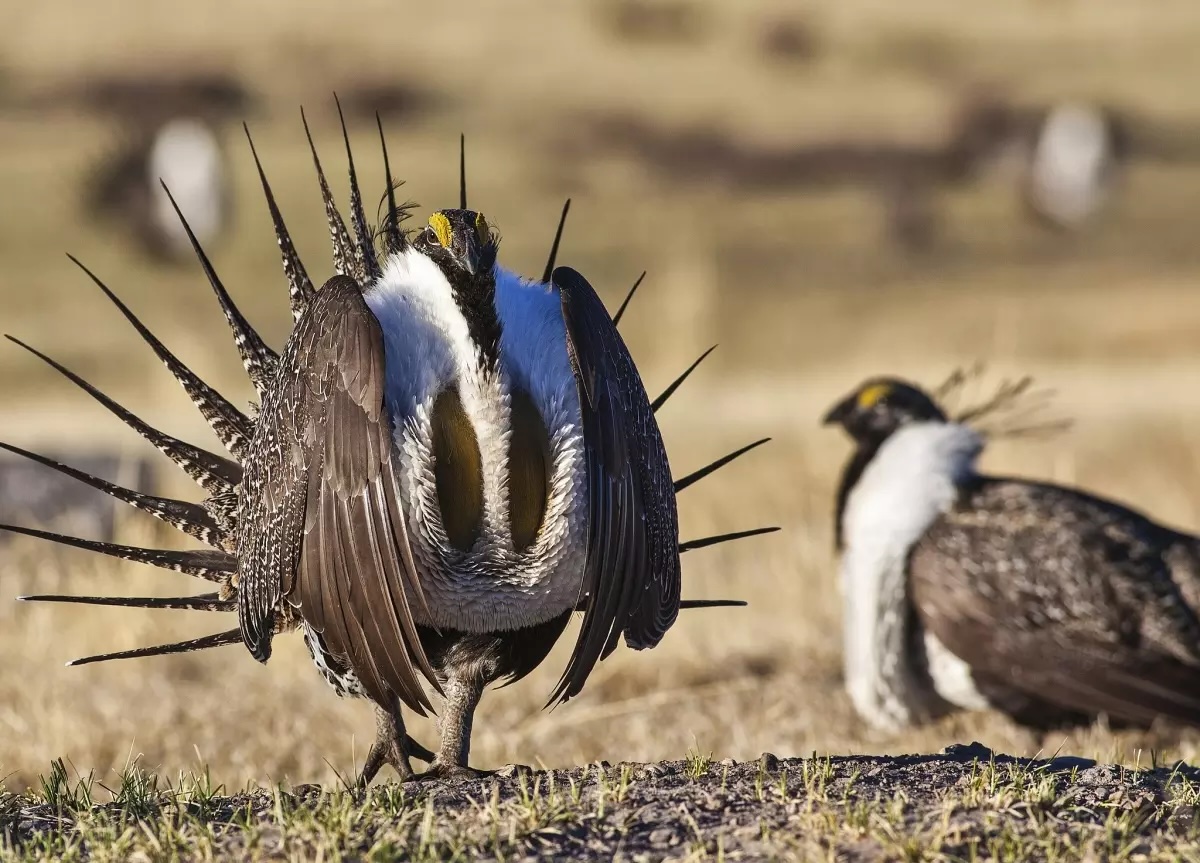
The entire project "lies within Greater Sage-Grouse General Habitat," and there are multiple "leks" -- the sage-grouse is an endangered and charismatic avian, and the leks, from the Swedish leka, to play, are their places of (extremely elaborate) courtship -- "within 4 miles of the Project."Project West Commercial-Scale Right-of-Way and Temporary Use Plan of Development, July 2024, Appendix 1, 982, 987-988/2094, https://eplanning.blm.gov/public_projects/2031522/200609177/20115689/251015669/Project_West_EA_Appendices.pdf, accessed on December 8, 2024 through https://eplanning.blm.gov/eplanning-ui/project/2031522/570.
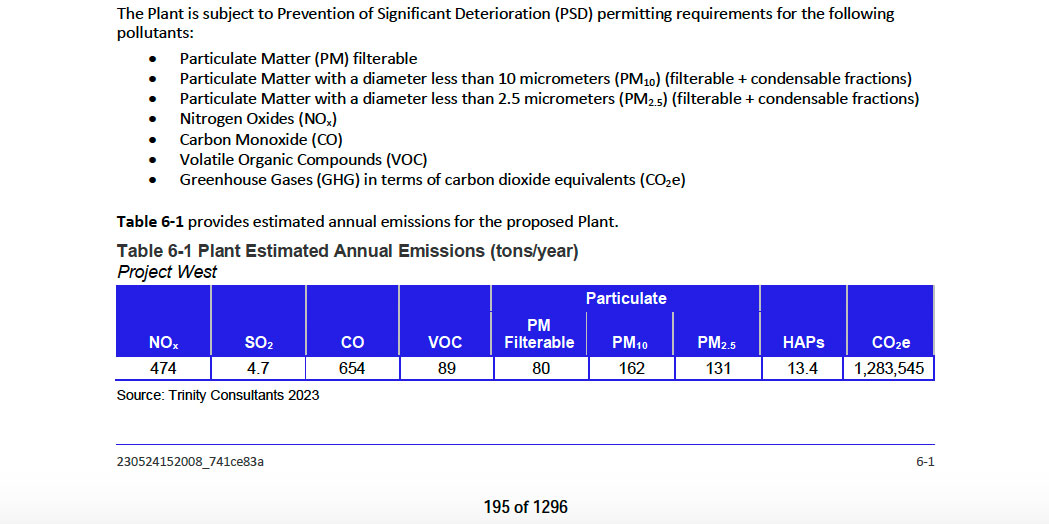
The US EPA, in comments of April 2024, asked for further investigation into the "magnitude, location, and timing of potential land subsidence that could result" from the project, Project West Right of Way, July 2024, Appendix 1, 398, 402/2094. and into the "potential presence of pressurized methane." In the earlier application to the Wyoming "Industrial Siting Council," there was a laconic reference to "Plant Estimated Annual Emissions," with a single line ISC Project West, 195/1296. that listed "greenhouse gases in terms of carbon dioxide equivalents," expected to amount to 1,283,545 tons per year.
The other new project, "Dry Creek Trona," is even larger. It will use a "method of solution mining with horizontal wells," already in operation in Turkey, to "target deep beds of trona occurring in layers beginning approximately 2,300 feet [701 meters] below the Earth's surface." The initial "Mine Plan" from 2022 discourses at length on the "chemistry of cavern development." The "relative uniqueness" of the mine, in the plan's conclusion -- "virgin-block solution mining of trona in multiple beds at large depth" -- means that there is little evidence on the basis of which to estimate "the complex deformation response of trona," and thereby the likelihood "Mine Plan - Dry Creek Trona Project," February 2022, 68,75-80,607,684/698. of "mine-induced subsidence."
The project is expected to produce 6.5 million tons of sodium carbonate and sodium bicarbonate per year. It too will include processing facilities, a mine (or "well fields") and ponds, as well as a co-generation facility and a rail line. Once the plants are in operation, "Mine Plan - Dry Creek Trona Project," 14,145,208/698. "manifest trains with up to 90 cars... and four locomotives will transfer product from the site approximately three times per week." After thirty years or so, the facilities will be closed and the wells plugged, to be followed by the "surface reclamation and revegetation of disturbed areas."
The long process of approval for the projects was well underway by the summer of 2024. The National Forest Service of the US Department of Agriculture, which is reviewing the Dry Creek Trona project -- it "involves construction of a water line across the northern end of the Flaming Gorge National Recreation Area on the Ashley National Forest" -- anticipated https://www.fs.usda.gov/project/?project=59259&exp=overview , accessed on July 28, 2024. There would be a decision, following an "objection period," by June 1, 2025. that there will be a final environmental impact statement by February 1, 2025. The BLM announced on July 19, 2024 These are "pipelines, powerlines, and transportation routes;" "BLM seeks input on proposed infrastructure for Project West Trona Mine in Southwest Wyoming," July 19, 2024 , accessed on July 29, 2024. that it was seeking public comment on the environmental assessment of the infrastructure required for the Project West mine.
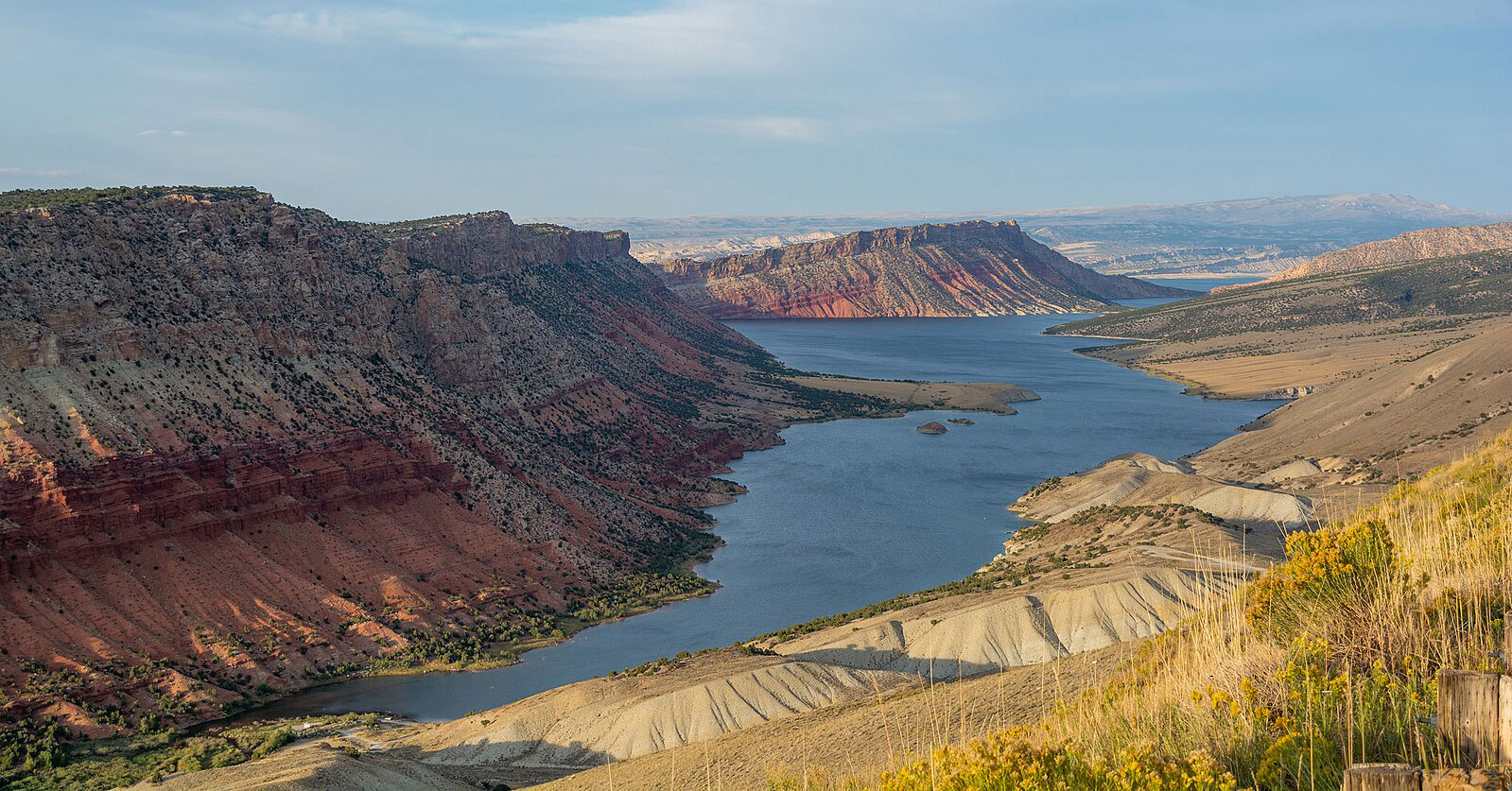
These have been local, almost intimate processes. In the earlier "public scoping period" "Scoping Comments," in Project West, July 2024, 398,401,406,410/2094; https://www.blm.gov/announcement/blm-announces-virtual-public-meeting-invite-public-input-environmental-assessment for Project West, in March-April 2024, the US EPA asked for an inventory of anticipated emissions and an examination of "all reasonable alternatives" to the project; Genesis Alkali, one of the other trona companies in Sweetwater County, said that the proposed planning had proceeded "unbeknownst." A member of the "public" said, "please avoid or minimize harm to wildlife and their habitat. Native species are already under stress from climate change and other causes," and another member of the public said, "I work at Solvay and have concern of how the additional traffic through this area (specifically at the dirt road turnoff) will impact the safety of all us Solvay employees [with] high chances of crashes on our road."
Environmental assessments
Towards the end of the summer of 2024, there was a more sober assessment, in the Draft Environmental Impact Statement Dry Creek Trona Mine Project Draft Environmental Impact Statement [Dry Creek Trona Draft EIS], available at https://eplanning.blm.gov/public_projects/2016395/200519818/20116856/251016836/Dry%20Creek%20Draft%20EIS_August%202024.pdf ; https://eplanning.blm.gov/eplanning-ui/project/2016395/570 for the Dry Creek Trona project released by the BLM in August 2024. https://www.federalregister.gov/documents/2024/08/09/2024-17683/notice-of-availability-of-the-draft-environmental-impact-statement-for-the-dry-creek-trona-mine The plan submitted (the "proposed action") was evaluated against three alternatives, of which one was "no action," and one was a modified plan, the "preferred alternative," in which the processing facilities would be constructed further to the north, away from the Flaming Gorge.
The evaluation was judicious, sometimes reassuring and sometimes daunting. There was an estimate, at last, for "maximum annual" methane (CH4) emissions for the "preferred alternative," of 866 metric tons (or 3,227 metric tons over the "project lifetime.") This is modest, by the historical standards of the traditional underground trona industry in Wyoming, or the "room-and-pillar" and "longwall" mining in which pillars suddenly collapse, and rocks fall from the roof. Even the shallowest of the existing mines, now the Şişecam mine, emitted 2,445 tons of methane per year in the early 21st century, according to the study of ventilation systems Pritchard et al., "Ventilation systems," pp. 50, 53, 58. published in 2004. The largest of the methane emissions observed from space in 2019 -- at {41.61, -109.87}, near the Genesis mine -- was of 32 tons of methane per hour.
The estimates of overall CO2 emissions Dry Creek Trona Draft EIS, 49,82,94/328. The estimate of peak year emissions for the "proposed" alternative is given as 2,773,429 MT of CO2e at p. 2-15 (49/328) and as 3,880,092 MT at p. 3-22 (82/328). The peak year estimate for the "preferred" alternative is given as 4,121,164 MT of CO2e at p. 2-15 (49/328) and as 3,892,717 MT at p. 3-34 (94/328). The annual emissions for the proposed alternative are calculated here on the basis of the estimate for "project lifetime" emissions for the preferred alternative (82/328) and the estimate of the "total timespan of the project," which is 34 years (11/328). are much larger, and are attributed, in the draft, to the (energy-intensive) process of drying and crystallizing trona into soda ash, to a natural gas-powered co-generation plant that is part of the plan, and to the transport required for moving bulk materials around the site. The "proposed" alternative, Dry Creek Trona Draft EIS, 49,82,94/328. The annual emissions for the "proposed" and "preferred" alternatives are calculated here on the basis of the estimate for "project lifetime" emissions (82,94/328) and the estimate of the "total timespan of the project," which is 34 years (11/328). The estimate of peak year emissions for the "proposed" alternative is given as 2,773,429 MT of CO2e at p. 2-15 (49/328) and as 3,880,092 MT at p. 3-22 (82/328). The peak year estimate for the "preferred" alternative is given as 4,121,164 MT of CO2e at p. 2-15 (49/328) and as 3,892,717 MT at p. 3-34 (94/328). as put forward by the developers, would produce 2,284,685 tons of CO2 equivalent per year; for the "preferred" alternative, the total would be 2,291,615 tons per year, with, in the "peak year of activity," emissions as high as 4,121,164 tons of CO2 equivalent. This is substantially larger than the estimate for the Project West solution mine (as per the single line in the industrial siting report), of 1,283,545 tons of CO2 equivalent per year.
The Dry Creek emissions in the peak year are described, with implausible precision, as representing Dry Creek Trona Mine Project EIS, 49/328 (global emission totals and "overall social costs," for the higher of the two estimates given), and 94/328 (gasoline-powered vehicles, for the lower of the two estimates.) "approximately 0.008 percent of global annual emission totals," and "equivalent to the GHG emissions from 926,481 gasoline-powered passenger vehicles driven for 1 year." The "overall social cost of GHGs" for the preferred alternative, over the lifetime of the project, is "estimated to range from $924,506,133 to $11,180,530,348." The draft adds, This is on the grounds that "trona mined in the U.S. has a lower (nearly 36%) GHG footprint than Chinese synthetic soda ash." Dry Creek Trona Draft EIS, 265/328. The source given is a report on the US trona market by an organization called "Grand View Research," "an India & U.S. based market research and consulting company;" https://www.grandviewresearch.com/industry-analysis/us-trona-market and https://www.grandviewresearch.com/info/about-us , accessed on August 30, 2024. almost as an afterthought, that "when considered at a global level," "GHGs would likely decrease."
Then there are the other forms of pollution Dry Creek Trona Draft EIS, 49,75/76/328 associated with the project. There are expected to be "exceedances" of permitted levels of nitrous oxide (NO2) and particulate matter, but they are "localized;" the presence of hazardous air pollutants would be "very localized." The "color" of the nearby landscape was estimated -- "assuming the worst possible dispersion condition" -- and the project was not expected to have a significant impact on visibility.
The sagebrush steppe is expected to be reclaimed in "25 to 75" years after "the start of restoration." The habitat of the sage grouse would be impacted for "52 to 110" years (although the "preferred alternative" would be further from the leks of the grouse, which the draft describes as "strutting grounds.") There are anecdotes of the future lives of unnamed birds; "waterfowl" who might alight on "the highly saline storage ponds," too large to be enclosed, and details of the experience of the project managers in rehabilitating birds who have in the past happened to land on their ponds. There would be a "hazing program" for the project, Dry Creek Trona Draft EIS, 46,49,157,188,192,197/328. to "discourage waterfowl from landing and staying on the evaporation ponds."
The report describes "irreversible" and "irretrievable" effects. The project would result in "278 caverns that are predicted to collapse," which would lead to subsidence of around 6 feet at ground level. But the area is not "seismically active," and the risk of even low-intensity earthquakes is estimated to be low.Dry Creek Trona Draft EIS, 50, 121-122,128-130/328; "Mine Plan - Dry Creek Trona Project," 68/698. (This is in contrast to the "geological faults identified" in the Anatolian heartland of the solution mining of trona.)
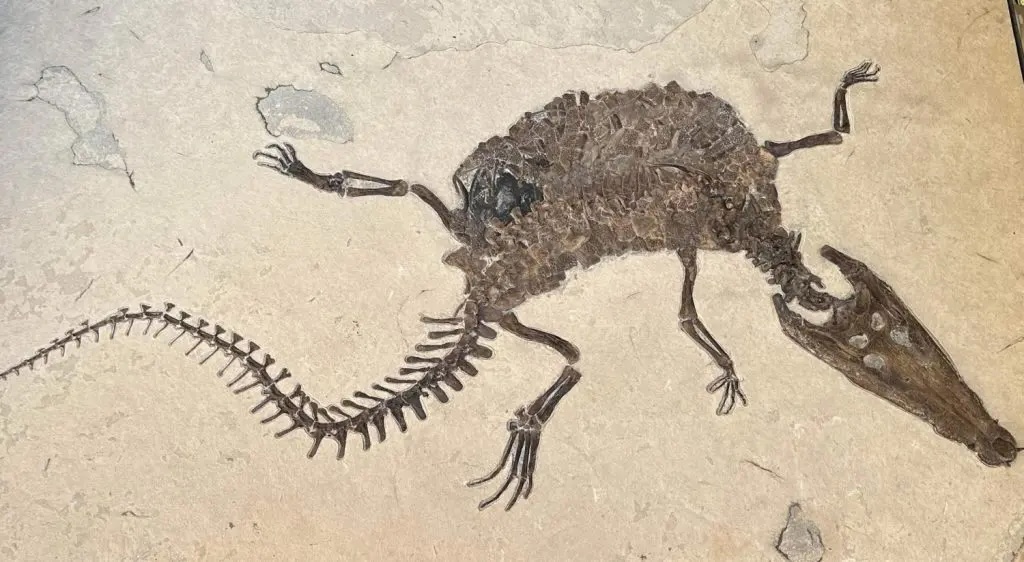
Southwest Wyoming -- like so many sites of ultra methane emissions around the world, from the habitat of the Pleistocene steppe mammoth of Drmno https://histecon.fas.harvard.edu/1800_histories/sites/drmno.html to the "huge plant-eating dinosaurs" See https://biollogy-medcine-geography-vestnik.ksu.kz/index.php/bmg-vestnik/article/view/748 and https://astanatimes.com/2024/03/kazakh-scientists-discover-dinosaurs-and-ancient-creatures-in-prehistorical-kazakhstan/ and on a methane site in central Kazakhstan, see https://histecon.fas.harvard.edu/1800_histories/sites/karaganda.html of Kazakhstan -- is a place of importance to "the history of life on earth." This is the language of the Paleontological Resources Preservation Act of 2009, cited in Dry Creek Trona Mine Project Draft Environmental Impact Statement, 142/328. The project Dry Creek Trona EIS, 145,148/328. would involve the "loss and destruction of scientifically significant or important fossils;" "disarticulated turtle shells," "crocodile bones" and "mammal jaws," in this land that was once Lake Gosiute. https://www.geowyo.com/lake-gosiute--the-blue-forest.html There would be irreversible impacts to places of Tribal significance, and to "environmental justice communities;" these are the subject of continuing consultations Dry Creek Trona Draft EIS, 266,323,324/328; "on June 28, 2023, the BLM conducted the field visit with the Tribal archaeologist of the Northern Arapaho Tribal Historic Preservation Office." with the Eastern Shoshone, Northern Arapaho, Ute and Shoshone-Bannock tribes, on a "government-to-government level."
The "pristine" night skies of the project area would be affected. But there would be a "lighting plan" and the consequences would be "negligible." The "primarily naturalized landscape" in the immediate vicinity of the project would become "a more industrialized landscape." Travellers would see project facilities, "geometrical shapes, large industrial infrastructure, steam/vapor cloud." "There would be irretrievable effects on the landscape character and scenic quality," although "viewers within the existing landscape" -- the local population -- are already accustomed Dry Creek Trona Draft EIS, 301,302,305/328. to "landform modifications and visual disturbances."
The most ominous prospect, in the draft, is a contingent possible future. It is the vista of not two but three immense new mining projects. One of the "reasonably foreseeable future actions," discussed at length in the evalution, is of a third, potentially even larger underground project, an "American Soda Solution Mining Expansion." This was little more, in the summer of 2024, than an intimation, about which there was little information; there had been some "geotechnical testing" Conversation with Kelly Lamborn of the Bureau of Land Management, Kemmerer, WY, August 27, 2024. on private land. But American Soda -- the Solvay operation in Sweetwater County -- is a large landowner, and the area affected would be almost ten times the size Dry Creek Trona Draft EIS, 163/328. The area of "large-scale negative cumulative impacts on vegetation" would be 35,668 acres for the proposed American Soda project and 3,722 acres for Project West. of Project West. It is the possibility Dry Creek Trona Draft EIS, 130,163,178,207,305/328. of "the simultaneous operation of three [additional] trona mines" that looms over the draft -- with "cumulative effects" from "increased seismicity or additional subsidence risks," "large-scale negative cumulative impacts on vegetation," consequences for air quality, the "probability of disproportionate and adverse impacts among environmental justice communities," and a continually increasing "presence and prominence of trona mine infrastructure."
| « Methane Emissions, Mine Safety and Pollution | Trona and Climate Change » |